Medieval Christianity gets remembered as a matter of prayer, ritual, and quiet devotion. But large parts of the institutional church behaved less like a spiritual body and more like a political power in its own right, one that built landed empires, backed crusades, and fought emperors over who got to appoint a bishop.
An abbey that ran a network bigger than most kingdoms
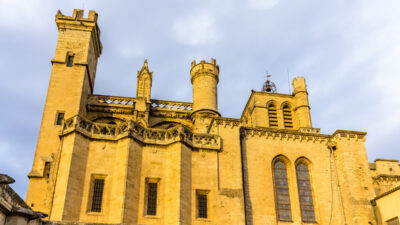
Cluny abbey, founded in Burgundy in the 10th century, grew by its 11th-century peak into the head of a network of more than a thousand affiliated monasteries stretched across Europe.
That kind of reach came with landholdings, revenue, and political weight that rivaled the secular principalities surrounding it, all answering not to a king but to an abbot.
None of that made monasteries irrelevant to learning, either. Between the 5th and 11th centuries, they were the West’s main conservatories of ancient knowledge, copying and preserving classical and Christian texts that might otherwise have disappeared. Clerics such as Albertus Magnus and Roger Bacon later carried out early forms of empirical inquiry into nature well before the Renaissance, and medieval universities themselves grew directly out of the church’s own institutions.
The abbot who told kings and popes what to do
Bernard of Clairvaux, a Cistercian abbot who lived from 1090 to 1153, became one of the most influential figures of the 12th century without ever holding formal political office. He advised popes, counseled kings, and personally preached the Second Crusade across Europe.
Yet the same man who shaped the decisions of the era’s most powerful rulers also opposed the use of learned, scholarly medicine for his own monks, insisting that spiritual discipline mattered more than physical treatment.
A decades-long fight over who got to appoint a bishop
Between 1075 and 1122, popes and the Holy Roman Emperors fought over a question that sounds bureaucratic but nearly split Christendom in two: who had the authority to name a bishop, the church or the crown.
The conflict, known as the Investiture Controversy, dragged on for nearly half a century before ending with the Concordat of Worms in 1122, a compromise that formally separated spiritual and temporal authority for the first time, at least on paper.
Monks who rejected the wealth other monks had built
By the early 13th century, the gap between monastic wealth, epitomized by institutions like Cluny, and the church’s claimed values of humility had become impossible to ignore.
The Franciscans, founded in 1209, and the Dominicans, founded in 1216, answered directly: absolute poverty, no property, and preaching on foot from town to town instead of governing land from behind abbey walls.
An institution operating on two levels at once
Read together, these four episodes describe a church that was never purely a spiritual authority. It was also a landholding, crusade-backing, bishop-appointing political force that played the same game as any secular power around it.
The line between faith and politics in the Middle Ages was never as clean as it looks from a church pew, and the tension between the two never really went away.