It has no moat, no drawbridge and, for centuries, nobody could say what it was for. Then, in the 1950s, scientists found something in the soil around it that ended up treating cancer.
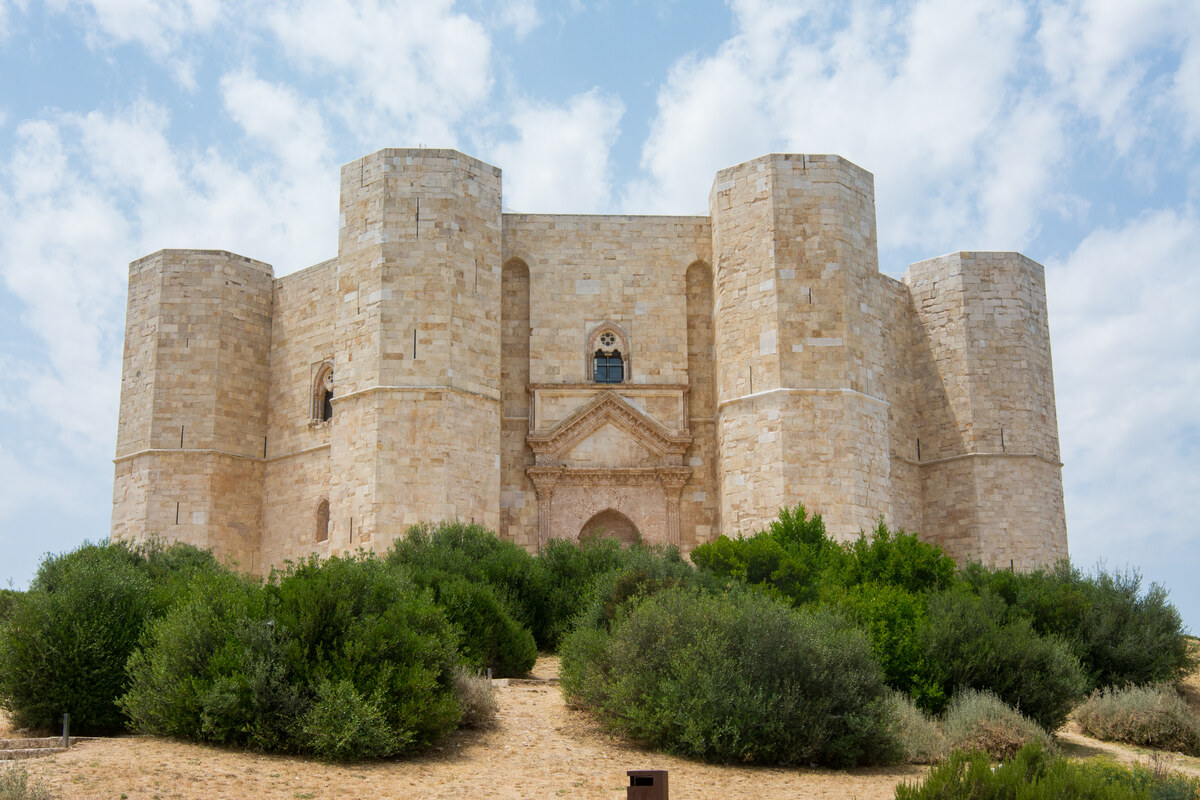
Castel del Monte sits on a hill in Apulia, in southeast Italy. King Frederick II built it in the 1240s, and it is still one of the strangest castles in Europe. Here are five facts that explain why.
1. It is an octagon built from eights
The castle is an octagonal prism with an octagonal tower at each corner. Both floors have eight rooms, and an eight-sided courtyard sits in the middle.
The main wall is 25 metres high, the eight towers reach 26 metres, and the whole castle is 56 metres across. Frederick II built many castles in Apulia, but none of the others used this geometry.
2. Nobody agrees what it was for
The castle has neither a moat nor a drawbridge, and some people concluded it was never meant to be a fortress. Its small size once led historians to call it a hunting lodge.
Scholars now believe it originally had a curtain wall and served as a citadel. Another theory sees the octagon as a bridge between a square, which stood for the earth, and a circle, which stood for the sky. Frederick may have been inspired by the Dome of the Rock in Jerusalem, which he saw during the Sixth Crusade, or by the Palatine Chapel at Aachen.
3. The Templar legend is a myth
Because of its mystery, the castle is often linked to the Knights Templar. Italian historian Raffaele Licinio spent years pushing back on this kind of reading.
His point was simple: “Castel del Monte was just one of the castles of the fortification system developed by Frederick II”, and it has no link to the Templars at all. The mystery is real, but the secret society is not.
4. A palace in Caserta wears its marble
The castle once had marble walls and columns. In the 18th century, members of the House of Bourbon took the marble columns and window frames and reused them at their palace in Caserta.
After that it was left empty for a long time. The Italian state bought it in 1876 for 25,000 lire and began restoring it in 1928.
5. Its soil gave us a cancer drug
During the Second World War, the US 15th Army Air Force headquartered a secret navigational aid station called Big Fence at the castle. That was already a strange second life for a 13th-century building.
The real surprise came in the 1950s. Soil around the castle turned out to contain a bright red compound made by a strain of the bacterium Streptomyces peucetius. Scientists named it daunorubicin, and further work led to a related compound, doxorubicin, which is now used as a chemotherapy agent.
A castle that keeps changing its story
It also appears on the Italian one cent euro coin, and it almost certainly inspired the fortress called the Aedificium in Umberto Eco’s novel The Name of the Rose.
Few medieval buildings have been a state prison, a plague refuge, a quarry for a royal palace, a wartime radio station and the source of a medicine. Castel del Monte is still being rewritten, and its original purpose remains one of the Middle Ages’ best unsolved puzzles.