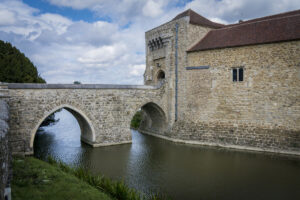
Wat Tyler rinsed his mouth in front of the king, and it cost him his head
A flagon of water, an insult and a stabbing at Smithfield ended the 1381 Peasants Revolt in minutes, and the king then took back every promise.
Continue →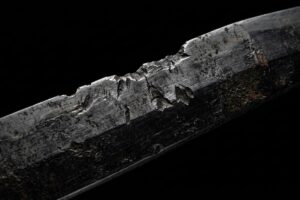
The first mass-produced tourist souvenir was a cheap lead badge
Medieval pilgrims bought lead badges by the tens of thousands, and rivers still give them up today. They were the first tourist souvenirs.
Continue →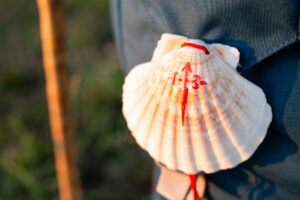
The real life of the knight who died carrying the sacred banner of France
Geoffroi de Charny offered to settle Poitiers with a hundred knights per side, then died holding the Oriflamme. His shroud story is just as strange.
Continue →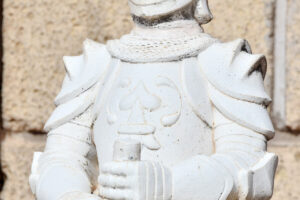
5 facts about Castel del Monte, the castle whose soil gave us a cancer drug
No moat, no drawbridge, no known purpose, and soil that led to a chemotherapy drug. Five facts about an octagonal castle.
Continue →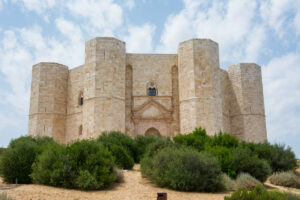
The largest medieval map was never meant to help anyone travel
Jerusalem sits at its center, Eden at its edge, and Europe and Africa are swapped. The Hereford map was built to teach, not to guide.
Continue →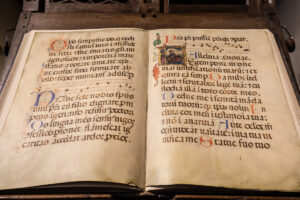
No, medieval ale tasters never tested beer by sitting in it
The famous leather breeches test for ale has no medieval source. The real job of an ale conner was stranger, and it still exists in London.
Continue →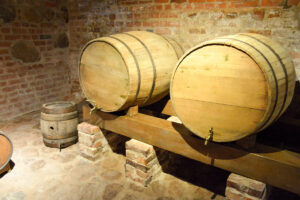
Medieval clothes had no pockets, so the belt did all the work
With no pockets in sight, medieval people hung knives, purses and keys from the belt, and it became a status symbol worth a week of wages.
Continue →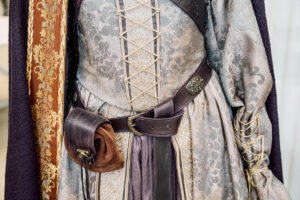
The medieval battle so bloody its dead were buried in their armor
In 1361, so many Gotland fighters died outside Visby that the victors never stripped the bodies. Their armor waited 600 years in the ground.
Continue →
No, the Alhambra you visit today is not the palace its sultans knew
Its colors faded, its room names were invented, its domes were added then removed: the Alhambra is a medieval palace rebuilt by centuries of strangers.
Continue →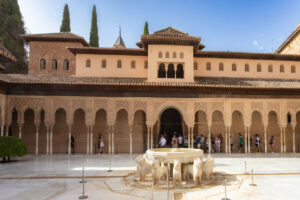
The real life of Thomas Malory, the outlaw knight behind King Arthur
The book that defined King Arthur's chivalry was signed by a knight prisoner. The man most scholars name had a long criminal record.
Continue →