The most popular medieval shrines sold more than 100,000 badges a year. Cast in lead, cheap and shiny, they were the first mass-produced tourist souvenir in Europe.
A trip you wore on your hat
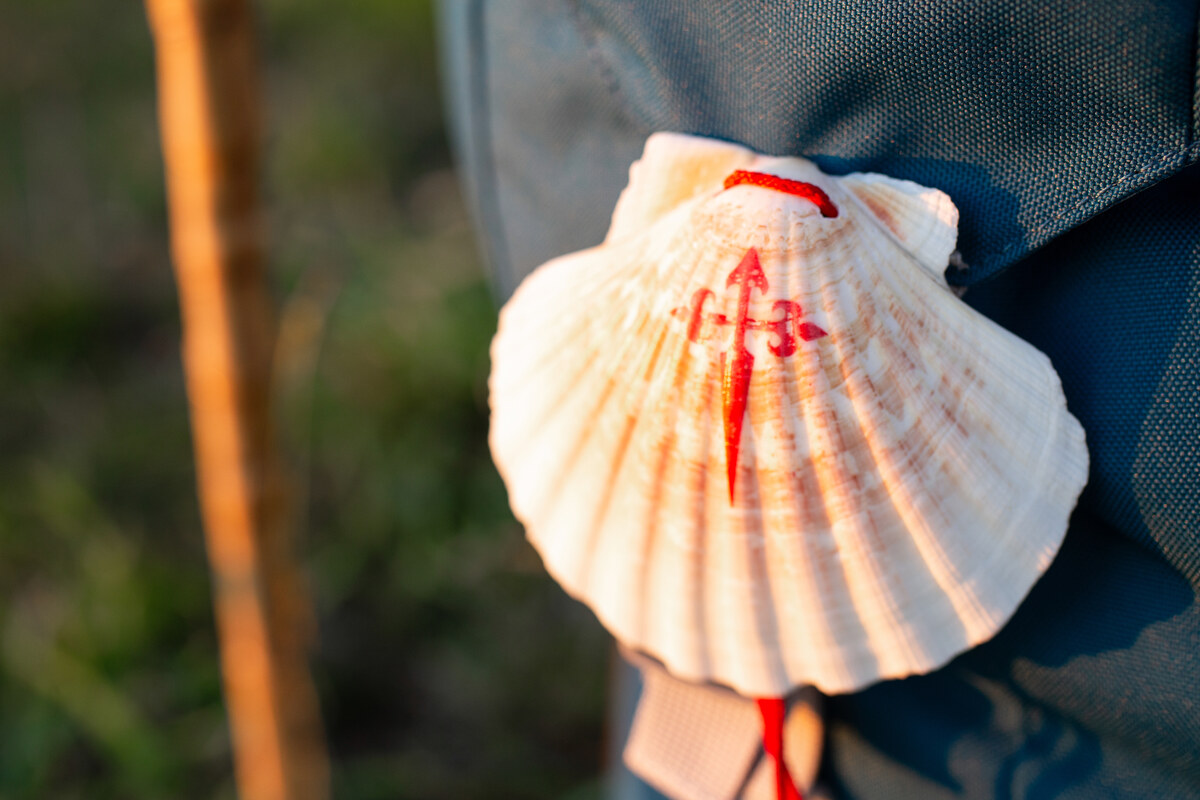
Pilgrims had always brought something home from holy places. The earliest and still the most iconic “badge” was the scallop shell worn by pilgrims to the shrine of Santiago de Compostela, picked up from the beach.
By the 14th and 15th centuries, vendors at shrines were selling something far more practical: small lead alloy badges stamped with an image of the place. Pilgrims pinned them to their clothes or hats, or wore them around the neck, so everyone could see where they had been.
Every shrine had its own logo
The imagery was designed to be recognised at a glance. Canterbury, where Thomas Becket was martyred in 1170, produced the most varied souvenirs: his shrine, his head reliquary and scenes from his life, often with Becket shown being killed by one of four knights.
Other sites had their own signs. Santiago had the scallop, Amiens showed the head of John the Baptist as a face on a plate, and Jerusalem had its cross. Learn the images and you can read a badge like a brand.
Cheap enough for almost anyone
The badges were cast in moulds made of bronze, cuttle-bone or limestone. Makers needed a specific ratio of lead and tin, because only that mix flowed thin enough to cast delicate shapes with the cheapest metal.
Quality varied wildly. Some badges were crude, others showed real skill. Freshly cast, the alloy was bright and shiny, though it tarnished quickly. The wealthy could buy rarer versions in precious metals, but nearly all of those were melted down centuries ago.
Some thin badges were made to be sewn into books. A few manuscripts still hold them, and in others the imprint left on the page can reveal which shrine the owner visited. Artists even began painting badges into the margins of prayer books.
The river mystery
Most surviving badges are found in or near rivers, and tens of thousands have been recovered since the mid-19th century. At Lynn Museum in Norfolk, a big collection was built by 19th-century children who were paid by a local antiquarian for their finds.
One popular idea says pilgrims threw their badges into water for good luck. That theory is now contested. Many badges at the Salisbury Museum came out of the town’s medieval sewers, which suggests that most were simply thrown away once their owners were done with them.
Not all badges were holy
Not every badge had a saint on it. Livery badges were handed to employees and allies by powerful lords, and they became highly controversial in the decades before the Wars of the Roses. Others were lovers’ tokens or cheap jewelry, and some erotic examples, including winged phalluses dressed as pilgrims, were produced in large numbers. Their meaning is still debated.
The end of a tradition
In England the habit died out in the early 16th century. Pilgrimage first declined, then was banned during the Reformation as superstition. In Catholic Europe it carried on, and a pilgrim certificate or badge is still handed out at some destinations today.
Tens of thousands of these lead trinkets together make up the largest body of medieval art objects to survive. The cheapest souvenirs ended up telling us the most.