After a medieval battle, the victors normally stripped the dead. Armor was valuable, and the fallen had no use for it. But in the summer of 1361, outside the walls of Visby, there were simply too many bodies.
So the dead went into the ground still wearing their mail. Nearly six centuries later, archaeologists found them exactly as they had fallen.
A Danish king lands on a trading island
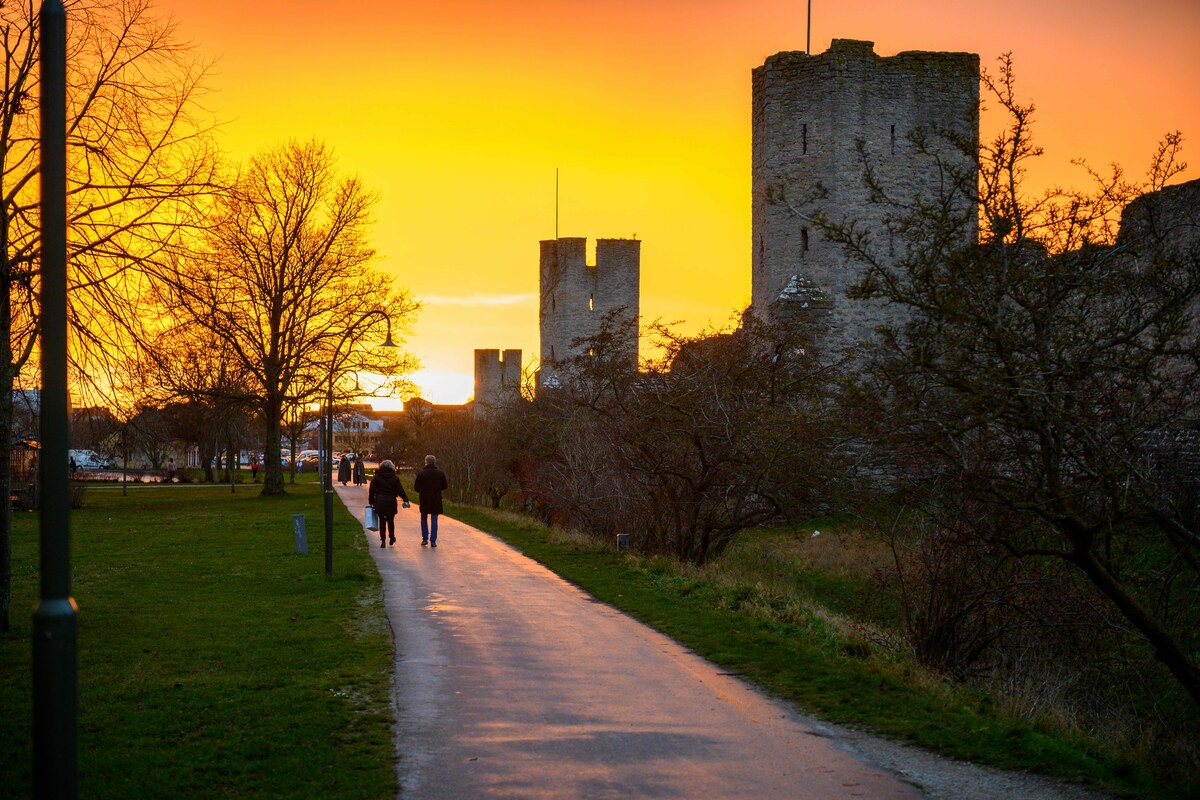
Visby, on the Swedish island of Gotland, was a rich trading town. It had joined the Hanseatic League in 1280, and its merchants had little in common with the farmers of the countryside around them.
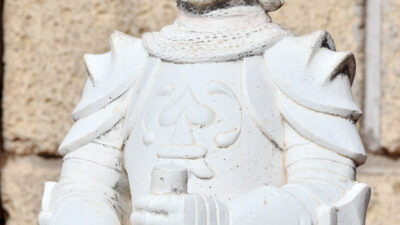
On 22 July 1361, a fleet of around 30 ships appeared off the coast. King Valdemar IV of Denmark, known as Valdemar Atterdag, wanted control of Gotland’s trade routes. His army of 2,000 to 2,500 men was made up largely of German mercenaries, professional soldiers in what historians call transitional armor: iron or steel plates over the vital areas and joints, on top of a full suit of chain mail.
Facing them were the Gutes, the island’s own people. Their leader is unknown. Their ranks were filled with minor nobles, freemen and farmers.
Five days, three battles, one massacre
The islanders fought back from the moment the Danes landed. After several clashes, including a defeat on marshy ground at Fjäle myr on 24 July, the survivors made a final stand just outside Visby’s city wall on 27 July.
The Danes opened with crossbows, which are believed to have knocked out a fifth of the Gotland militia. Then came the melee. During the whole fight, the gates of Visby stayed shut. The townspeople most likely watched from behind their walls.
A Visby record puts the Gotland dead at around 1,800. A chronicle from Lübeck explained the bloodbath bluntly: the peasants were poorly armed and unused to war. By medieval standards, the toll was enormous, comparable to the French losses at Poitiers five years earlier.
Why nobody took the armor
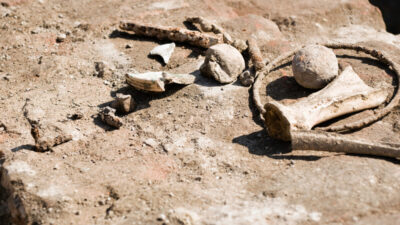
The fallen were thrown into five or six mass graves near the cemetery of Solberga nunnery, east of the wall. And unusually, many of them were buried in their armor.
Military historian John Keegan offered the likely explanation: hot weather and the sheer number of corpses “defeated the efforts of the victors to strip them before decomposition began.” About 2,000 bodies would eventually be dug up.
The first excavation, in 1905 at a site now called Korsbetningen, revealed a grim detail. At least a third of the Gotland army was made up of minors and elderly men. This was not a professional force. It was a whole community throwing everyone it had at an invading army.
An armor catalogue frozen in 1361
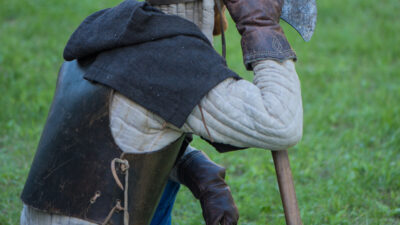
For armor specialists, the Visby graves turned out to be a treasure. Many skulls were still wrapped in mail coifs, hoods of chain mail. Helmets were rare, perhaps because they were taken after the battle. Padded gambesons were probably worn too, but cloth does not survive centuries underground.
The real star was the coat of plates, a garment with metal plates riveted inside a cloth or leather shell. The graves yielded 24 distinct patterns of it. Some had as few as 8 plates, others around 600.
That variety tells a story. By the 1350s, this kind of armor had become cheap enough for ordinary militias, and older designs were still being made alongside newer ones because they demanded less skill and fewer tools. Gotland’s farmers seem to have gone to war in whatever they could get, some of it already old-fashioned.
Barrels of silver and a dachshund
Two days after the battle, Visby surrendered. Legend says Valdemar set out three huge beer barrels and threatened to burn the town unless they were filled with gold and silver. One version claims they were full before nightfall.
Nobody can confirm it. The story became famous anyway, thanks largely to an 1882 painting by Carl Gustaf Hellqvist, now in Stockholm’s Nationalmuseum. It even includes a dachshund by one of the barrels, a breed that only appeared in the 16th century.
A cross that still asks for prayers
Some time after the battle, a memorial cross was raised near Solberga. Its Latin inscription, in one English rendering, reads: “In the year of the Lord 1361, on July 27, in front of Visby gates, in the hands of the Danes, the boys buried here fell. Pray for them.”
Valdemar’s victory did not last. Attacking a Hanseatic town turned 77 cities of the League against him, and he was forced into the Treaty of Stralsund in 1370. But the farmers of Gotland left something more lasting than a treaty: an armory buried in the earth, and one of the clearest pictures we have of what ordinary men actually wore to die in.