In 1415, Henry V of England won one of the most famous battles in history in a matter of hours. Six years later, a seven-month siege of a single French town wore down his army, and it very likely cost him his life.
One afternoon of glory against seven months of mud
At Agincourt, on 25 October 1415, Henry’s exhausted and hungry army faced a French force three to five times larger. His archers cut down the French knights in a few hours, and the victory made him a legend.
Yet Agincourt was the exception, not the rule. Medieval warfare was mostly a succession of sieges and raids, and pitched battles in open country were rare. After Agincourt, Henry’s war became a war of sieges: Harfleur in 1415, Rouen in 1418-19, and finally Meaux in 1421-22.
Those sieges ran on artillery and ammunition. By one calculation, the English crown bought well over a million arrows between 1418 and 1421.
A town built to be stubborn
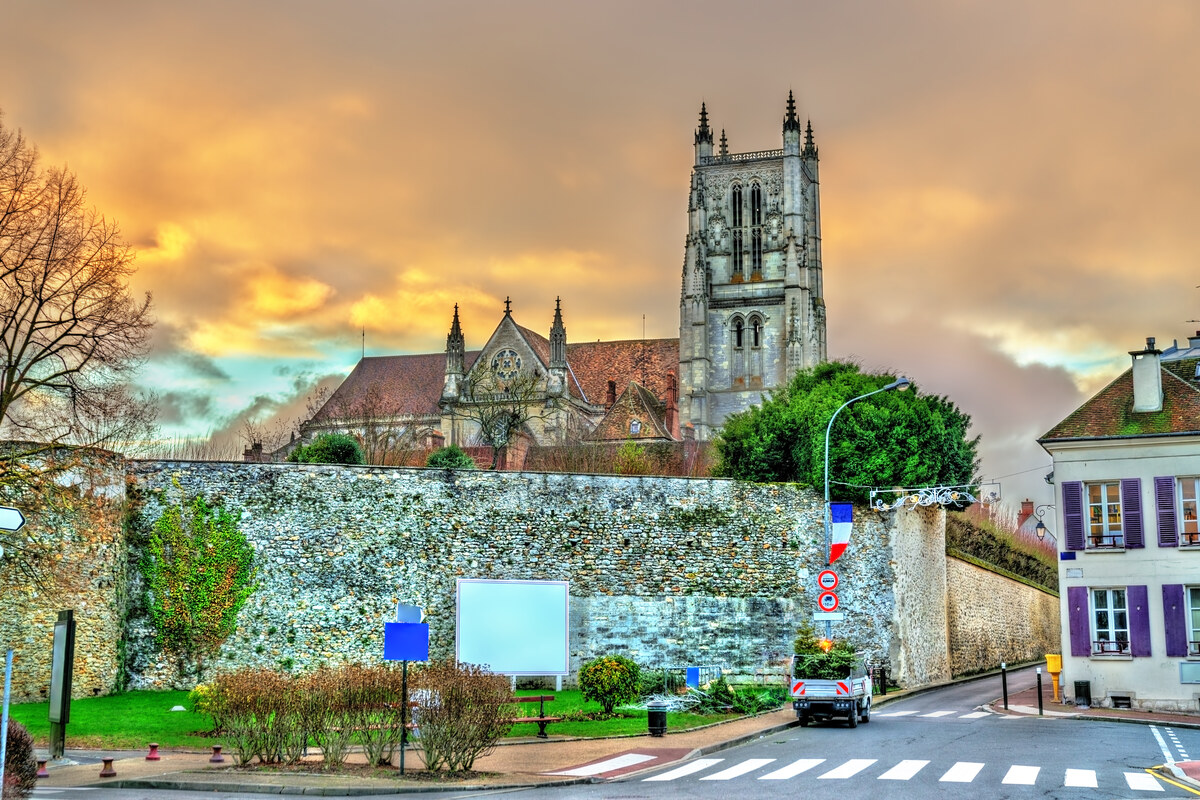
Meaux sat on a loop of the Marne, east of Paris. The walled town and its suburbs stood on the north bank, while a smaller, heavily fortified district called the Marché sat inside the river bend, connected to the rest of Meaux by a single bridge.
It was the most important stronghold still held by the dauphin’s troops around Paris. About 1,000 hardened defenders held it, well supplied and well armed. Henry arrived with an army of more than 20,000 men and opened the siege on 6 October 1421, with mining and bombardment.
The defence was led by a man known as the Bastard of Vaurus, described as a singularly vicious lord but a brave commander. Grim rumours circulated about him, including executions at his favourite elm tree, and historians today treat many of the stories from this siege as exactly that: rumours.
The real enemy was inside the English camp
Henry’s troops were described as “threadbare and not easily reinforced from Normandy”, and the siege dragged on through the winter. Casualties mounted, including John Clifford, a veteran of Agincourt.
Among the dead was also 17-year-old John Cornwall, a cousin of the king. A gunstone took off his head while he stood next to his father. The grieving father declared that Henry’s war was proceeding “contrary to God and reason”, left for England and swore never to fight again.
Disease did even more damage than French guns. An estimated one besieger in sixteen died of dysentery and smallpox, and the English lost more than 6,000 men over the whole siege.
On 6 December 1421, news arrived that Queen Catherine had given birth to a son and heir at Windsor. Henry still refused to leave Meaux until the job was done.
A trumpeter who mocked the king
In March 1422, starving and demoralised townspeople opened the gates of the walled town. The defenders simply fell back into the Marché and held out for two more months.
The siege only ended on 10 May 1422, when the garrison threatened to rebel. The Bastard of Vaurus was dragged through the streets and beheaded beside the tree where he had executed so many others.
He was not the only one. A trumpeter named Orace shared his fate, because throughout the siege he had mocked Henry by “blaring out an irritating tune” whenever he saw the king walking among his men.
The victory that came too late
Meaux was a real success: its fall cost the dauphin a long list of towns and fortresses. But Henry fell ill in June 1422. Contemporary sources blamed smallpox, leprosy or St Anthony’s fire, while the chronicler Thomas Basin suggested he had caught dysentery at Meaux. Scholars consider dysentery the most probable cause, spread by the unsanitary conditions of the English camp.
By late June he could no longer ride and had to be carried in a litter. Taken to the Château de Vincennes, east of Paris, he died there on 31 August 1422, aged 35, leaving his crown to a son not yet one year old.
Agincourt is the battle everyone remembers. But the quiet, muddy siege of a river town did what an army three to five times larger never could, a reminder that in medieval war, disease in your own camp could be deadlier than any charging knight.