“Kill them all, God will know his own.” It’s the line everyone repeats about the massacre at Béziers in 1209, and it almost certainly was never said by anyone standing on that battlefield.
The line everyone quotes
On July 22, 1209, crusader forces broke through the walls of Béziers and killed hundreds of its residents, Cathars and Catholics alike, in one of the opening horrors of the Albigensian Crusade. The order supposedly given by papal legate Arnaud Amaury, “Kill them all, God will know his own,” has been repeated in textbooks, documentaries, and casual conversation ever since.
It’s a chilling sentence. It’s also missing from every account written by anyone who was actually there.
Where the quote actually came from
The phrase doesn’t appear in any chronicle written close to the siege. It surfaces decades later, in a text by Caesarius of Heisterbach, a German Cistercian monk who never set foot in Languedoc and was compiling moralizing stories, not reporting from a battlefield.
Historians who study the crusade generally treat the line as apocryphal, a dramatic flourish added long after the fact. Arnaud Amaury was real, and he genuinely led the crusade’s religious arm. The sentence attached to his name almost certainly is not.
What the crusaders actually did instead
Strip away the invented one-liner, and the real methods used against Cathar strongholds look less like a mob and more like an engineering project.
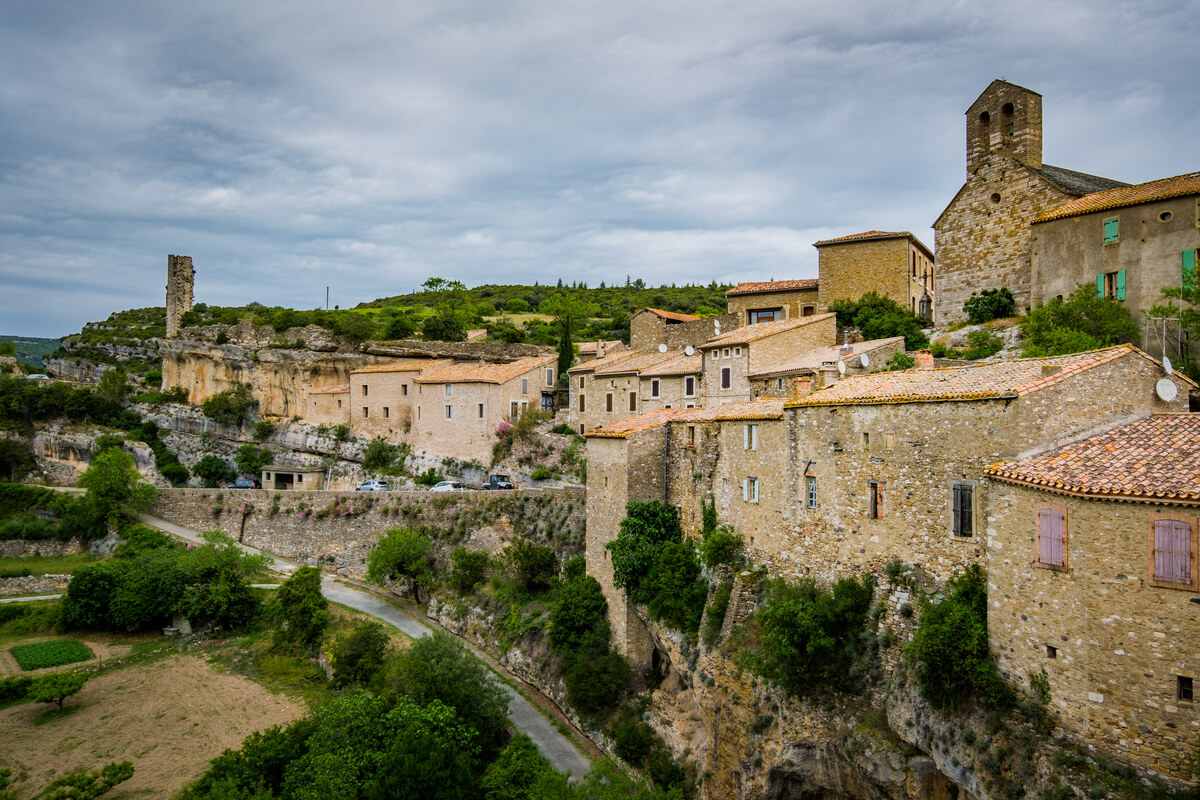
The crusaders had already learned that lesson at Carcassonne, where cutting off access to water forced the city to surrender without a full assault. At the siege of Minerve in 1210, that same principle became a purpose-built weapon. Simon de Montfort’s forces constructed a massive stone-throwing siege engine, nicknamed “Malvoisine,” with one job: smashing the covered walkway that let defenders reach their water supply.
Cut off from water, Minerve surrendered without a single assault ever being launched. When the town fell, 140 Cathar “perfects” refused to renounce their faith. They were burned alive, a decision the crusade’s leadership carried out with no rousing quote required to justify it. It would not be the last mass burning of the war.
A siege doesn’t need a slogan to be brutal
That’s the uncomfortable part of correcting the myth. The invented quote makes the crusade sound like one moment of battlefield chaos. The historical record shows something closer to policy: calculated sieges, engineered water cutoffs, and mass executions carried out methodically, campaign after campaign, across two decades of war.
A fabricated slogan is easy to condemn and just as easy to forget. A repeated military strategy, refined from siege to siege, is much harder to look away from.
What the myth ends up hiding
Removing “Kill them all, God will know his own” from the story doesn’t soften the Albigensian Crusade. It just relocates the horror from a single dramatic sentence to twenty years of deliberate, repeatable tactics turned against an entire region’s water supplies, towns, and beliefs.
That’s a harder story to package into a quote. Maybe that’s exactly why the fake one stuck around for eight centuries.