The most famous English book about King Arthur and the Knights of the Round Table was signed by a man who called himself a “knight prisoner”.
His name was Sir Thomas Malory. His Le Morte d’Arthur was completed around 1470 and printed by William Caxton in 1485, one of the first books ever printed in England. And the man most scholars believe wrote it had a record that reads like a villain’s part in his own story.
A knight who asked readers to pray for his release
Almost everything we know about the author comes from short prayers scattered through the text. At the end of the first tale, he wrote: “For this was written by a knight prisoner Thomas Malleorre, that God send him good recovery.”
Later, he asked readers of the tale of Sir Gareth to pray that God would send him “good deliverance soon and hastily.” Whoever he was, he was confined somewhere while he wrote about the noblest knights of legend.
The catch: at least six men named Thomas Malory lived in late 15th-century England, and the author’s identity has never been confirmed.
The leading suspect had a very long record
Since the Harvard professor George Lyman Kittredge investigated the question in 1894, the main candidate has been Sir Thomas Malory of Newbold Revel, in Warwickshire. He is the only Thomas Malory of the period clearly recorded as a knight.
On paper, he looked respectable. He was knighted before 1441, worked as a professional soldier and was elected to Parliament for Warwickshire in 1443.
Then the charges piled up. In 1451 he was accused of ambushing the Duke of Buckingham with 26 other men, an accusation never proved. He was also charged with extortion, violent robberies and breaking into a house in Monks Kirby, stealing goods worth 40 pounds and raping the owner’s wife. In 1928, research by Edward Hicks showed he had been imprisoned as a thief, bandit, kidnapper, attempted murderer and rapist.
Prison could not hold him
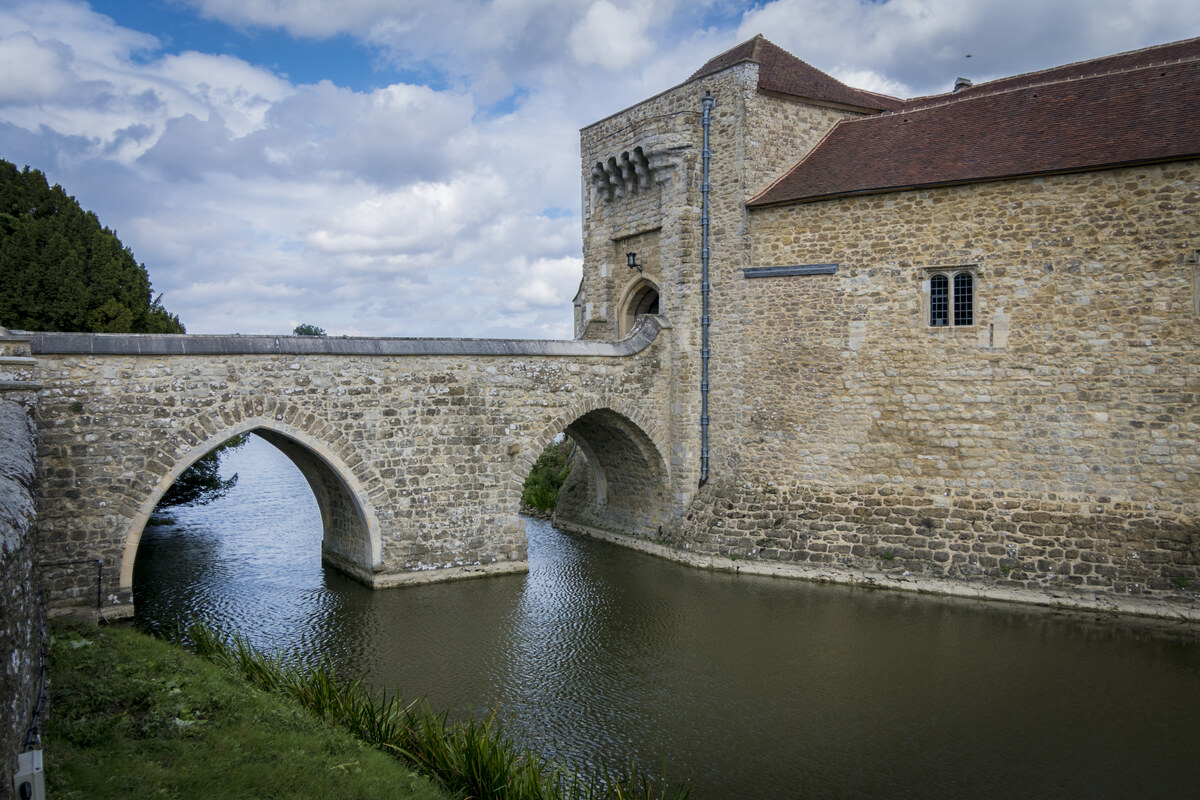
Locked up in Maxstoke Castle, he escaped, swam the moat and went home to Newbold Revel. Convicted in 1451, he spent a year in London’s Marshalsea Prison. Back inside by March 1452, he escaped two months later, possibly by bribing the guards, and was caught again within a month.
Held in Colchester over more robberies and stolen horses, he escaped once again. The authorities began fining the lords responsible for him in case he got out, and by June 1455 the fine had reached 2,000 pounds. He was finally freed by a general pardon when Edward IV took the throne in 1461.
The chivalry problem
For scholars, this was awkward. Helen Cooper said his life “reads more like an account of exemplary thuggery than chivalry”, and C. S. Lewis, shortly before his death, called it a grave issue for readers of the book.
The text makes it worse. In Le Morte d’Arthur, Sir Lancelot is outraged by a knight who is a thief and a rapist: “He does shame to the Order of Knighthood, contrary to his oath. It is a pity that he lives.” The scholar E. K. Chambers doubted the knight of Monks Kirby could have written that “without a twinge.”
Not everyone accepts him as the author. One military record suggests he was born around 1393, which would make him at least 75 when the book was finished. As the scholar William Matthews put it, “the medieval view was that by sixty a man was bean fodder and forage.” Rival candidates have been proposed, yet none has ever consistently commanded widespread support.
A manuscript found in a school library
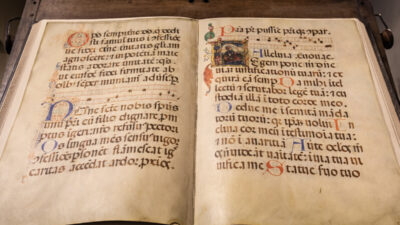
For centuries, readers only knew Caxton’s printed version. Then in June 1934, Walter Oakeshott, an assistant schoolmaster cataloguing the library of Winchester College, found an unknown manuscript copy. It showed that Caxton had revised the text, replacing the prisoner’s scattered prayers with a single closing note.
Microscopic examination later found ink smudges on the manuscript matching freshly printed pages in Caxton’s own type. The manuscript had once sat in Caxton’s print shop.
A troubled knight and a lasting legend
The Newbold Revel knight died on 14 March 1471 and was buried in Christ Church Greyfriars, near Newgate Prison, under an inscription calling him a “valiant soldier”. The tomb was lost when Greyfriars was destroyed in 1538, during the Dissolution of the Monasteries.
His book fared better. It influenced writers as different as Edmund Spenser, Alfred, Lord Tennyson, Mark Twain and John Steinbeck. Much of the Arthurian chivalry we still picture today comes from a prisoner who, if the leading theory is right, spent years breaking the very rules he wrote about.