In medieval England, a woman could ask a bishop to hold her funeral while she was still breathing, then be sealed inside a room attached to her village church for the rest of her life.
She was called an anchoress. Her cell had a window onto the altar, a window for her food, and a window for visitors who came to ask her for advice.
Dead to the world, alive in the wall
Unlike a hermit, an anchorite took a vow of stability of place. That meant permanent enclosure, usually in a cell built against a church wall.
The consecration rite closely resembled a funeral. In Germanic-speaking areas, from at least the 10th century, the bishop said the Office of the Dead as the anchorite entered the cell. If the doorway was walled up, he sometimes pressed his seal onto the wall. From that moment, the anchorite was considered dead to the world and a kind of living saint.
A room of 12 to 15 feet and three windows
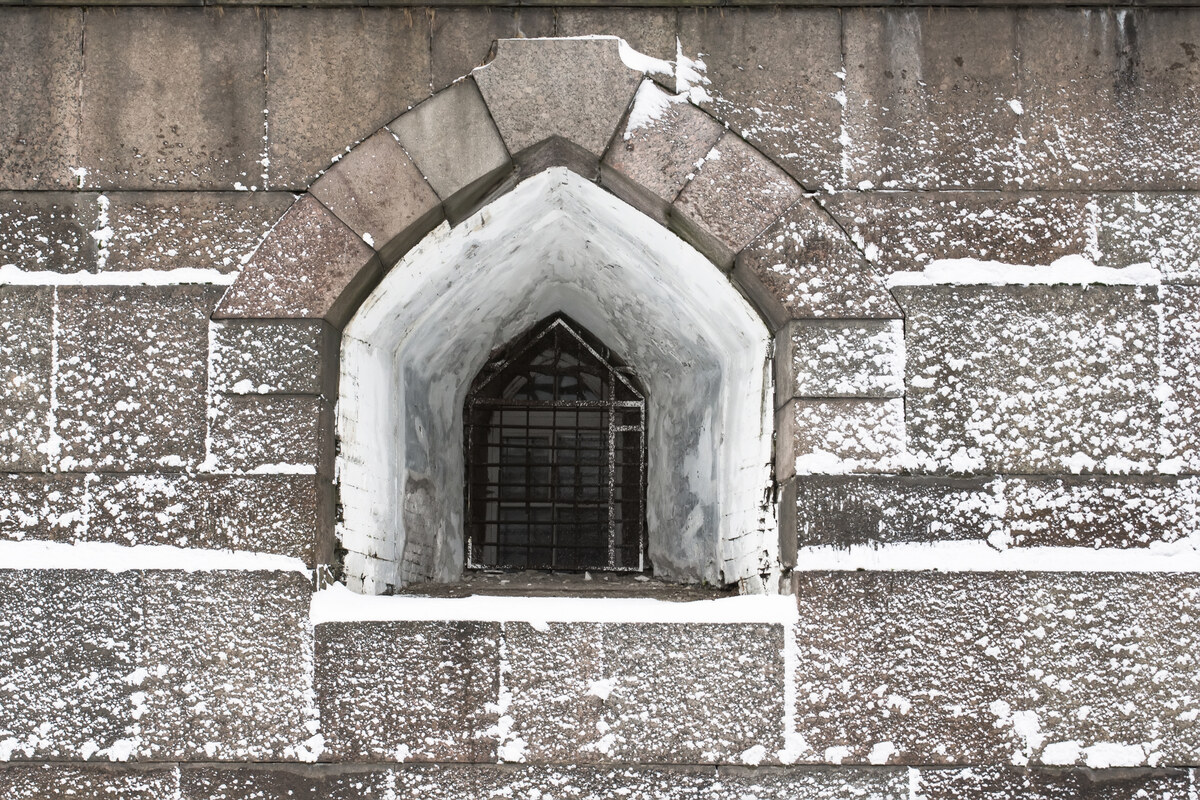
Most anchorholds were small, at most 12 to 15 feet square. Each had three windows, and each window did a different job.
The first, called a hagioscope or “squint,” faced the sanctuary, so she could watch the altar, hear Mass and receive the Eucharist. The second let someone take care of her physical needs. The third often faced the street, covered with translucent cloth to let in light.
Christine Carpenter, who petitioned to become the anchoress of Shere church in Surrey in 1329, received her food and drink through a metal grating on the outside wall. Inside the church, a quatrefoil and a hagioscope were cut into the stone for her.
The myth of the total recluse
It is tempting to picture a silent prisoner forgotten behind a wall. The evidence says otherwise.
Anchoresses were not alone. Julian of Norwich is known to have had several maidservants, among them Sara and Alice. When Aelred of Rievaulx wrote a rule for his recluse sister around 1161, he recommended exactly two housemates: an older woman as companion and doorkeeper, and a young maid for the domestic work.
And they were not cut off from the village either. Through those windows, they gave spiritual advice and counsel to visitors, and gained a reputation for wisdom. Though set apart by stone, the anchorhold sat at the very centre of the community.
A daily routine measured in prayer
The early 13th-century rule known as Ancrene Wisse gives a sense of the day. Its set devotions alone would take some four hours, on top of the church services she followed through the squint, plus private prayer and devotional reading.
Writers produced whole guidebooks for these women. Richard Rolle wrote The Form of Living for Margaret Kirkby, an anchoress at Hampole who preserved his texts. Walter Hilton composed the first book of his Scale of Perfection for an unnamed enclosed woman.
More women than men, and a way out that was rarely taken
The numbers are striking. Written evidence supports 780 anchorites on 600 sites in England between 1100 and 1539, and the real total was probably higher, since no consistent register existed. From the 12th to the 16th century, women consistently outnumbered men, by as many as four to one in the 13th century. By the 15th century the ratio had dropped to two to one.
The vow was meant to be permanent. Some refused to leave their cells even when pirates or looters were pillaging their towns, and burned to death when the church was torched.
Yet the story of Christine Carpenter shows the rule had a human side. She left her cell. Then, in 1332, she applied for permission to be enclosed again, and was granted it.
What the wall tells us
The dissolution of the monasteries under Henry VIII, between 1536 and 1539, effectively ended the anchorite tradition in England. A few cells survive, at Chester-le-Street in County Durham and at Hartlip in Kent.
They remind us that medieval communities did not only value people who fought or ruled. Some villages kept a person in the wall of their church, and trusted her prayers and her advice more than almost anyone’s.