Most stories about the medieval drawbridge jump straight to chains, counterweights, and heavy iron swinging up over a moat. The real mechanical history is stranger and slower than that. It includes one region that never used chains at all, one 1714 tweak almost nobody remembers, and one rival bridge design that survived on French soil until 1885.
The drawbridge that never touched a chain
In the south of France, the earliest bridges built into castle entrances skipped chains and counterweights completely. Instead of hanging from ropes and swinging upward, they rolled forward and backward along tracks made of wood, sliding into place more like a drawer than a door.
It was a genuinely different piece of engineering, not a rough draft of the chain-and-counterweight design that would later dominate. It gradually lost ground as balance mechanisms spread across the rest of the country.
By the time chains and counterweights had become the standard image of a castle gate, this rolling, rail-based design had all but disappeared from new construction. It survives today mostly as a footnote, a reminder that “the drawbridge” was never really one single invention.
A quiet fix that came before the famous one
History remembers 1728 as the year the engineer Bernard Forest de Bélidor solved the drawbridge’s biggest flaw, a counterweight system that lifted the bridge with a constant force instead of sudden, uneven jerks that strained the whole mechanism. Fourteen years earlier, in 1714, a far less famous engineer named Milet had already tried to fix that exact problem.
Milet’s answer was simpler: toothed, gear-like wheels added to the counterweight mechanism, meant to make the lifting motion more even and predictable. It was not the elegant, widely copied solution Bélidor would publish a generation later, but it counts as the first real mechanical improvement to a design that had barely changed in centuries.
Between Milet’s gears and Bélidor’s sinusoidal counterweight, military engineers experimented with so many variations that historians now count roughly ten distinct categories of drawbridge mechanism across five centuries. Almost none of them made it into the popular image of a castle gate.
The bridge design that survived until 1885
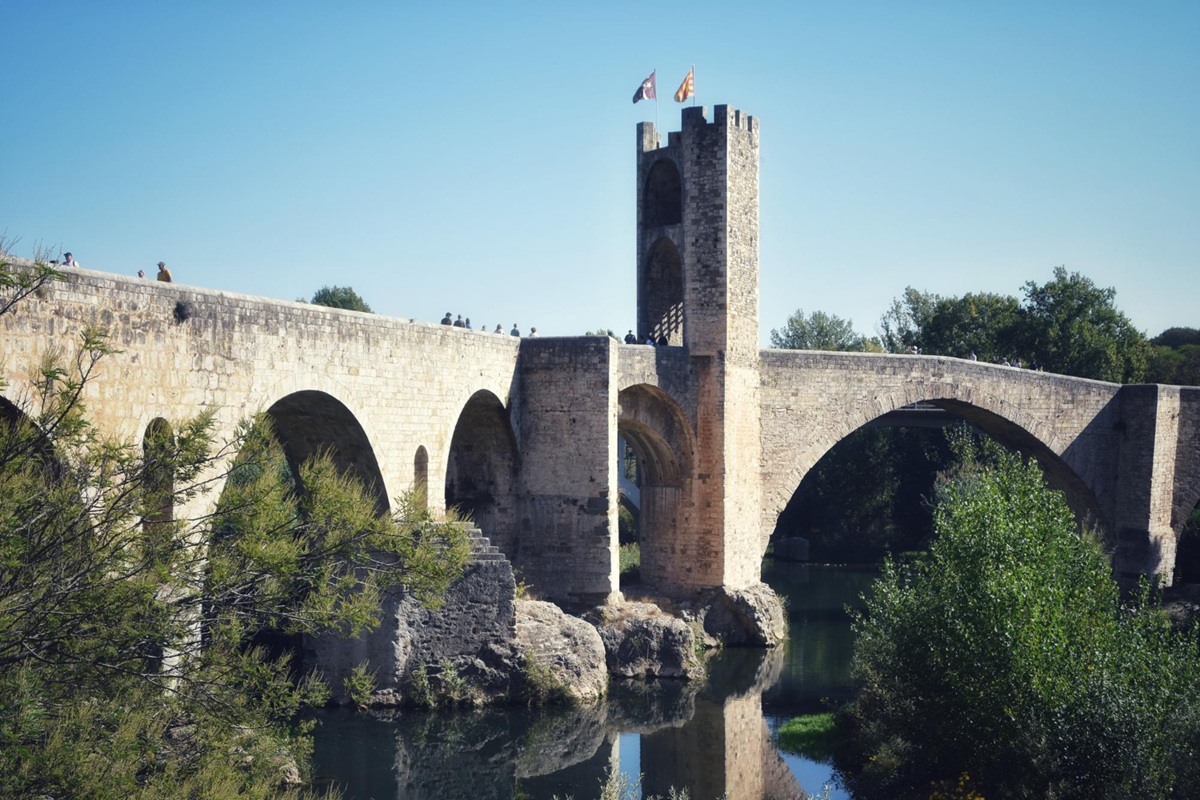
Drawbridges were not even the only crossing built into a fortification. Many castles and forts also relied on a pont dormant, a fixed bridge that simply stayed in place over the moat or ditch, with nothing at all to lift or lower.
That fixed design stuck around far longer than most people would guess, well into the age of gunpowder and rifled artillery. It was only after 1885 that the pont dormant disappeared completely from French military fortifications, replaced entirely by mobile systems built around diamond-shaped moats designed to drain water more efficiently.
History rarely arrives in one clean leap
None of these three chapters make it into the popular image of a medieval castle gate. There is no dramatic siege attached to a set of gear wheels from 1714, and no memorable scene built around a fixed bridge that, by design, never moved at all.
That is usually how real engineering history works. Not one brilliant invention arriving fully formed, but a long chain of small, forgotten fixes, regional detours, and quiet endings that never earned a headline of their own.