The Catholic Church tried to outlaw the crossbow in 1139, calling it too dangerous for wars between Christians. Nobody who actually fought a war listened. Here are six facts about the weapon that unsettled medieval Europe more than almost any other.
It reached Europe long after it was already old news
The crossbow was already centuries old by the time it defined medieval warfare. Chinese armies were using early versions during the Warring States period, as far back as the 5th century BC, without anything like the trigger mechanisms that came later.
Europe caught up far later. The oldest known depiction of a crossbow on the continent appears in an 1086 illumination, and the weapon only settled into its familiar medieval form in Italy around the mid-10th century.
A pope tried to ban it, and kings ignored him
In 1139, the Second Lateran Council formally condemned the crossbow in conflicts between Christians, branding it “hateful to God.” Pope Innocent II repeated the threat of excommunication for its users in 1143.
It changed nothing. Richard the Lionheart and his rival Philip Augustus of France both built dedicated crossbowmen units after the ban, chasing exactly the military edge the church was trying to suppress.
It needed no strength and no years of training
A longbow demanded years of practice and real physical strength just to draw. A crossbow only needed its mechanism cocked, then the shooter simply aimed and released, no accumulated skill required.
To medieval clergy, that was the real problem. Critics complained the weapon let “a coward kill the bravest of men without risk,” collapsing the individual courage chivalric warfare was supposed to reward.
One witness swore it could pierce a bronze statue
Byzantine historian Anne Comnène described the crossbow in her chronicle the Alexiade as “truly diabolical,” claiming a bolt could punch clean through a bronze statue and bury itself in a city’s stone walls.
The claim was almost certainly exaggerated. But a trained historian believing it possible says plenty about how far the weapon unsettled people who had never seen anything fire that hard.
Its fatal weakness was speed, not power
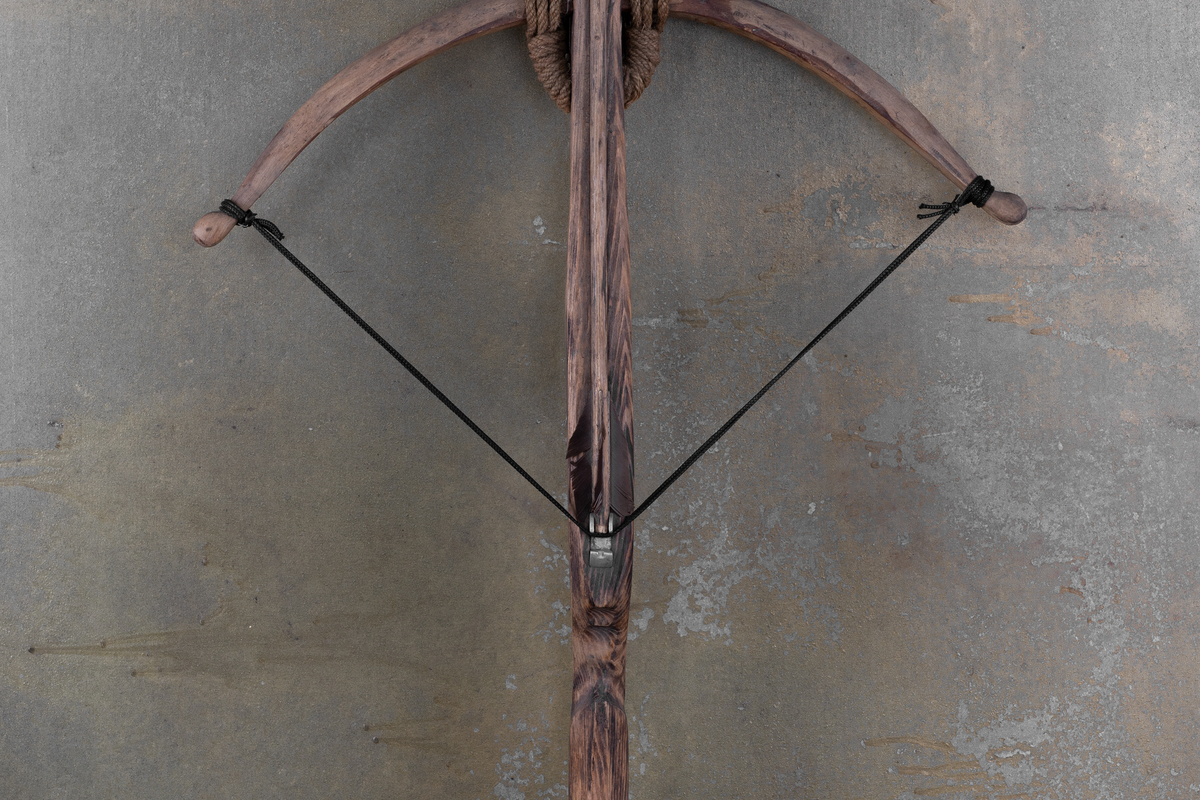
A skilled longbowman could loose ten to sixteen arrows a minute. A crossbowman, slowed by a mechanism that needed winding, managed only two to four bolts in the same time, and the heaviest models needed a winch or cranequin just to cock.
That gap turned crossbowmen into easy targets unless they fought behind shields or fortifications, forcing entire tactical formations to exist just to keep them alive between shots.
A wet string helped decide one of France’s worst defeats
At Crécy in 1346, France sent Genoese mercenary crossbowmen against the English line, exhausted from a long march and armed with bowstrings gone slack in the rain. English longbowmen, using hemp strings that tightened when wet, kept firing at full strength.
The mismatch helped turn Crécy into one of the most lopsided defeats of the Hundred Years’ War, a case study in how a few centimeters of damp cord could outweigh centuries of military reputation.
A weapon a pope tried to erase from Christian warfare ended up outlasting both his ban and the age of knights, undone in the end not by moral condemnation but by gunpowder. Six centuries later, it is still hard to think of many bans that failed quite so completely.