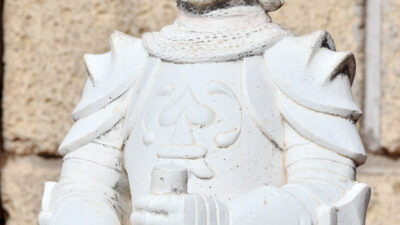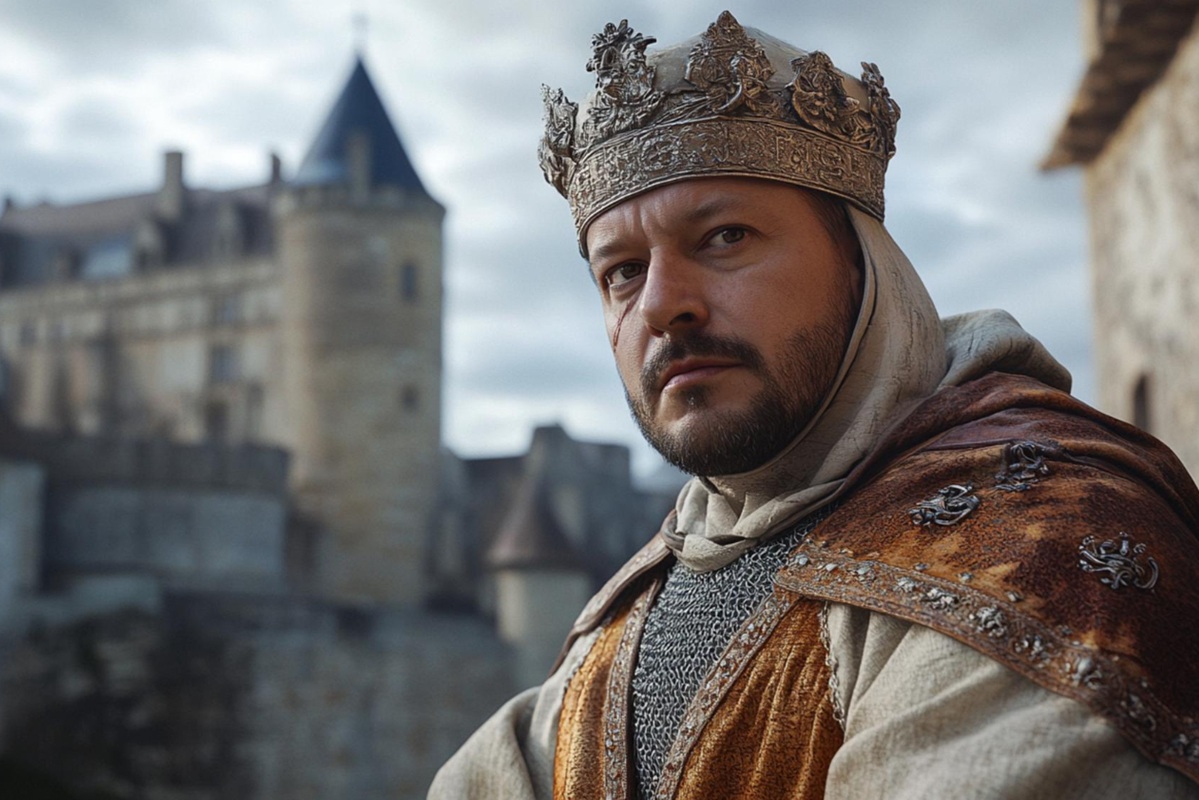
In the 1600s, a king of Poland and Sweden owned a full suit of chain mail that he actually wore, at a time when knights fighting in that kind of armor were already ancient history.
A costume from a war that had already ended
Jean II Casimir, king of Poland and Sweden from 1609 to 1672, possessed and wore a parade hauberk in the 17th century, long after this armor had any place on a real battlefield.
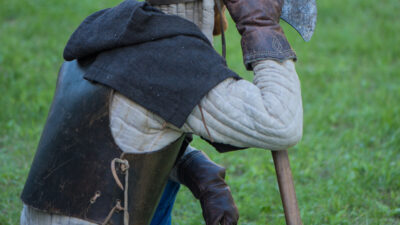
By his time, chain mail’s combat role had ended centuries earlier. From the 15th and 16th centuries onward, plate armor had already taken over most of the body’s protection, and the hauberk survived only as a secondary piece filling the gaps between rigid plates, when it wasn’t simply replaced by the padded jaque.
Putting on a full hauberk in the 1600s had nothing to do with readiness for war. It was a costume from a different century.
Kings had been putting on this same armor for 500 years
Long before Jean Casimir, the hauberk was already tied to royal image. In 1066, the Bayeux tapestry recorded Norman warriors, hauberks included, in the most detailed medieval depiction of this armor to survive.
A century later, Louis VII of France, who reigned from 1120 to 1180, had himself represented on his royal seal wearing a hauberk, not a crown or a robe, but this exact garment as the image of his authority.
Richard the Lionheart followed the same pattern. His seal from 1195 shows him in a full hauberk complete with a camail protecting his neck and shoulders, one of the clearest surviving depictions of a medieval king wrapped, head to toe, in chain mail.
Not a Viking invention, whatever the movies suggest
Popular culture often hands the Vikings credit for chain mail. Historians reject that outright.
Ring mail already existed across Europe and the Middle East well before the Viking age. During the First Crusade, between 1096 and 1099, the Arab armies facing Norman and French knights had a specific name for this armor. They called it Frankish, not Scandinavian.
The real debate among historians is narrower than that: did the hauberk spread through contact between Norman knights and Arab-Byzantine cultures met on pilgrimages to the Holy Land, or through technology crusaders brought home after 1099? Either way, Northern Europe isn’t in the running.
Even novelists couldn’t resist writing about its limits
The hauberk showed up often enough in medieval literature to prove how familiar it was to readers, not just soldiers.
The romance Amadis de Gaule describes a lance fragment lodging inside a hauberk’s sleeve, and a sword blade splitting one clean along a knight’s back, blunt reminders that mail stopped cuts and arrows but not a well-placed thrust or a heavy blow.
The Burgundian court poet Jean Lemaire de Belges referenced hauberts directly in his own work, Illustrations de Gaule et Singularités de Troie, proof the armor had a cultural life far outside the battlefield.
A costume that outlived its own war
By the time Jean Casimir put his on, the hauberk had already spent roughly two centuries as a relic rather than a battlefield necessity.
What survived wasn’t the armor’s usefulness. It was the image, the same one Louis VII and Richard the Lionheart had chosen for their own royal seals five hundred years earlier.
Armor built to stop a blade can keep sending a message about power long after the last blade it ever actually stopped.