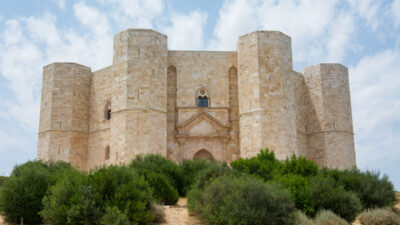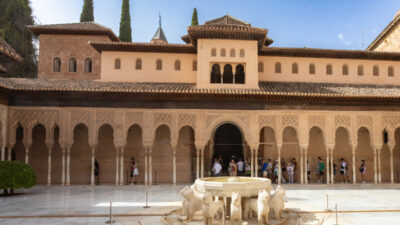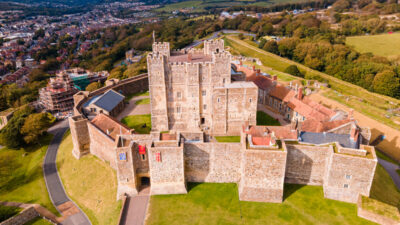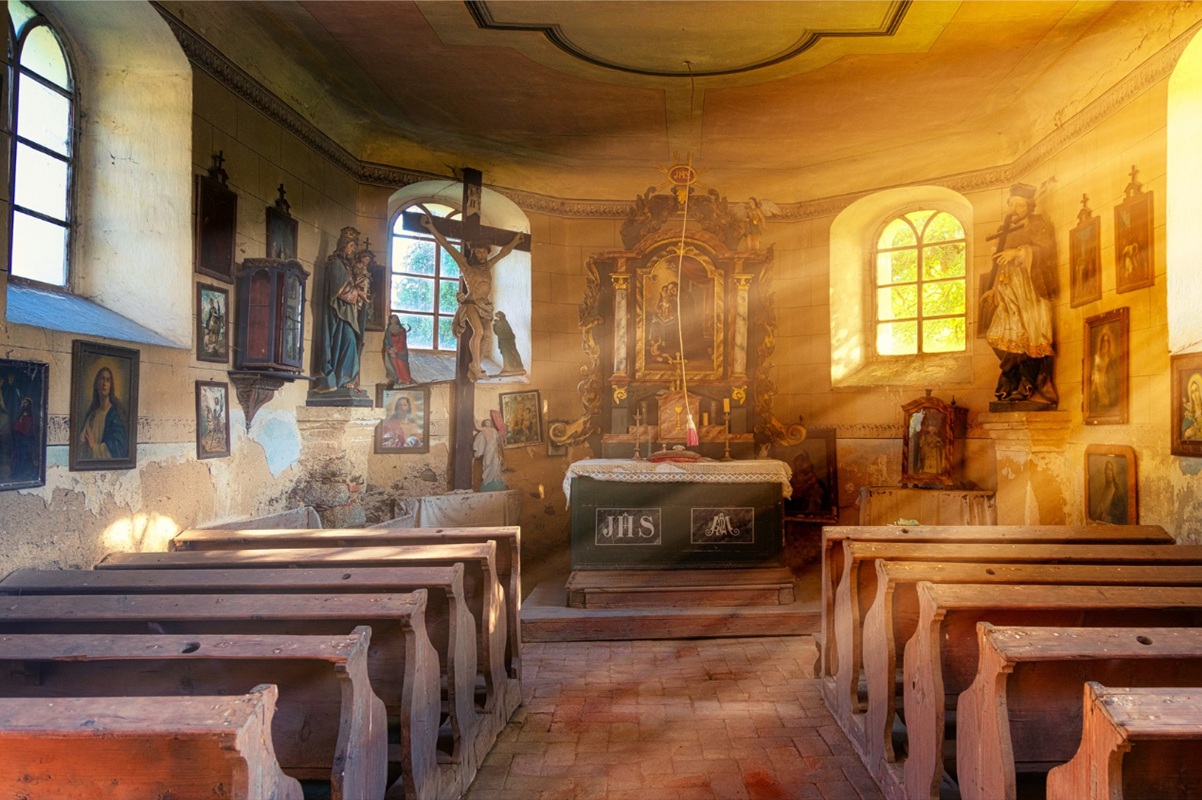
When raiders swept through exposed medieval regions, villagers often ran for the church, not the castle.
A defense network far bigger than any castle
Medieval fortification wasn’t just a story about castles. It also included fortified bridges, fortified farms, fortified mills, crenellated manor houses, and fortified churches.
Together they formed a dense defensive mesh that covered entire territories, not just the seats of noble power.
Fortification is often pictured as a privilege reserved for warrior nobility. In reality, bourgeois town houses, church buildings, village enclosures, and working farms were all part of the same defensive fabric, at every level of medieval society.
The church that became the last refuge
In border regions and unstable territories, the fortified church was an everyday reality.
Villagers stored their belongings there and hid their families during raids, turning the local church into the community’s last line of defense.
These weren’t symbolic gestures. Some Romanesque churches in the south of France still stand today with their original crenellations and hourds intact, wooden fighting galleries built to drop stones and arrows straight down on attackers below.
Same stone walls, three different jobs
Whether the walls belonged to a castle, a farm, or a church, the walkway running along the top did three jobs at once. It let soldiers move quickly around the whole perimeter, watch the approaches, and fire down through crenellations and arrow slits.
Towers made the system even more brutal. They weren’t just tall lookout points. They let defenders fire directly across the wall sections between them, turning every stretch of curtain wall into a crossfire zone for anyone trying to climb it.
The scale of a building even revealed who lived there. Kings raised cylindrical donjons on the philippien model, great lords built quadrangular keeps, smaller lords settled for earthen mottes, and the bourgeoisie made do with crenellated houses. The entire feudal hierarchy was written directly into the landscape.
The people who built the walls rarely lived safely behind them
None of this defense came free. Under the feudal system, peasants owed their lord a fixed number of days of labor every year, just to build and maintain his fortifications.
It created an uneasy trade: protection from the same walls that were raised, in part, on the backs of the people who needed protecting most.
What outlasted the Middle Ages, and what didn’t
Gunpowder didn’t end this system overnight either. For more than a century, garrisons adapted with new artillery platforms, lowered towers, and thickened ramparts, before the whole approach was finally replaced by bastioned fortresses built from the Renaissance onward.
Defense in depth was the whole point of the system. Even after outer walls fell, a garrison could keep fighting from behind the next line, all the way back to the donjon.
That principle protected French strongholds for centuries. It didn’t protect the donjon of Coucy, in Aisne.
At 54 meters, it was the tallest keep ever built in medieval Europe, the very last resort in a chain of defenses meant to survive anything. In 1917, a retreating German army dynamited it in a single afternoon, ending in minutes what centuries of sieges never managed to finish.