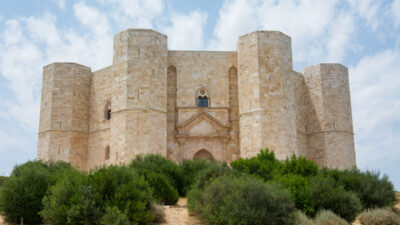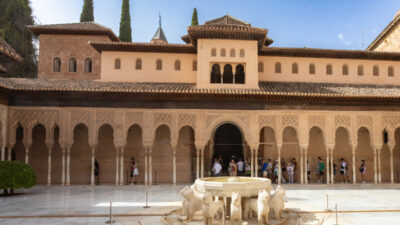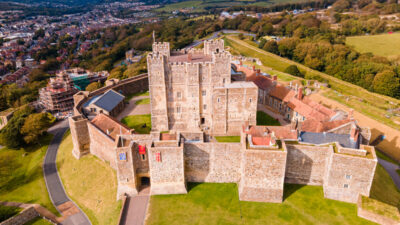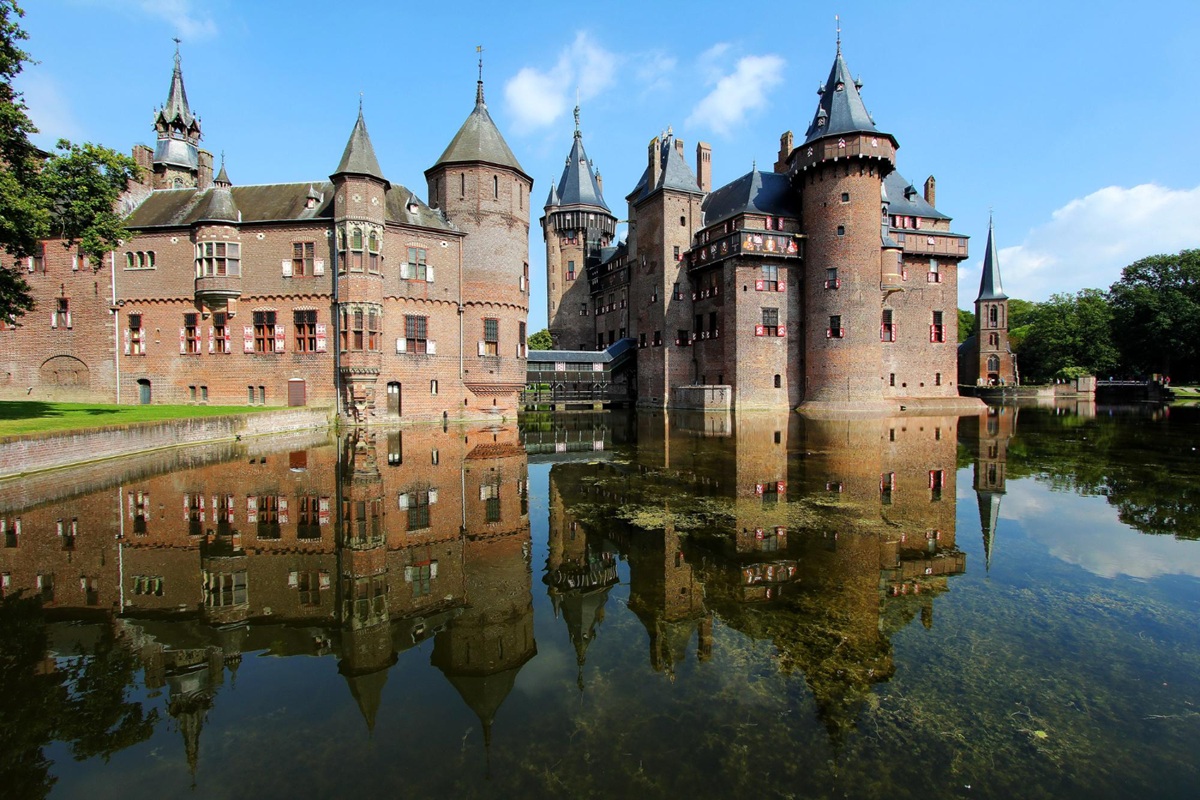
Inside a medieval donjon, the tallest tower of a castle, a lord’s family could find a private bedroom, a chapel and a great hall for receiving guests, all stacked one above the other. This wasn’t a grim fortress. It was a home.
The myth that refuses to die
Pop culture loves the image of the medieval castle as a freezing stone box built purely for war, with nothing inside but soldiers and weapons.
The reality is almost the opposite. A medieval castle combined two functions that were never separated: defense, yes, but also administration and daily residence. It housed the lord’s family, his archives, his treasures, and an entire court depending on how powerful the lord was.
A tower built to be lived in
The donjon itself, the highest and most defensible tower, took its name from the Latin dominus, meaning lord or master. At first the word didn’t even refer to a single tower. It described the whole fortified complex where the lord actually lived.
Early rectangular donjons from the 10th and 11th centuries were divided into three distinct living spaces: the aula, a great hall for receptions, the camera, private apartments, and the capella, a chapel. The donjon of Loches, built in the Loire Valley in the 11th century and rising 37 meters, is a textbook example of this “donjon-palace” model.
That tower was the work of Foulques Nerra, count of Anjou, who built some of the first great stone keeps in the Loire Valley in the early 11th century, at Langeais around 994 and Loches around 1010. His model of a residence stacked inside a tower of stone went on to shape castle building across Western Europe.
Not every tower got the same treatment
Comfort wasn’t universal, which makes the French and English model even more striking. In the lands of the Holy Roman Empire, lords built cylindrical towers known as bergfrieds.
A bergfried had no living quarters whatsoever. It was a bare watchtower meant only for combat, with none of the private rooms, chapels or halls found in a French or English donjon. The comfort built into Western European keeps was a deliberate choice, not a given.
The donjon wasn’t a dungeon either
English speakers tend to assume the donjon’s main job was locking up prisoners. That’s a much later, marginal use of the word.
In the Middle Ages, the donjon was first and foremost the lord’s main residence, or his final refuge if the outer walls fell. Prisoners were usually kept in separate towers entirely.
That doesn’t mean the building was simple. Visitors were deliberately barred from learning its interior layout. Narrow corridors, staircases with steps of uneven height, and low lintels were built on purpose, turning the tower into a maze that could disorient any attacker who made it inside.
A 19th-century word for a medieval life
Here’s the detail that exposes the whole misunderstanding: the term “chateau fort” itself didn’t exist in the Middle Ages. It only entered the French language in 1835, during the Romantic era’s fascination with an imagined medieval past, fueled by writers like Walter Scott and Victor Hugo.
Medieval people simply said castrum or castellum. Even many of the castles still standing today were heavily restored in the 19th and 20th centuries to match that same romantic vision rather than their original medieval appearance.
The dark, cold, purely military castle of popular imagination owes more to 19th-century novelists and restorers than to the people who actually lived, raised families and held court behind those walls.