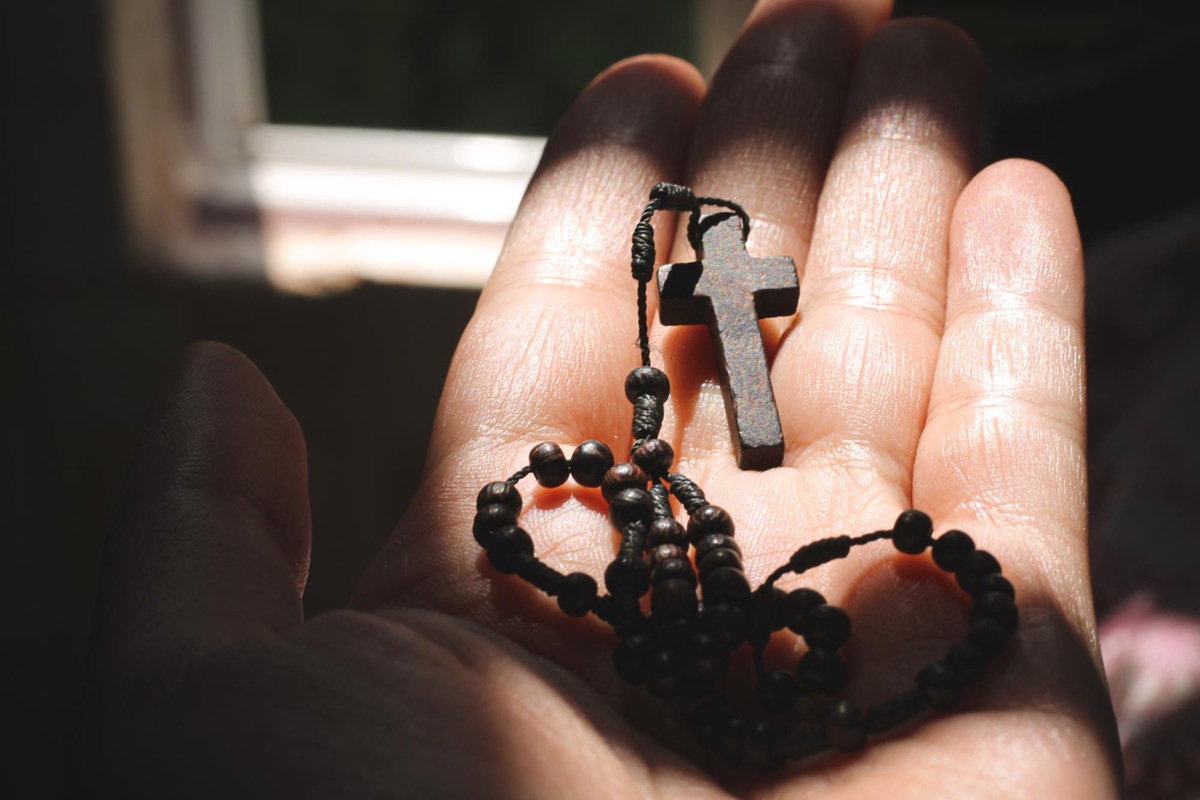
Popular retellings of the rosary’s origin skip nine centuries of history to land on one dramatic scene: Dominic de Guzman kneeling in a forest near Toulouse, receiving the finished prayer from the Virgin Mary after three days of prayer. It is a powerful story. It is also not how the object in your hand actually came together.
The legend everyone knows
According to Catholic tradition, Dominic de Guzman received the rosary in a vision during the early 13th century, while preaching against Cathar heresy in southern France. The story casts the object as a single gift, handed down complete in one moment.
It is the version most people repeat. It is also the version the historical record complicates almost immediately.
Monks were already counting prayers centuries earlier
Long before Dominic, monks already needed a way to track repetitive prayers without losing count. Paul of Thebes reportedly used piles of pebbles, moving one aside with every recitation.
Anthony the Great is credited with a knotted cord device for the same purpose, a tool still used by monks on Mount Athos today. The instinct to count devotion by hand predates the Dominicans by hundreds of years.
In the 12th century, the Cistercian order adopted this style of prayer counting and helped spread it across monastic Europe, well before Dominic’s forest vision is said to have taken place.
The Dominicans turned a habit into a movement
What the 13th-century Dominicans actually did was institutionalize an existing devotional habit and turn it into a tool of preaching and popular teaching. Around this same period, the term rosarium, meaning rose garden, entered use for this growing set of prayers.
The revelation story, whether read as history or legend, marks the moment the practice gained a founding figure and a clear mission. It does not mark the moment the object took its final shape.
It took another 250 years to finish the design
The rosary most Catholics recognize today, organized around fifteen mysteries to contemplate while praying, was not fixed until 1470. That year, the Dominican friar Alain de la Roche founded one of the first rosary confraternities, in Douai, and organized those fifteen mysteries into the structure still used in worship.
He actually preferred a different name for his creation, the Psalter of Christ and the Blessed Virgin Mary. That name never caught on. The structure did.
A prayer bead built one layer at a time
Even the word chapelet carries this layered history. It comes from the old French chapel, meaning flower crown, tying back to garlands of roses once offered to the Virgin. Reciting the prayer was imagined as weaving a crown of roses, one Ave Maria at a time, one petal at a time.
The most precious surviving examples, carved from ivory or set with gemstones, often hide a small medallion or relic at their center, turning a counting tool into a portable reliquary. Every layer added across those centuries, a monk’s pebble, a knotted cord, a friar’s confraternity, is still folded into the object believers hold today.
A single vision makes a better story than a thousand years of monks quietly refining a habit. But the second version is the one that actually explains why the rosary looks, and works, exactly the way it does.