In 1283, at the royal court of Naples, a French poet staged a play with singing shepherds, spoken dialogue, and a live musical score. Historians consider it the first secular musical theatre in Europe. It looks a lot like opera, four centuries before Monteverdi wrote one.
What a trouvère actually did
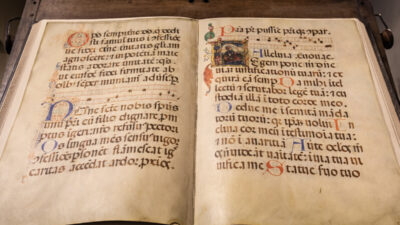
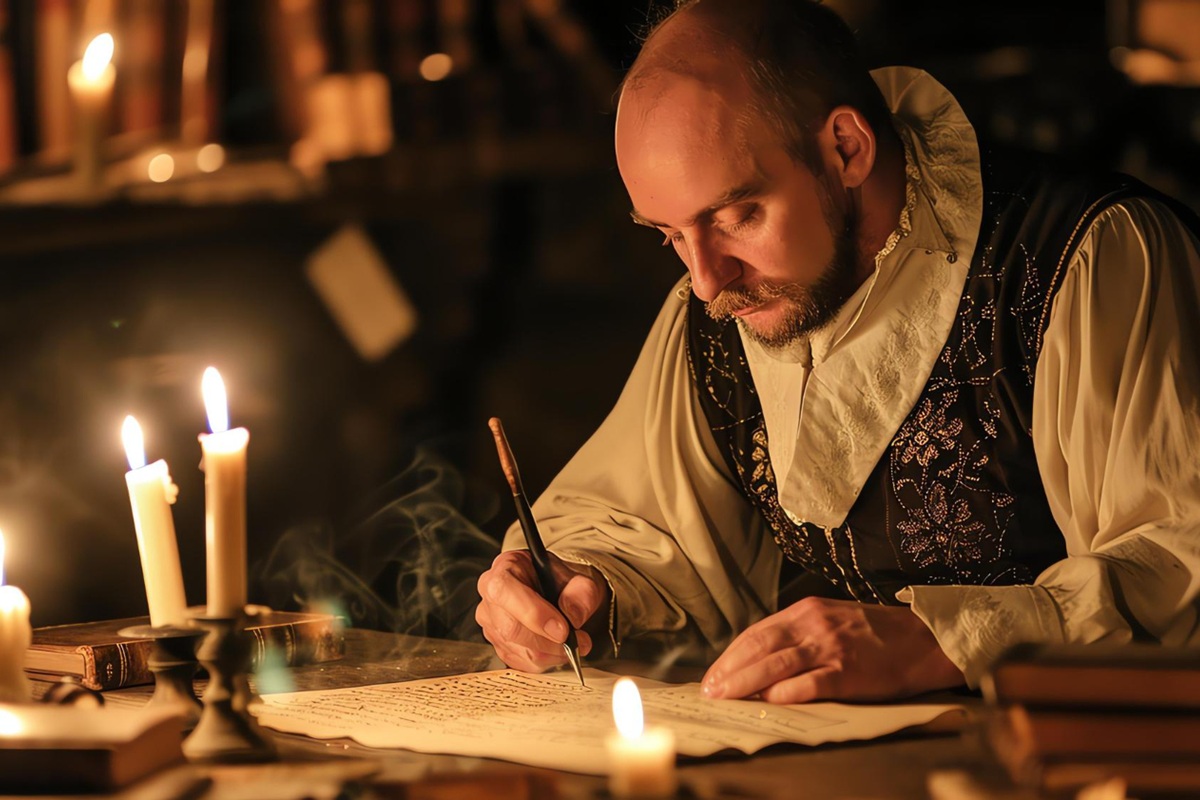
A trouvère was a poet-composer from northern France who wrote and performed his own work in the language of the north, Old French, rather than Latin or the Occitan of the southern troubadours. That single choice helped give French literature its first great vernacular monuments.
Trouvères were not the same as jongleurs. Jongleurs and minstrels performed other people’s songs, accompanying themselves on the vielle. Trouvères wrote the words and the music themselves, a distinction of status as much as skill.
Their repertoire was wide: the rotrouenge, a refrain song; the jeu-parti, a poetic debate on questions of love; and the pastourelle, a dialogue between a knight and a shepherdess. That last form would matter more than anyone expected.
The play that got there first
Adam de la Halle, a trouvère from Arras nicknamed the “Bossu d’Arras” (nobody actually knows if he was hunchbacked), is considered the last great trouvère and the inventor of secular musical theatre.
Around 1283, at the court of Charles d’Anjou in Naples, he staged the Jeu de Robin et Marion, a pastoral built on the old shepherd-and-shepherdess dialogue, but with music, spoken scenes, and dancing woven together into a real performance.
It is recognized as the first known secular musical pastoral in Europe, and a direct ancestor of opéra-comique. Four hundred years before the word “opera” existed, the format was already on stage.
A king who sang his heart out
Thibaut IV of Champagne never had a normal path into poetry. His father died on May 24, 1201, six days before he was born, so he became Count of Champagne before he had even left the womb.
King Philippe Auguste stood as his godfather and raised him at the French court. In 1234 he was crowned King of Navarre, and in 1239 he led the Crusade of the Barons to the Holy Land, the only noble of royal rank to go.
Between the crown and the crusade, he composed 71 documented lyric works, including 37 love songs, and had some of them painted directly onto the walls of his palaces in Troyes and Provins.
Contemporaries whispered that his most intense love songs were coded messages to Blanche de Castille, Saint Louis’s mother. Nothing proves it, but the rumor alone gave a king’s poetry a political, almost scandalous edge.
Poetry wasn’t just for kings
The trouvère movement was not confined to royal courts. In Arras, Valenciennes, and Douai, associations called puys brought together merchants, artisans, and bourgeois who wrote and competed in poetry as a matter of course.
For the 13th century, that was a genuine democratization of lyric composition, happening in the same towns that were producing wool, cloth, and Adam de la Halle himself.
An art form waiting for its name
The trouvères helped fix French as a literary language centuries before anyone thought to call it that. Adam de la Halle’s little pastoral in Naples did something similar for musical theatre.
Nobody in 1283 called it opera. It would take four more centuries, and a composer in Venice, before the word finally caught up with what a poet from Arras had already put on stage.