A medieval mercenary’s spare weapon gave English the word freelance. A single suit of chain mail could take months to finish, one tiny ring at a time. Six medieval weapons still leave fingerprints on modern life, in words, gestures and even the shape of a human spine.
The word freelance comes straight from a spare lance
In the final decades of the Hundred Years’ War, English and French captains found new work in Italy. Cities like Florence, Siena and Milan paid mercenary companies to fight their battles.
These captains, men like John Hawkwood, answered to no king. Their troop was simply their “free lance,” a lance not bound to any single lord’s service, available to whoever paid best.
The term crossed directly into modern English. Anyone who works job to job without a permanent employer is still, technically, running a free lance.
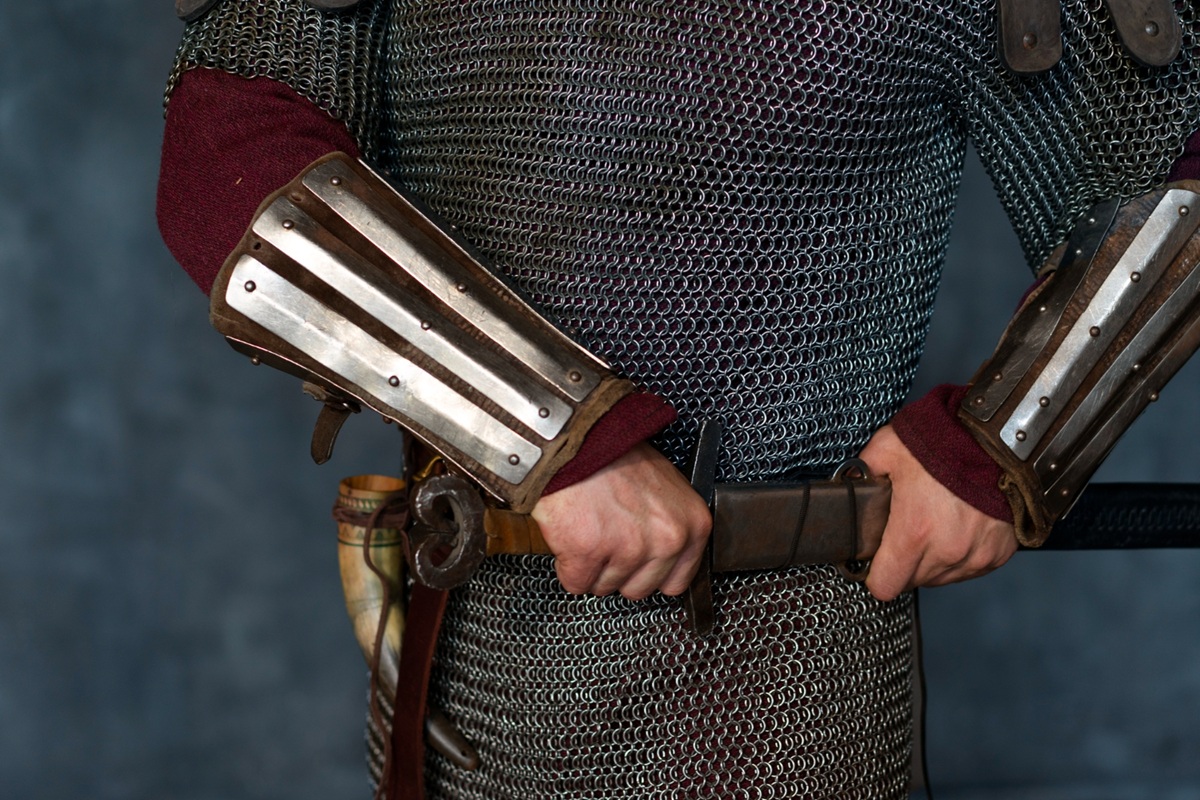
One suit of chain mail took 30,000 hand-riveted rings
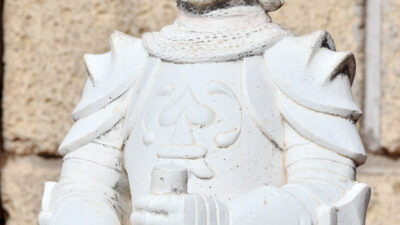
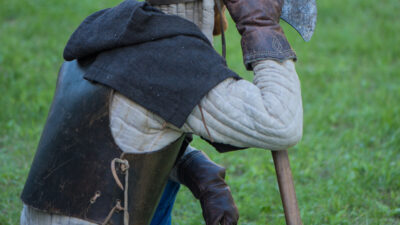
The hauberk, the mail tunic worn by knights and men-at-arms, was built ring by ring. Each individual ring was riveted shut by hand, a task that could take hundreds of hours to complete.
Whole towns specialized in the trade. Chambly, Paris, Bayeux and Cambrai in France, along with Lombardy in Italy, became known for producing hauberks, some lighter and finer than others.
Owning a hauberk could be a legal requirement, not a luxury
In feudal Normandy and Brittany, a specific type of landholding called the “fief de haubert” came with strict conditions. Whoever held that land had to be knighted at 21 and own a horse, a sword and a complete hauberk.
That equipment represented a genuine fortune, out of reach for many fighters. A line from the 12th-century poem Garin le Lorrain has a soldier wishing simply for “a little hauberk” of his own, a small mercy compared to the full set.
Longbow archers trained from age 7, and it reshaped their spines
English and Welsh archers began training as children, gradually building up the strength to draw bows with a pull of up to 180 pounds.
Autopsies of medieval Welsh archers have found permanent spinal deformities, physical evidence of decades spent repeating the same motion. In return, an experienced archer could fire up to sixteen arrows a minute.
A rainstorm helped decide the battle of Crécy
English longbows used strings made of hemp, which actually grew stronger when wet. Crossbows favored by Genoese mercenaries fighting for France used strings made of sinew, which lost tension in damp weather.
Rain fell before the armies met at Crécy in 1346. That one detail of string material helped give English archers a critical edge over crossbowmen who should have outranged them.
Tournament lances were built to snap, war lances were not
In the joust, lances carried a blunted tip or a crown-shaped “coronel” designed to shatter on impact instead of piercing armor. Breaking a lance cleanly on an opponent’s helmet or shield actually scored more points than knocking them off their horse.
A real war lance was the opposite: built to survive a full cavalry charge without breaking, concentrating the weight of horse and rider into a single devastating point of impact.
What these weapons left behind
None of these six objects survive only in museums. One lives on in a word freelancers use to describe their own work. Another left its mark in the bones of the men who carried it. A third turned a rainy morning into a turning point of a war that lasted over a hundred years.
The next time someone signs on as a freelancer, they are, in a very literal sense, continuing a habit that started on medieval battlefields.