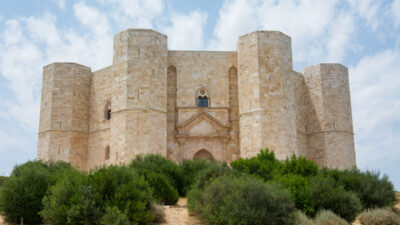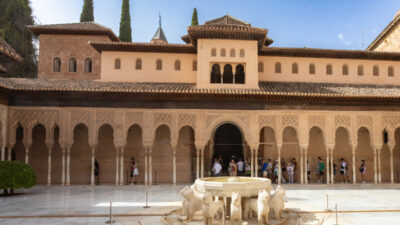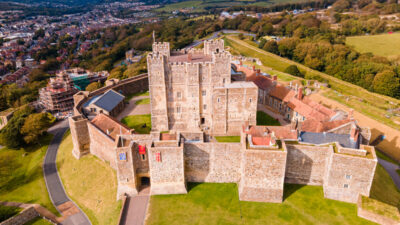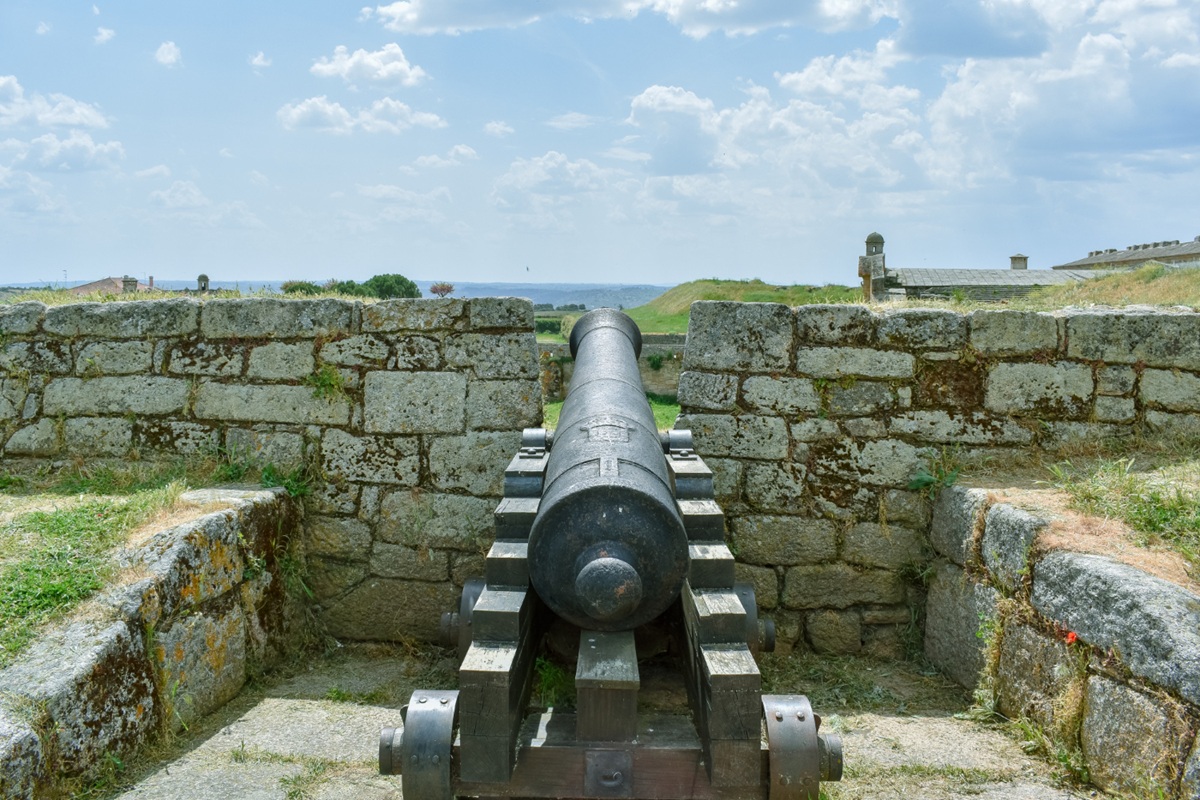
In the early 1600s, King Henri IV of France ordered dozens of fortresses torn down or stripped of their defenses, judging them militarily obsolete. Four centuries later, in a forest in Burgundy, a team of builders is putting a brand new one up, stone by stone, using nothing but the methods a medieval mason would have recognized.
A building with two jobs, not one
A château fort was never just a military structure. By definition, it combined a defensive role with an administrative and residential one, sheltering a lord’s family, his archives, his treasury, and, depending on his standing, an entire court.
That dual purpose is what separated a château fort from a simple fort or an unfortified palace. Take away either half, the defense or the household living inside it, and it stopped being a true château fort at all.
Born to stop the Vikings
The first stone castles in France trace back to the 9th century, after the collapse of the Carolingian Empire left the region exposed. The Edict of Pîtres actively encouraged lords to fortify their land against Viking raids, and the castral movement took off from there.
Around the year 1200, King Philip II Augustus pushed the idea further with a coordinated construction campaign across the kingdom, developing what became known as the Philippian model: a regular layout, round towers, and a fortified gatehouse that became the standard for French military architecture.
For roughly four centuries, that combination of household and fortress kept spreading across the country, reshaping how power was built, quite literally, out of stone.
Then a king wrote the last chapter
That momentum did not last forever. By the 17th century, Henri IV judged that many of these fortresses served no real military purpose anymore, and ordered a wave of demolitions and dismantlements across the kingdom.
That decision is treated as the definitive close of the château fort era, the moment the centuries-long tradition of building private fortified residences in France effectively came to an end.
Except somebody is doing it anyway
In Burgundy, a team of artisans is currently rebuilding a 13th-century château fort completely from scratch, relying only on construction methods faithful to the period.
The project, known as Guédelon, is not a replica built for tourists to admire from behind a rope. It is a working experiment that lets archaeologists watch, step by step, exactly how these fortresses were actually built, the same knowledge Henri IV’s demolition crews could tear down but never truly erase.
And yet the building rising in that Burgundy forest is not quite a real château fort in the full medieval sense. Nobody lives inside it. There is no lord’s family, no archives, no treasury, none of the household life that once defined the second half of the word.
An ending that never really stuck
A king can order stone walls torn down. He cannot erase the knowledge of how to raise them back up.
Centuries after Henri IV signed off on the end of an era, the hands that built it are back at work, one stone at a time, proving that some endings only look final from a distance.