In the summer of 1410, a mid-ranking knight who had missed the biggest battle of his life saved the Teutonic Order from annihilation. Three years later, his own brothers removed him from power, and he ended up in a jail cell in Danzig.
His name was Heinrich von Plauen, and his career is one of the strangest rises and falls of the late Middle Ages.
A knight nobody had heard of
Von Plauen was born around 1370 in Vogtland, a region between Thuringia and Saxony. Every male in his family was baptized Heinrich, which is why historians call him “the Elder” to tell him apart from a relative with the exact same name.
He arrived in Prussia around 1390 as a guest of the Teutonic Order and only later became a full member. For twelve years, he held no important post. In 1402 he became commander (Komtur) of Nessau, then of Schwetz in 1407.
In other words, he was a provincial manager in a military order, not a war hero. That was about to change very quickly.
The man who missed Grunwald
On 15 July 1410, the Teutonic Knights were crushed by Polish and Lithuanian forces at the Battle of Grunwald. Most of the Order’s leadership was killed or captured on the field.
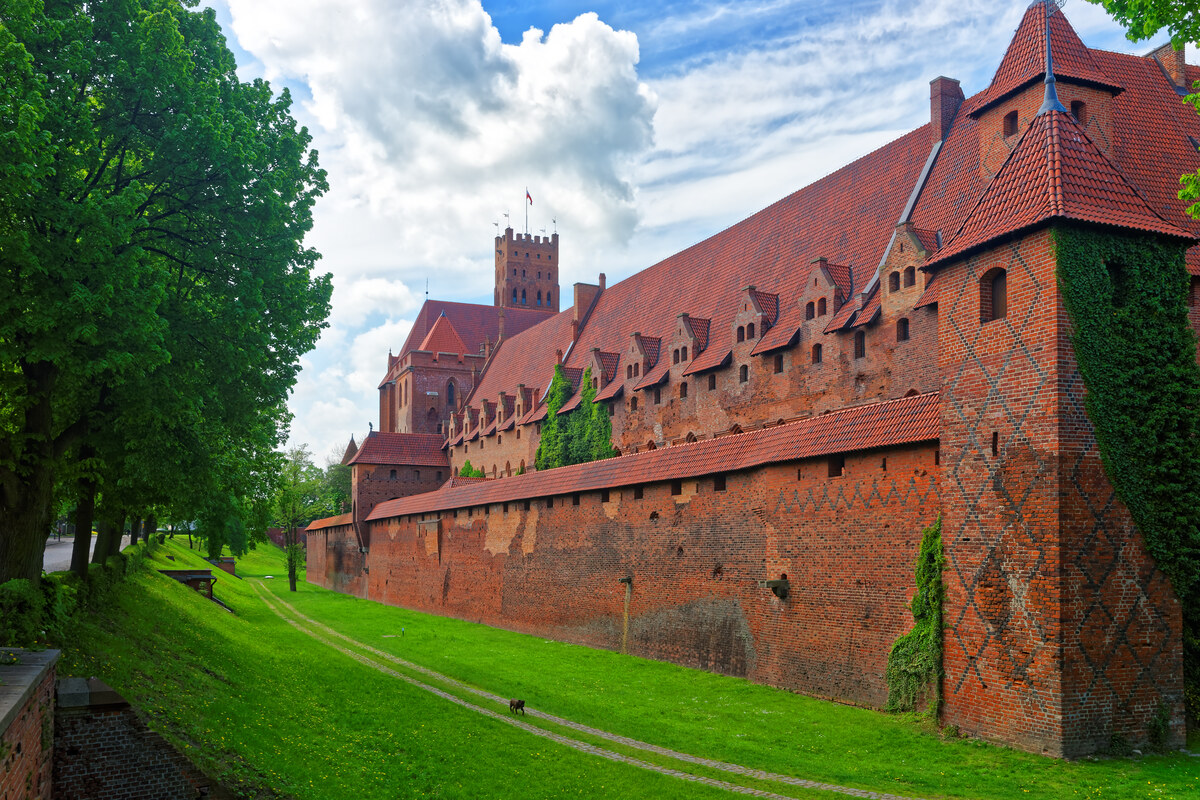
Von Plauen was not there. He had been left in Schwetz in command of a reserve of about 3,000 men. When the news arrived, he marched them to Marienburg (today Malbork), the Order’s capital, guessing correctly that the victorious armies were heading there.
Historians still debate whether he followed pre-battle orders from Grand Master Ulrich von Jungingen or simply filled the void on his own initiative. Either way, he started writing letters to Germany as if he were already the Grand Master, asking for troops and money.
Burning his own town to save a castle
The Polish and Lithuanian armies moved slowly, about 15 kilometers a day. Modern historians call that delay one of their greatest tactical mistakes. It gave von Plauen just enough time to prepare.
The day before the enemy arrived, on 25 July, he ordered the town outside the castle to be burned. The besiegers would find no shelter, and the defenders would have a clear field.
It worked. King Jagiełło, convinced Prussia had already fallen, was busy handing out land to his nobles. His army ran short of ammunition, suffered from dysentery, and wanted to go home for the harvest. On 19 September, the siege was lifted.
Von Plauen then chased the retreating army and, by the end of October, had recaptured almost every fortress except those on the Polish border.
From savior to Grand Master
In November 1410, the Order rewarded him by electing him its 27th Grand Master, ahead of officials who outranked him and had actually fought at Grunwald.
The job was brutal. The Peace of Thorn, signed on 1 February 1411, saved the Order’s core lands, but it also demanded a war indemnity worth six million Prague groschen, payable in four installments.
To raise the money, von Plauen imposed a special tax on the Prussian cities. Danzig refused and held out against a blockade until April 1411. He also uncovered a plot inside the Order and had one of the knights involved, Nicholas von Renys, beheaded. None of this made him popular.
Yet, to universal surprise, he made the final payment on time in January 1413.
Jailed by his own brothers
Von Plauen wanted another war with Poland. In late summer 1413, he massed thousands of men on the borders. The campaign collapsed, partly because his own knights refused to obey.
On 9 October 1413, Michael Küchmeister von Sternberg, the Order’s grand marshal and a supporter of peace talks, removed him from office. Von Plauen officially resigned and Küchmeister took his place.
At first, the fallen hero was sent to command a minor fortress. Then came the twist: King Jagiełło, his old enemy, refused to back the new regime and demanded that von Plauen be restored. Soon after, von Plauen was arrested.
He was only released from the Danzig jail in 1418, the very city whose resistance he had broken with a blockade seven years earlier.
A quiet end, and a grave at Marienburg
After his release, von Plauen became procurator of Lochstädt, a small post near Königsberg. He died there in 1429, far from the power he had once held.
He was buried at Malbork Castle, the fortress he had saved. It is a fitting final address for a man whose whole story fits inside one summer of defiance, and whose reward was to discover that saving an institution does not mean it will ever forgive you.