In October 1517, a German friar nailed a document to a church door in Wittenberg. Within weeks, copies of it were circulating across Europe, not because word of mouth was unusually fast that year, but because a machine had already spent decades getting ready for exactly this moment.
A machine built to multiply words
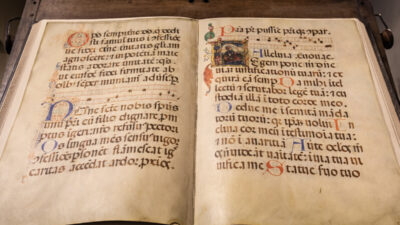
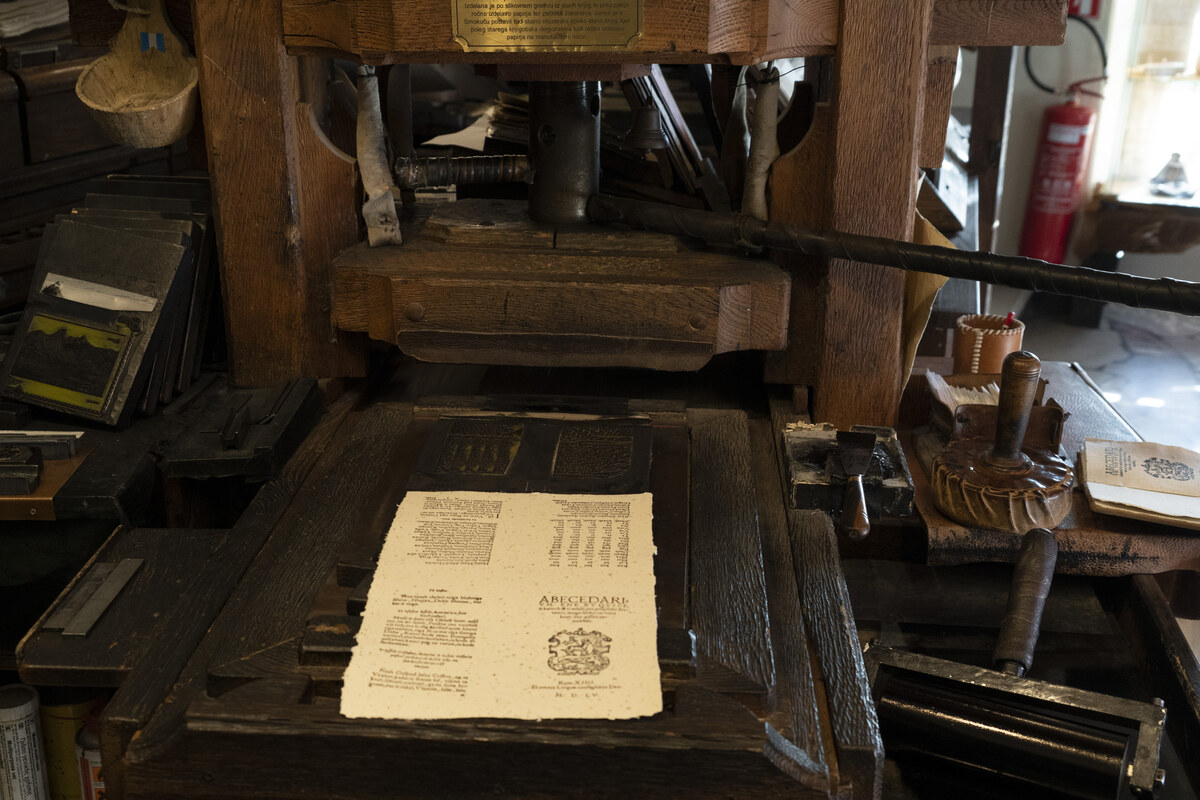
By the time Martin Luther needed it, the printing press was not a novelty sitting in a single workshop. In the fifty years after Gutenberg’s first Bible, roughly 20 million books were printed across Europe, an output no scribe working by hand could ever have matched.
Germany alone had more than 200 print workshops by the year 1500. Presses had already been set up in every major European city between 1464 and 1481, decades before Luther ever picked up a pen against the Church.
That matters more than it sounds. The network capable of spreading Luther’s words did not appear because of him. It was already sitting there, mature and running at full capacity, waiting for someone to give it something worth copying.
One document, an unstoppable spread
That existing infrastructure is what turned a local protest into a continental event. Luther’s 95 theses were printed and reprinted until they had reached readers across Europe in a matter of weeks, an event historians describe as impossible without the printing press behind it.
Without that technology, the theses would likely have stayed a Wittenberg argument, read by a handful of clergymen and forgotten within a season. With it, one friar’s protest became the spark of the Protestant Reformation.
The medieval version of going viral
What made the spread so hard to stop was not one printer deciding to broadcast Luther’s words to the continent. It was hundreds of independent workshops, each free to copy and recirculate the same text on their own, with no central authority controlling where it went next.
That decentralized structure, one document endlessly reproduced by operators with no coordination between them, looks remarkably familiar today. It is the same basic mechanic behind anything that spreads widely now: not one loud voice, but many small, independent ones repeating the same message until it is everywhere at once.
No single workshop needed permission from another to print another run. That absence of a gatekeeper is exactly what made the theses impossible to contain once they left Wittenberg.
A Reformation that needed hardware, not just an idea
Luther’s timing mattered, but so did the machinery already sitting in hundreds of European workshops. A system capable of producing millions of books had existed for decades before anyone used it to fracture the Catholic Church.
The 20 million books already printed by then were proof the network could handle enormous volume. Luther did not have to build anything. He only had to feed it a text that people wanted copied.
Ideas still move at the speed of their machine
Five centuries later, the lesson still holds. An idea spreads only as fast as the infrastructure built to carry it, whether that infrastructure is a room full of hand-operated presses in 15th-century Mainz or a network of independent operators no one can fully see today.
Luther supplied the spark. Decades of accumulated printing capacity supplied the fuel. Neither one alone would have changed a continent.