In June 1099, the crusaders camped outside Jerusalem had walls fifteen metres high in front of them and almost no wood to build anything that could reach the top. The solution sailed into a nearby port a few days later, and its crew began taking their own ships apart.
A city that had been stripped bare
The crusaders reached Jerusalem on 7 June 1099, after a march that had started from Antioch in January. Waiting for them was the Fatimid governor, Iftikhar al-Dawla, and he had used his time well.
He had poisoned every well in the surrounding area. He had cut down every tree outside the city. He had expelled Jerusalem’s Eastern Christians, fearing a betrayal like the one at Antioch, where an Armenian named Firouz had opened a gate to the attackers.
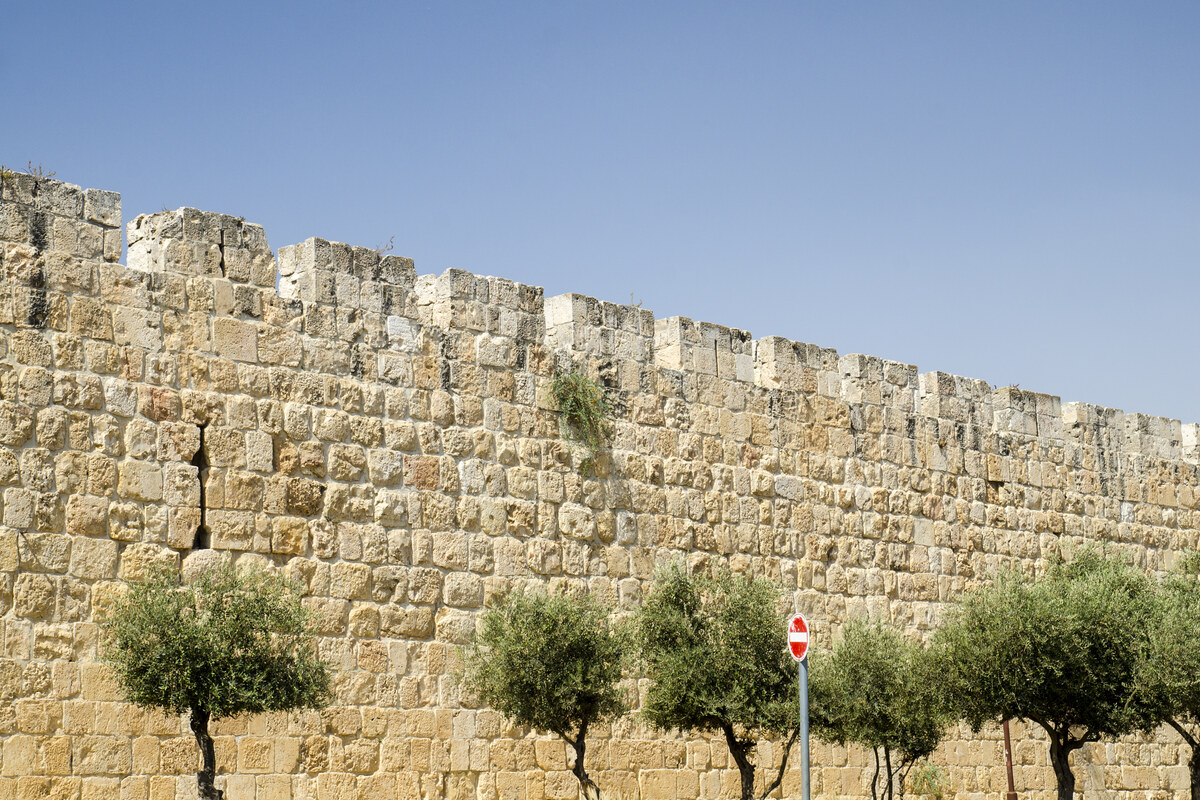
The walls themselves ran for about four kilometres, three metres thick, with five major gates each guarded by a pair of towers. Behind them stood somewhere between 3,000 and 4,500 defenders, including an elite troop of 400 Egyptian cavalrymen.
The assault that only had one ladder
The crusaders, roughly 12,000 to 15,000 strong, attacked anyway on 13 June. It went badly. With no timber available, they had almost nothing to climb with.
According to the story, Tancred had a vision of a stack of wood hidden in a cave. It was enough to make a ladder, and a knight named Rainbold climbed it. He never managed to get a foothold on the wall, and the attack collapsed.
What followed was arguably worse than the city’s own ordeal. The besiegers suffered from thirst, from the scorching summer heat and from hunger, and many men and animals died. Then, at the end of June, word came that a Fatimid army was marching north from Egypt. Time was running out.
The sailors who dismantled their own fleet
The turning point arrived by sea. On 17 June, news reached the camp that English and Genoese ships had landed at the port of Jaffa, carrying the materials needed for siege equipment.
Among them was a Genoese merchant named Guglielmo Embriaco, whose name translates as “William the Drunkard.” His expedition was a private venture, with a squadron that one chronicle puts at two galleys and another at six or nine.
Embriaco made a radical call: he had his ships taken apart and carried the men, supplies and dismantled material inland to Jerusalem. That lumber was turned into the siege towers that would decide the battle, while Robert Curthose and Robert of Flanders gathered extra timber from nearby forests.
In almost three weeks, under the direction of Embriaco and Gaston of Béarn, the crusaders built two massive wheeled siege towers, a battering ram with an iron-clad head, numerous scaling ladders and portable wattle screens. The defenders watched it all and positioned their mangonels on the walls, waiting.
Two days that ended a five-week siege
The attack began on 14 July. Godfrey of Bouillon, Robert of Flanders and Tancred pushed against the northern wall, while Raymond of Toulouse attacked from the south. By evening, the northern force had broken through the first line of defence.
On 15 July, Godfrey’s tower reached the wall. A knight from Tournai named Ludolf was the first to climb onto it, and the crusaders quickly gained a foothold. In the south, Raymond’s tower was held up by a ditch, but his Provençal troops eventually stormed the walls too.
What came next was a massacre of Muslims and Jews that the chroniclers themselves described in horrifying terms. Its scale is still debated: figures range from 3,000 to 70,000, and historians consider the highest number a significant exaggeration. Some defenders survived by surrendering the Tower of David to Raymond, who let them leave for Ascalon.
A crown he refused to wear
On 22 July, Godfrey was chosen to lead the city. He took the title of Defender of the Holy Sepulchre rather than king, reportedly saying he would not wear “a crown of gold in the city where Christ wore a crown of thorns.”
Embriaco went home a hero. He earned the nickname “mallet head,” and he is now remembered as one of the founders of what became the Republic of Genoa.
It is a reminder that medieval sieges were rarely won by courage alone. Sometimes the fate of a city depended on who controlled the timber, and on a merchant willing to sacrifice his fleet to get it.