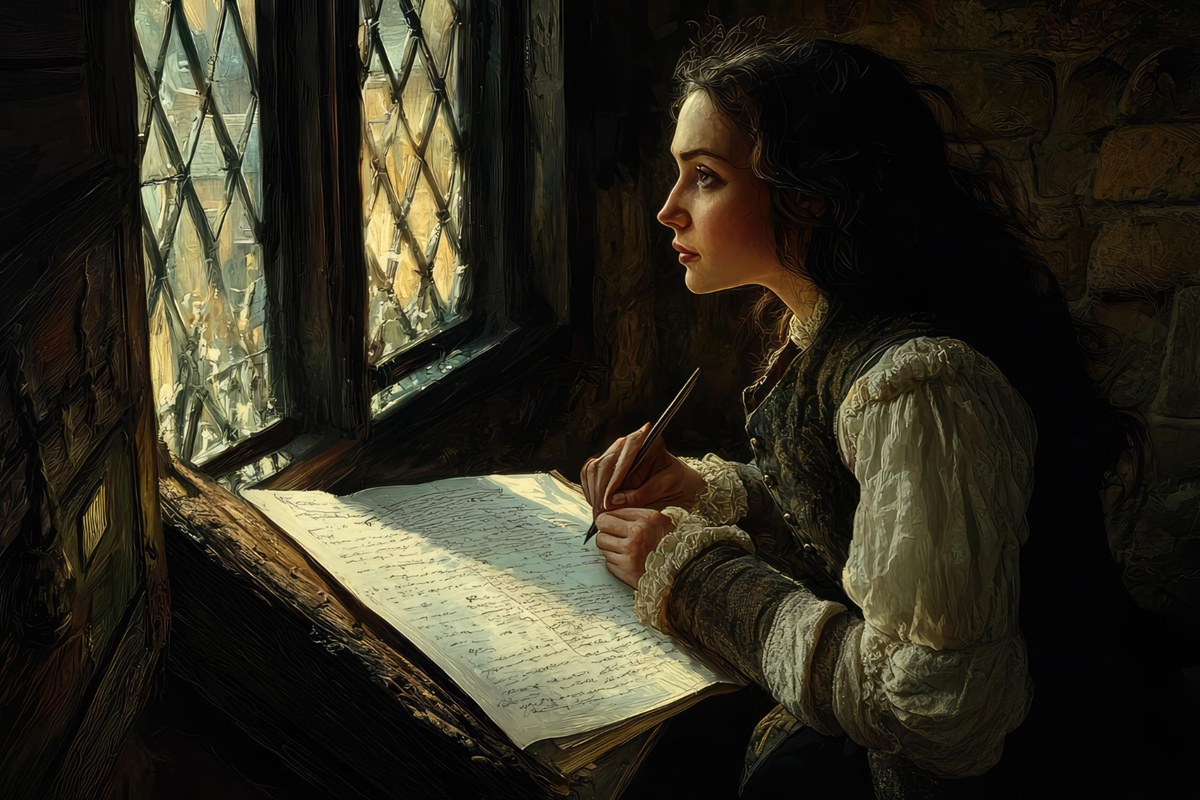
Around 1160, at a royal court in England, a poet identified herself only as “Marie de France” and became the first named woman known to write literature in French. She spent her career collecting oral stories from Brittany and turning them into something rare for the time: heroines who choose, refuse, and act on their own terms.
A name that hides more than it reveals
Almost nothing about her life is confirmed beyond the name she chose to leave behind. She likely composed her best-known work, a collection of short verse tales called the Lais, sometime between 1155 and 1170, probably connected to the court of Henry II and Eleanor of Aquitaine.
Even her name is a clue and a mystery at once. “Marie de France” suggests a Frenchwoman who had settled in England, but nothing more specific about her identity has ever been established.
What is certain is her place in literary history. She stands as the first identified woman to compose literature in French, at the exact moment the genre was shifting from anonymous oral epic toward written works signed by a recognizable author.
She called herself a keeper of memory
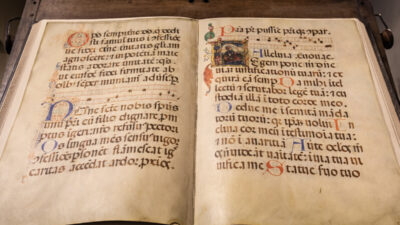
In the prologue to her Lais, Marie de France explains her own method directly. She says she decided to “put into memory” Breton stories she had heard told aloud by storytellers, rather than let them disappear.
Medievalists now read that line as something close to a proto-ethnographic act, a conscious decision to preserve an oral tradition through writing, centuries before anyone had a word for that kind of work.
Her Lais were not her only project. She also wrote a collection of Fables and a text known as the Espurgatoire Saint Patrice, the legend of Saint Patrick’s Purgatory. That range points to a polyglot intellectual working across genres, not a single-book author remembered for one lucky success.
The myth of the passive medieval heroine
Courtly romance has a reputation for reducing women to prizes, rewards handed out at the end of a knight’s adventure. Marie de France’s own stories complicate that picture directly.
Her heroines make choices. They refuse loves imposed on them and act with a psychological complexity that few male authors of the period attempted for female characters.
The pattern shows up even outside her own work. In Chrétien de Troyes’s Yvain, the heroine Laudine negotiates the terms of her own remarriage with real authority, proof that the “passive heroine” image does not hold up even among Marie de France’s better-known male contemporaries.
A name literary history almost dropped
None of this made Marie de France a household name the way Chrétien de Troyes became one. Her identity remained uncertain for centuries, pieced together from a handful of manuscript clues rather than any confirmed biography.
That gap says less about her talent than about whose names medieval literary culture chose to remember carefully. She wrote some of the earliest complex heroines in French literature and still had to wait centuries to be read as more than a footnote to the genre she helped invent.