For over a century, European readers accepted that a vast Christian kingdom lay hidden somewhere in Asia, ruled by a legendary king named Prester John. The source of that belief was a wildly popular medieval travel book, written by a man who had probably never set foot outside western Europe.
A king invented to save Christendom
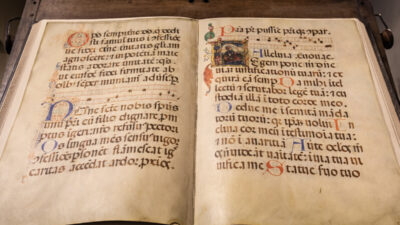
The Book of Marvels of the World, written in Liège between 1355 and 1357 under the name Jean de Mandeville, describes at length the wondrous kingdom of a Christian ruler called Prester John, sometimes placed in Asia, sometimes in Ethiopia.
He became an emblematic figure for European hopes of finding a Christian ally in the East. Mandeville’s account did not just repeat the legend, it added detail and geography, making the fantasy read like a diplomatic briefing.
Warriors who cut off a breast, in a land without men
The same book describes the Amazons, women warriors living in a kingdom without men called the “kingdom of Feminie”. According to Mandeville, they removed one breast to shoot arrows more effectively, a detail borrowed directly from Herodotus.
He placed this kingdom in Asia Minor with the same confident precision he used to describe Constantinople, a real city he almost certainly never saw either.
A book bold enough to suggest sailing around the world
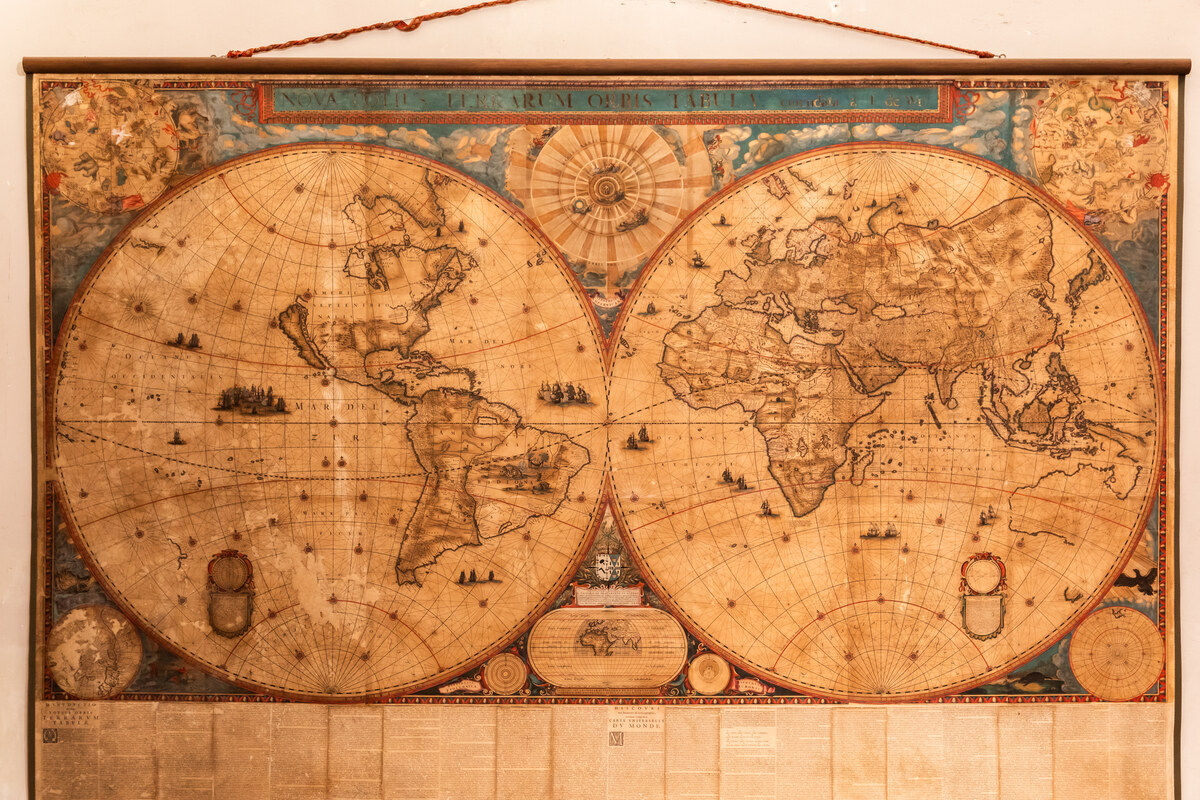
Beyond monsters and legendary kings, the book makes a genuinely striking intellectual claim: it discusses the theoretical possibility of circumnavigating the globe, and invites its readers to go discover the earth for themselves.
That was a remarkable idea for the 1350s. The book’s enormous circulation, over 250 manuscripts in 10 languages before the 17th century, meant this notion reached far beyond scholars, into the hands of merchants, nobles and, later, navigators planning real voyages west.
Copying someone else’s journey was not considered stealing
Mandeville never actually reached Asia. His “voyage” was a compilation of existing sources: Marco Polo, the Franciscan missionary Odoric of Pordenone, Vincent of Beauvais, Herodotus, Pliny the Elder, all rewritten as personal, eyewitness observation.
His medieval contemporaries did not see this as fraud. The idea of plagiarism, in the sense we use it today, simply did not exist. Compiling and reworking existing knowledge into a new synthesis was considered legitimate scholarly work, not theft.
It was only in the 19th century that historians began openly accusing him of deception. His epitaph in Liège identifies him plainly as a “professor of medicine”, and a street near the city’s Guillemins train station still carries his name today, a quiet tribute to one of the Middle Ages’ most successful literary impostors.
A different idea of what counted as true
None of this stopped the book from being read as serious geography for more than a hundred years. Medieval audiences were less interested in verifying an author’s footsteps than in receiving a coherent, believable account of a world most of them would never see.
That gap between what was written and what was true did not need to be closed for the book to matter. It only needed to feel true enough to change how people imagined the edges of their own world.