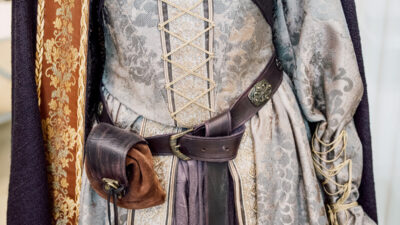
Museums have displayed the “medieval chastity belt” for centuries as one of the era’s darkest curiosities. Historians who have actually studied these objects agree on something else entirely: almost none of them are medieval at all.
The story everyone thinks they know
The legend is simple and vivid. A knight leaves for the Crusades, locks a metal belt around his wife’s hips to guarantee her fidelity, and rides off keeping the only key. It has become the go-to symbol of medieval misogyny in films, novels, and casual conversation.
The image is so familiar that few people ever stop to ask where it actually comes from.
The evidence just isn’t there
No authentic medieval chronicle, court record, or church document mentions a chastity belt in actual use. The written and material record of the Middle Ages, otherwise packed with details about everyday objects, stays completely silent on it.
Historians who have examined the “medieval” belts sitting in museum collections have reached a consistent conclusion: the vast majority are forgeries or novelty pieces manufactured in the 18th and 19th centuries, feeding a Victorian appetite for a supposedly savage, superstition-ridden Middle Ages.
The chastity belt fits a familiar pattern. Plenty of “medieval” horrors popular in fiction were retrofitted onto a period later centuries found easier to imagine as brutal than to actually research.
So what did a medieval belt actually do
Medieval clothing had no built-in pockets. The belt was the real carrying system of the age: knives, coin purses, keys, and even small tools hung from it, for men and women of every social class.
For a knight, the belt carried a heavier meaning. The ceinturon, a reinforced version of the ordinary belt, was handed to him during the dubbing ceremony itself, a symbol of military status he strapped on every time he rode into battle.
Belt buckles were crafted objects in their own right, worked in silver, gilded bronze, or wrought iron depending on the owner’s wealth, often carved with heraldic, floral, or animal designs.
A belt that said everything about you
Sumptuary laws regulated belts exactly like other jewelry. Commoners were legally barred from wearing gold belts or ones set with precious stones, ornaments reserved strictly for the nobility.
A well-made, silver-mounted belt could be worth a week’s wages for a skilled craftsman. Medieval probate inventories list belts separately from clothing, valued as possessions in their own right.
Archaeological leather belts often show up to five separate rows of stitched repairs, evidence that people mended them again and again rather than replacing them.
Fashion added another layer of meaning. Medieval women wore belts far lower than we do today, sometimes down to the hip or even mid-thigh, a silhouette that shaped Gothic fashion and shows up repeatedly in fourteenth-century sculpture and manuscript illumination.
Monks and nuns wore a belt or cord with an entirely different meaning. Tied at the waist, it symbolized temperance and mastery over the body. The three knots of the Franciscan cord stood for the order’s three vows, a piece of everyday clothing turned into a spiritual statement.
Why the myth won’t die
The chastity belt survives in popular imagination not because it is true, but because it confirms a story people already want to believe about the medieval period.
The real belt of the Middle Ages tells a richer story: in an age without pockets, a single strip of leather doubled as a wallet, a toolkit, a rank insignia, and a spiritual symbol, all worn at once around the waist. The word itself grew just as far beyond the wardrobe: medieval law used “ceinture” to describe a city’s fortified walls, the belt that held an entire town together.