In the 12th century, some medieval lords decided the wind blowing over their land belonged to them, and they wanted to be paid for it.
Windmills turned air into power, and into a legal fight
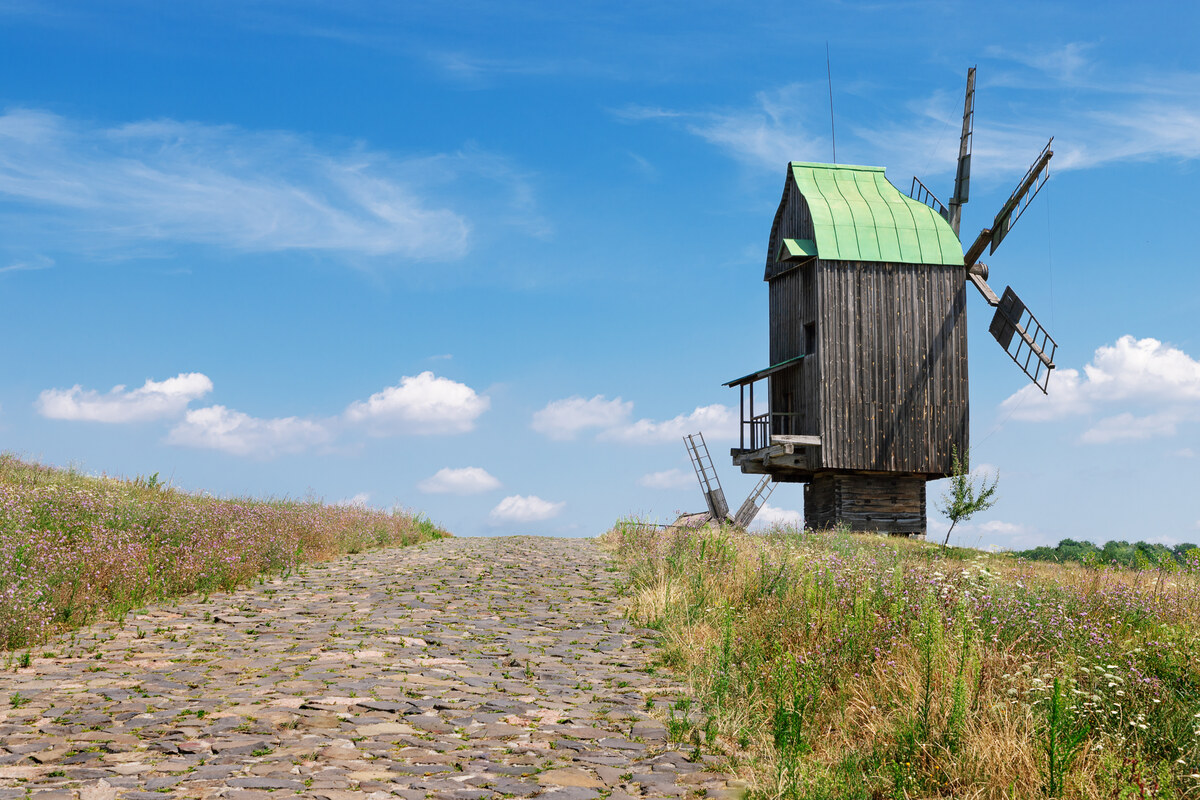
The windmill reached Europe in the 12th century and quickly became one of the era’s most important technologies. The earliest documented French mention appears in a 1170 charter from the city of Arles.
Windmills joined the water mill, the heavy versoir plough, and three-field crop rotation as part of what historians call the medieval agricultural revolution, a stretch between the 10th and 13th centuries when farm productivity jumped dramatically across Europe.
Some lords claimed the breeze on their land was theirs to tax
Windmills needed wind, and feudal lords noticed. Several tried to impose what became known as a “wind right,” arguing that any breeze crossing their domain was their property, and that anyone who wanted to catch it in a mill owed them for the privilege.
It was a strange kind of land grab, an attempt to own something no one could see, touch, or fence in.
A 1779 court ruling settled who really owns the wind
The argument dragged on for centuries before a court finally closed it in 1779. The ruling stated, in effect, that wind is a free element and belongs to no one in particular, not to the lords who claimed it, but to everyone.
It is a remarkably modern verdict for its time: a shared natural resource, declared off limits to private ownership, centuries before the idea became a familiar legal concept.
Medieval blacksmiths were sharper than the stereotype suggests
The same period that produced this windmill dispute also relied on blacksmiths who worked entirely “by eye.” They read the color of heated metal, cherry red, orange, then white, to judge its exact temperature with no thermometer at all, a skill passed down orally from master to apprentice over years.
That empirical mastery went further than simple horseshoes. Medieval smiths developed their own alloys and treatments, including damascened steel, for weapons, farm tools, and prestige objects, combining different grades of metal to get exactly the properties they needed.
The trade was also demanding on the landscape. Producing a single ton of iron required roughly ten hectares of forest to fuel the furnaces with charcoal, which is why medieval forges almost always sprang up close to large woodlands.
Sharing the plough, and preserving the loom in stone
The heavy versoir plough tells a similar story of resourcefulness rather than backwardness. It could require up to eight oxen to pull and cost more than most households could afford alone, so several families would pool their resources and share a single plough between them.
Some of this era’s craftsmanship survives in unexpected places. A mid-14th-century bas-relief by Florentine sculptor Andrea Pisano, still standing on the bell tower of Florence’s cathedral, shows a medieval loom in remarkable detail, one of the most precise visual records of medieval textile tools that has come down to us.
A quieter kind of medieval ingenuity
Long before modern property law caught up with new technology, medieval communities were already arguing over who owned the invisible forces powering their world. The wind case they settled in 1779 still echoes anytime a shared resource runs up against a private claim.