On 5 January 1477, in thick snow outside Nancy, one of the richest princes in Europe was struck on the head by a weapon that was cheap to make. The blow went straight through his helmet and skull.
The prince was Charles the Bold, Duke of Burgundy. The weapon was a halberd. Eight years later, the same humble polearm would end the life of a king of England.
A duke who went to war with his treasures
Charles commanded one of the most feared armies in Europe, and he liked to fight in style. He travelled to battles with priceless objects as talismans, from carpets said to have belonged to Alexander the Great to the 55-carat Sancy diamond and the jewel known as the Three Brothers.
On 2 March 1476, near the Swiss town of Grandson, it all went wrong. His troops mistook a tactical pullback for a full retreat, panicked and fled. The Swiss looted his tent: the diamond, the jewels, his silver bath and even his ducal seal.
The victors initially had little idea of what their loot was worth. A small surviving part of it is still on display in Swiss museums today.
A cheap weapon built to pull knights from their horses
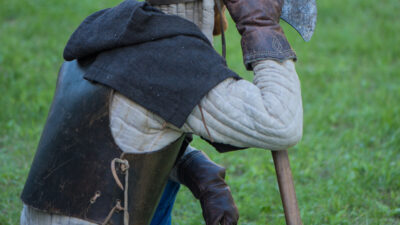
The men who beat him did not need gold. The halberd was a two-handed pole about 2 to 2.5 metres long, topped with an axe blade and a spike. Many had a hook or thorn on the back of the blade.
That hook mattered. It could drag a horseman to the ground, while the point helped push back approaching cavalry. The weapon was very versatile in battle and, crucially, inexpensive to produce.
Even its name is down to earth. Halberd comes from the Middle High German halm (handle) and barte (battleaxe). The poet Konrad von Würzburg first mentions it in the 13th century, and the chronicler John of Winterthur described it as a new weapon used by the Swiss at the Battle of Morgarten in 1315.
It was the primary weapon of the early Swiss armies in the 14th and early 15th centuries. Only later did they add the long pike to repel knightly charges, keeping the halberd for close combat.
The frozen end of Charles the Bold
At Nancy, Charles was besieging the capital of Lorraine when Duke René II marched against him with thousands of Swiss mercenaries. The snow hid their movements, and the Burgundian artillery was too slow to engage them.
Charles tried to rally his men, but they were already fleeing. Encircled by Swiss and Alsatian infantry, he was struck with a halberd that pierced his helmet. His death went unnoticed by the enemy army, and the battle simply carried on.
His body was found two days later, stripped by pillagers, with half of his head frozen. A group including his valet, his Portuguese physician and his chaplain recognised him by a missing tooth, an ingrown toenail and long fingernails. In Artois, people refused to believe he was dead at all.
Eight years later, a king at Bosworth
On 22 August 1485, King Richard III of England was killed at the Battle of Bosworth Field. Researchers who studied his skull suspected that a halberd or a bill had sliced through the back of it, leaving his brain exposed.
They were later able to confirm it was a halberd. In less than a decade, the same unglamorous weapon had brought down a duke famous for his wealth and a crowned king.
From killing blade to ceremonial staff
As firearms spread, armies needed fewer halberds. By 1588, official Dutch infantry companies counted just 9% halberds, and by 1600 the weapon was carried only by sergeants, two men per company.
In the British army, sergeants kept their halberds until 1793. By then the weapon had no sharpened edge at all. It had become a symbol of rank, used to keep soldiers correctly aligned and their muskets aimed at the right level.
Still standing guard five centuries later
Historians credit the Swiss victory over Charles at Morat, in June 1476, with contributing to the decline of feudalism and heralding the end of the very idea of chivalry. Fittingly, the weapon of those infantrymen never fully left service.
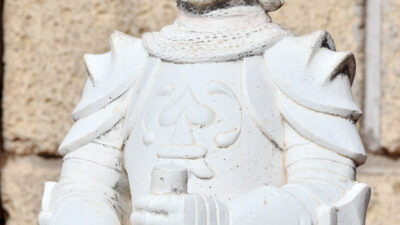
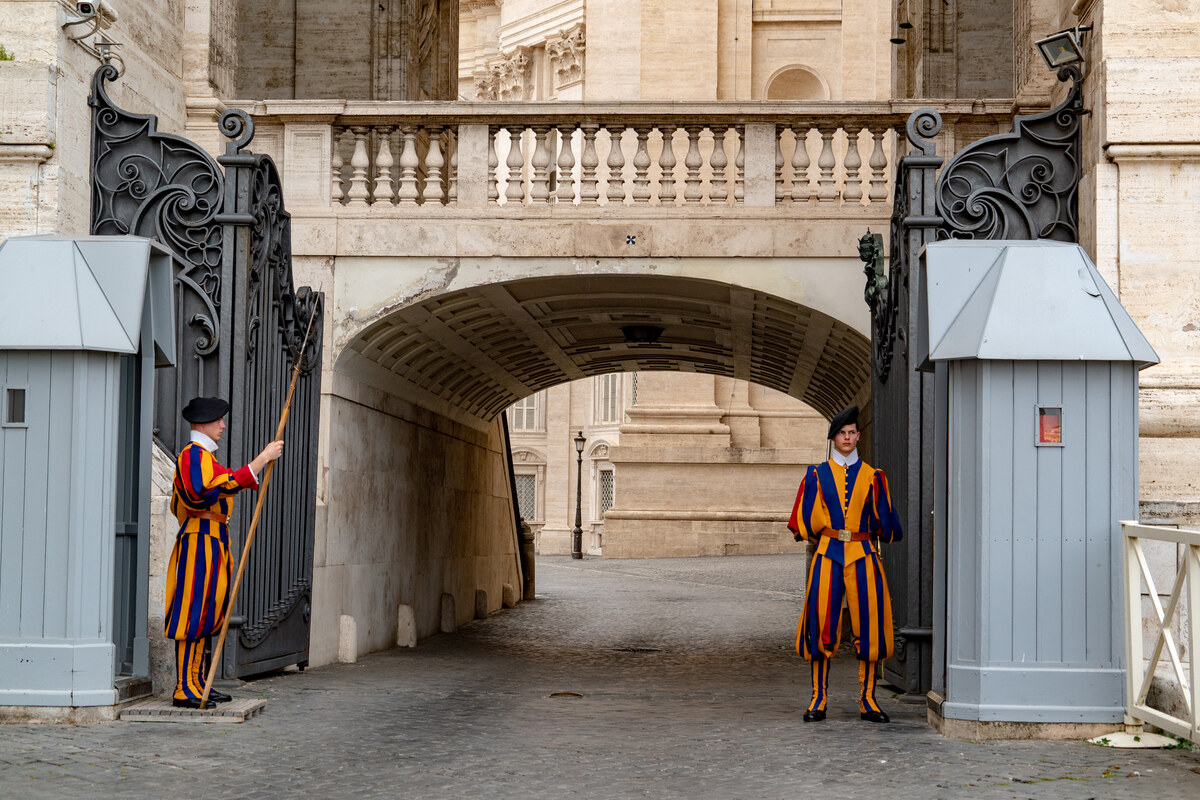
Today, the halberd is still the ceremonial weapon of the Swiss Guard in the Vatican, and of the Halberdiers company of the Spanish Royal Guard. Charles the Bold’s diamonds became Swiss war booty, while the cheap tool that killed him is still in uniform.