In 1356, an emperor wrote into law that if the men choosing the next king took longer than 30 days, they would eat nothing but bread and water until they made up their minds.
That clause sits inside one of the most important documents of medieval Europe. And the document itself is named not after anything it says, but after the lump of gold hanging from it.
A law named after its seal
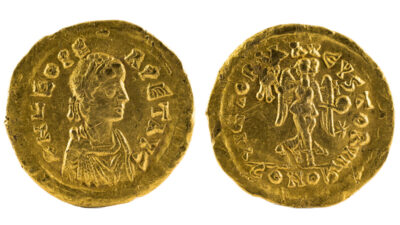
Medieval rulers authenticated their decrees with seals, and the material sent a message. Metal seals, called bulls (from the Latin bulla), used gold for imperial chanceries, silver for royal ones and lead for documents issued by the papacy.
A decree carrying a gold seal, a bulla aurea, became known simply as a golden bull. The Byzantines called theirs chrysobulls, from chrysos, the Greek word for gold. Over time, the name of the seal swallowed the name of the whole text.
The most famous of them all was issued by Emperor Charles IV at imperial assemblies held in Nuremberg and Metz. Its first 23 chapters are dated 10 January 1356, the last eight 25 December 1356. History remembers it as the Golden Bull of 1356.
An empire that once elected two kings at once
The Holy Roman Empire had a strange problem. Its king was not born into the job, he was chosen by the great princes of the realm. But nobody had ever pinned down exactly how.
The result was chaos. In 1314, two rival groups of electors chose two different kings at once, Louis of Bavaria and Frederick of Austria. The question was settled not by a vote but on the battlefield, where Louis eventually subdued his rival.
The Golden Bull was written to make sure that never happened again. Its own text says it aimed at “bringing about a unanimous election” and “closing all approach to the aforesaid detestable discord.”
Seven men, four votes
The Bull named exactly seven prince-electors. Three were churchmen: the archbishops of Mainz, Cologne and Trier. Four were lay princes: the King of Bohemia, the Count Palatine of the Rhine, the Duke of Saxony and the Margrave of Brandenburg.
Each also received a largely ceremonial court title. The King of Bohemia became Arch-Cupbearer, the Duke of Saxony Arch-Marshal. Even the voting order was fixed, with Trier voting first and Mainz last.
Then came a quietly revolutionary rule. For the first time in the Empire, majority voting was written down explicitly: four votes out of seven were always enough to elect a king. Three stubborn electors could no longer block everything.
Bread, water and no way out
The Bull did not trust the electors to hurry. It set the election in Frankfurt, the coronation in Aachen and the first assembly of each reign in Nuremberg, and it spelled out who had to do what, down to the townspeople of Frankfurt.
Chapter 2 then added its famous deadline. If the electors failed to choose within 30 days of swearing their oath, “from that time on they shall live on bread and water, and by no means leave the aforesaid city” until a ruler had been elected.
The text even regulated the order in which dignitaries marched when the emperor was present. Nothing about the process was left to improvisation.
The families who were left out
Not everyone was pleased. The Habsburgs, longtime rivals of Charles IV’s house of Luxembourg, were left off the list entirely. Their response was audacious.
Duke Rudolf IV of Austria had a document forged, the Privilegium Maius, supposedly issued by Emperor Frederick Barbarossa and granting Austria special privileges. The emperor and the princes ignored it at the time. Yet the forgery was eventually ratified when a Habsburg, Frederick III, became emperor himself in the 15th century.
The Bavarian branch of the Wittelsbach family fared no better. Overlooked in favour of its Palatinate cousins, it would remain without an electoral vote until 1623.
One more absence stands out. The Bull said nothing about the pope confirming the election. Pope Innocent VI did not protest, because he needed Charles IV’s support against the Visconti of Milan.
A gold seal that outlived its century
The Golden Bull fixed key parts of the Empire’s constitution for more than four hundred years. Historians see it as a milestone on the long road toward largely independent states within the Empire, a process only completed centuries later with the Peace of Westphalia in 1648.
In 2013, UNESCO added it to its Memory of the World Register. Its original copies are still kept in archives and libraries in Vienna, Munich, Stuttgart and Darmstadt.
It is a reminder that in the Middle Ages, the object attached to a law could matter as much as the words inside it. Sometimes, it was even what everyone remembered it by.