Bernart de Ventadorn’s own biography admits it plainly: he was the son of a castle baker. By the height of his career, he was composing verse for Eleanor of Aquitaine, queen first of France and then of England.
A voice that didn’t come from a noble hall
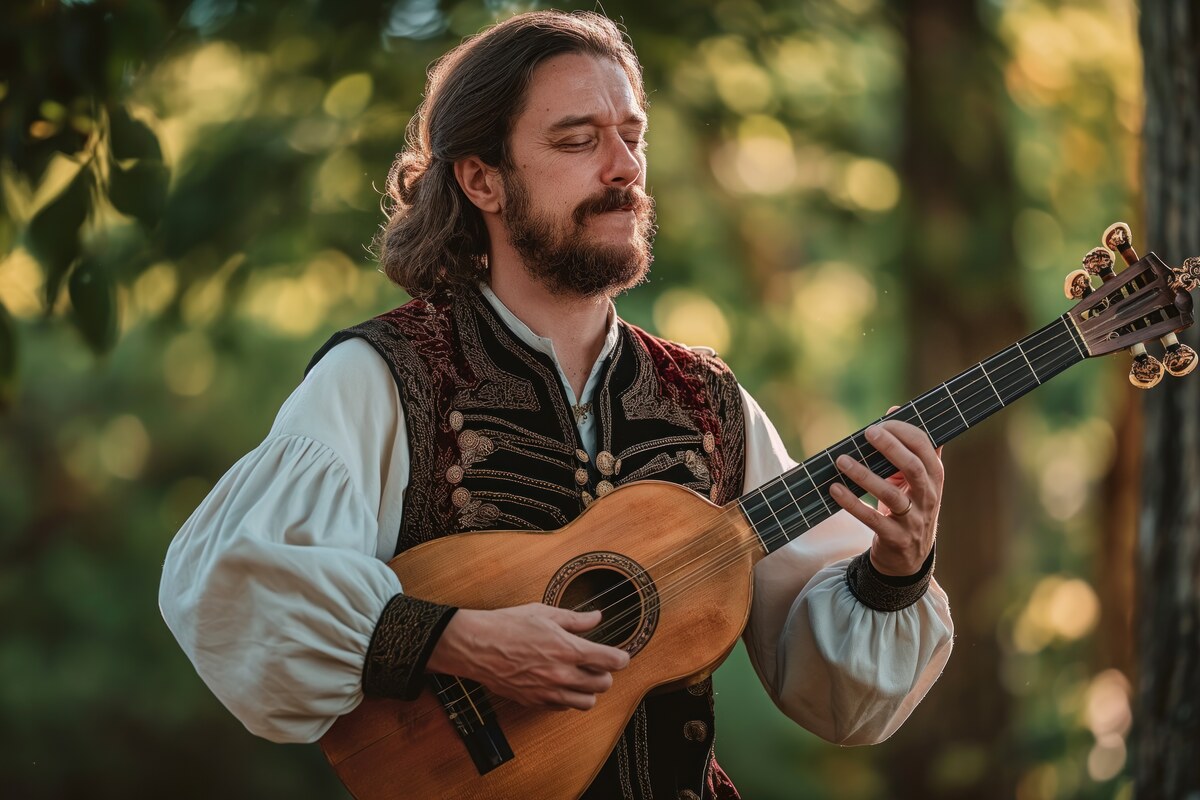
A troubadour was a poet-composer working in the language of the south, langue d’oc, writing both the words and the music himself. Most were nobles. Guillaume IX of Aquitaine, the earliest troubadour whose work survives, was a duke and count in his own right.
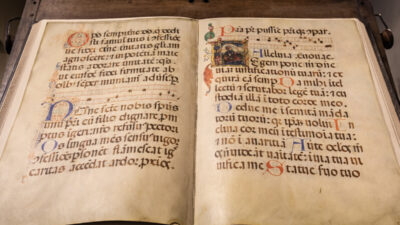
Bernart de Ventadorn broke that pattern. His vida, the short biographical sketch medieval scribes attached to troubadour song collections, states outright that he was the son of a baker at a castle. Nothing about his birth pointed toward a life at court.
Proving yourself in three different registers
Composing wasn’t a casual hobby. Troubadours worked across three distinct styles: trobar leu, the light and accessible register; trobar ric, the ornate and technically demanding one; and trobar clus, deliberately obscure verse meant only for a circle of listeners skilled enough to decode it.
The genres stacked up too: beyond the well-known love song, poets were expected to handle the aube, a lament sung by lovers forced apart at dawn, the planh, a formal funeral lament, and the tenso, a poetic debate carried on verse by verse between two composers in front of an audience.
Mastering that range separated a real composer from a joglar, the hired performer who sang someone else’s songs to the accompaniment of a vielle. For a baker’s son with no title to lean on, technical skill was the only credential that counted.
From a castle kitchen to a queen’s retinue
Active roughly between 1147 and 1170, Bernart eventually reached the court of Eleanor of Aquitaine, first in France and later in England, after her marriages carried her between the two kingdoms.
Getting there meant his verse had to hold up next to poets born into the nobility his songs were often addressed to. A baker’s son was, for a while, taken seriously among dukes and countesses on the strength of what he could write, in front of one of the most powerful women in 12th-century Europe.
Talent as the only currency that mattered
Medieval society ran almost entirely on birth. Land, title, and marriage decided most futures before anyone spoke a word. Bernart de Ventadorn’s career is one of the rare documented cases where verse alone opened a door that birth never would have.
His story survives specifically because that contrast mattered to the people who first wrote his vida down. It was worth recording precisely because it wasn’t the way things were supposed to work, not because a baker’s son writing songs was an everyday occurrence.
A door that still opens the same way
Eight centuries later, the idea that pure skill can carry someone past their origins still carries real weight, on stages and screens as much as it once did in a count’s hall. Bernart de Ventadorn just got there first, with nothing but a pen and enough nerve to use it.