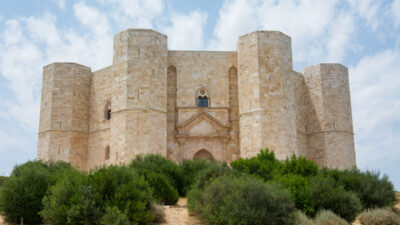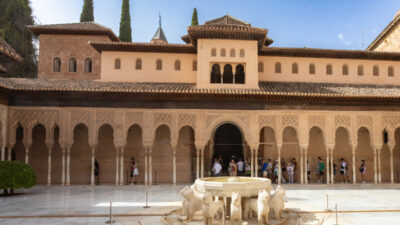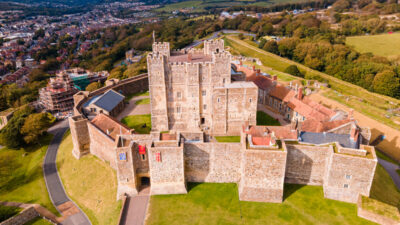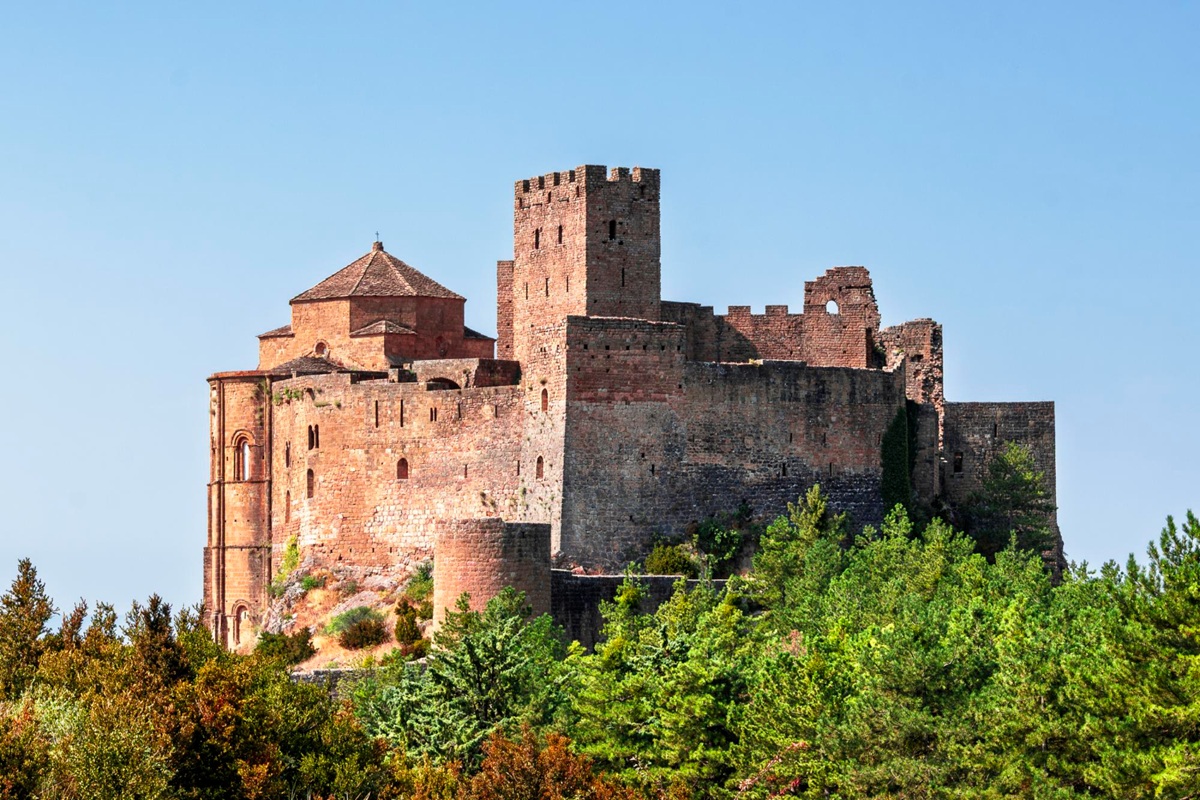
In medieval Italy, you didn’t need a flag to know whose side a city was on. You just had to look up at its walls.
A wall built to be read
During the long conflict between Guelfs and Ghibellines, the shape of a city’s merlons, the solid blocks standing between the open notches of a battlement, quietly announced its politics to anyone passing by.
Merlons cut in a forked, swallow-tail shape marked a city loyal to the Holy Roman Emperor, the Ghibelline side. Plain, rectangular merlons signaled loyalty to the Pope instead, the Guelf camp.
The distinction is still visible today on the Ponte Scaligero in Verona and the Palazzo Pubblico in Siena, stone statements of allegiance that have outlived the conflict itself by seven centuries.
Defense was never the whole story
Historian Charles Coulson argued that crenellation was never purely tactical. A crenellated parapet was, just as often, a display: proof that a lord had the power, and the royal favor, to fortify his home.
In medieval England, that favor was not optional. Adding battlements to a house without a royal “licence to crenellate” was a serious offense, one that could get the property confiscated. Only the crown could authorize the appearance of military strength.
Seen this way, a castle wall was doing two jobs at once: stopping an army, and reminding everyone else exactly who was allowed to look this dangerous.
Engineered for the human body
Battlements were not decorative guesswork. Merlons stood roughly two meters tall so a standing defender was fully shielded behind one, and the walkway behind them sat about a meter above the sentry path.
The open notches, the crenels themselves, measured 70 centimeters to a meter wide, just enough space for a soldier to lean out, fire, and pull back before anyone below could react.
Carcassonne still shows the system at its most developed: over 3 kilometers of walls and more than 50 towers, arranged so defenders could fire from two superimposed levels of rampart at once.
An idea borrowed, adapted, and passed down
Crenellation itself long predates medieval castles. Roman fortifications already used the same cellular system, with merlons wide enough to shelter exactly one archer or slinger, no more.
Contact with Byzantine and Arab siege techniques during the Crusades reshaped the design further, adding wooden shutters called hourds and narrower slits sized for crossbows between elongated merlons.
By the 14th century, that evolution was standard across Europe, visible in the crossbow-ready battlements of newly built fortresses like Richard the Lionheart’s Château-Gaillard.
The wall outlived the castle
Gunpowder artillery made crenellated walls militarily obsolete by the 16th century, but the idea behind them never really disappeared.
The firing slits built into concrete bunkers during the Second World War are still called “créneaux de tir,” a direct descendant of the medieval notch, protecting the person inside while letting them fire back.
A design once used to shield a single archer, and just as often to broadcast a city’s politics to friend and enemy alike, is still standing today in steel and concrete.