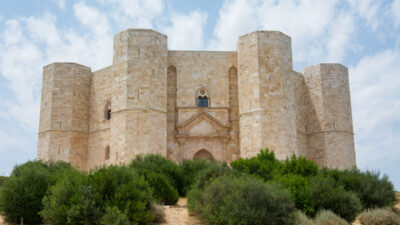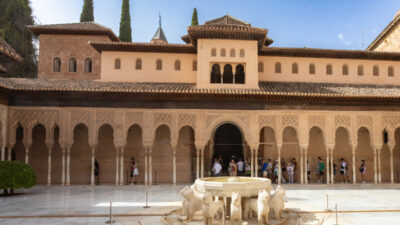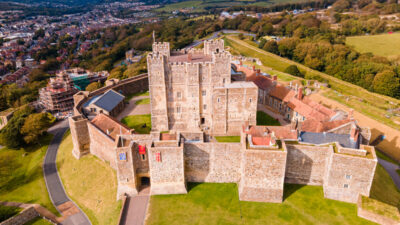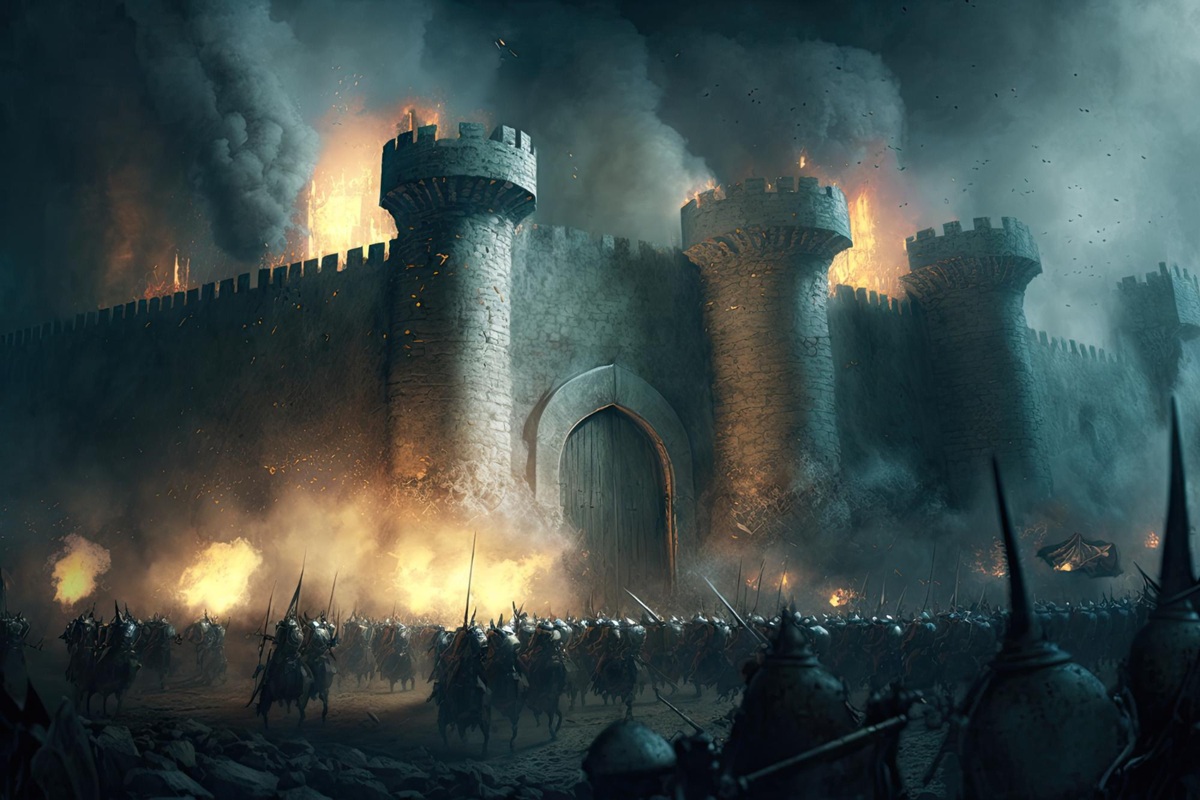
Breaching a castle’s outer walls was never the end of a siege. Behind them stood the donjon, the tallest tower of the fortress, built as much to trap intruders as to keep them out.
A tower built for one last stand
The donjon served three roles at once: a watchtower, a firing platform, and the final refuge once the outer walls had fallen. If every other defense gave way, this tower was where a garrison made its very last stand, the one position an attacking force still had to take by force.
The word itself comes from the Latin dominus, meaning master or lord. Originally, it described the entire fortified residence of a castle’s owner, living quarters and all. Only later did the meaning narrow down to describe just the tower, the sense most people know today.
No visitors, no floor plans
Outsiders were deliberately kept away from a donjon’s interior. Its layout, its corridors, its stairwells, all of it stayed a closely guarded secret, known only to those who lived and fought inside it.
That secrecy had a very practical purpose. In a siege, whether an attacker knew the tower’s internal plan or not could decide the entire outcome. A defender who understood every twist of the building held a real advantage over intruders forced to guess their way through unfamiliar stone, corridor by corridor.
A maze built to slow you down
Even after breaching the outer walls, attackers who finally reached the donjon itself faced another obstacle entirely, and a very different kind of fight. Corridors narrowed on purpose, funneling soldiers into single file. Staircases were built with steps of uneven height, just enough to catch a running foot. Doorway lintels sat lower than expected, forcing anyone in a hurry to duck or take a blow to the head.
None of this was accidental. Every disorienting detail was designed to slow down soldiers moving fast through unfamiliar territory, turning the tower’s own interior into a weapon aimed squarely at whoever made it that far.
Not every keep looked the same
England developed its own answer after the Norman Conquest. Between 1066 and the First Crusade, so called shell keeps appeared across the country: oval or circular enclosures raised on top of an earthen mound, with buildings set directly against the inner walls instead of a single freestanding tower at the center.
Height, meanwhile, became its own kind of competition, one that never really ended. Château de Largoët in Brittany claims the tallest surviving donjon in France today, standing 57 meters across seven floors and 177 steps, edging out Château de Crest’s 52 meters, the tower usually credited with that title in most rankings.
What the walls still don’t tell you
None of this made a donjon comfortable to storm, and that was entirely the point. It was engineered, floor by floor, corridor by corridor, to punish exactly that kind of intrusion, long before anyone reached whatever treasure, prisoner, or lord they had come for.
Centuries later, what remains are quiet ruins, admired mostly for their silhouette against the sky, photographed by visitors who wander freely through rooms once meant to stay secret. But every corridor and staircase inside once had a job to do: make absolutely sure that reaching the top of a medieval keep was never, ever the easy part.