Frankish rulers once banned selling their swords to outsiders, guarding the technology behind them like a state secret. Centuries later, that same weapon needed an entirely new system just to be used correctly.
A weapon guarded like a state secret
Long before knights carried it into battle, the sword was already valuable enough to control. Carolingian emperors formally banned trading Frankish swords to foreign peoples, protecting a technological edge that made their blades better than anything else nearby.
Even the markings on a blade carried weight. Before the year 1000, many swords bore Norse runes, treated by their owners as something close to protective magic. Once Christianity spread further across Europe, those runes vanished from new blades, replaced by Latin religious inscriptions instead.
Armor forced the sword to change shape
By the 12th century, even how a sword was worn had shifted. It hung obliquely from the hip on a broader, double-strap belt, a change tied to the rise of heavy cavalry.
The bigger shift came later. From the 13th century onward, fighters leaned harder on the estoc, a thrust delivered point-first rather than edge-first, aimed at the joints, visor slits, and gaps a cutting blow could never reach.
By the close of that century, new sword types appeared built specifically around this shift: longswords made for two hands, and bastard swords sized in between, both designed to punch through the latest plate armor rather than slice across it.
One master turned it into a system
Fighting well with these new blades was not something a knight simply worked out alone on the battlefield. In 14th-century Germany, a fencing master named Johannes Liechtenauer built a complete, structured method for it, known as the Kunst des Fechtens, the art of fighting.
He recorded that method in illustrated manuscripts, and those manuscripts still exist today. They remain historians’ single most important source for how medieval Europeans genuinely fought with a sword, rather than the loose, improvised swinging usually shown on screen.
Learning to grip the blade itself
Fencing manuals from the centuries that followed describe a technique that looks like a mistake at first glance: a fighter wrapping a bare hand around the blade itself, just above the guard.
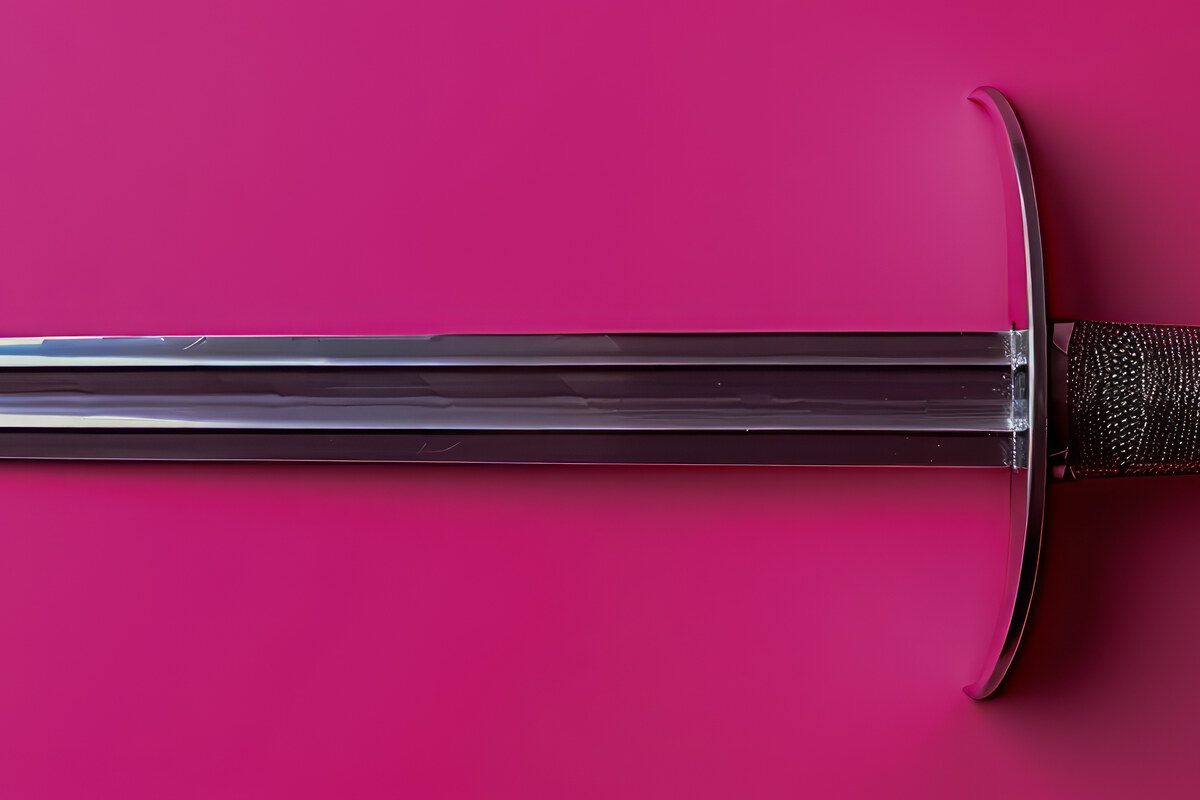
That section, called the ricasso, was deliberately left unsharpened for exactly this reason. Gripping it there sacrificed reach but bought precision, letting a fighter drive the point through a narrow gap in an opponent’s armor instead of swinging wide and hoping.
It works on the same logic as choking up on a bat: less power, far more control exactly when a fight closes to point-blank range.
A skill we only know because someone wrote it down
None of this survives by accident. The export ban, the vanished runes, the shift toward thrusting, Liechtenauer’s system, the grip on the blade itself: all of it is known today only because someone recorded and illustrated it centuries ago.
Without those manuscripts, medieval swordsmanship would be pure guesswork now, reconstructed from movies and assumptions instead of from the fighters who actually practiced it.