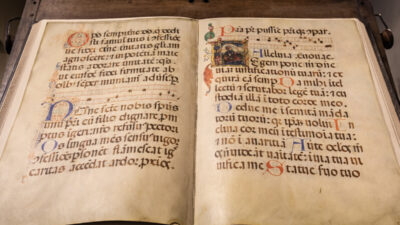
Open a surviving page of the Gutenberg Bible today and the ink still gleams, dark and glossy, as if it had been pressed last year. Chemists who analyzed it found an unusually high concentration of lead and copper, a formula that has kept the text luminous for more than five centuries while most ink from the same era has turned dull and brown.
The ink nobody could explain for centuries
Most 15th-century inks have faded badly. The Gutenberg Bible’s has not. Modern analysis of the original pages shows a metallic composition far denser than anything used in ordinary manuscripts of the time.
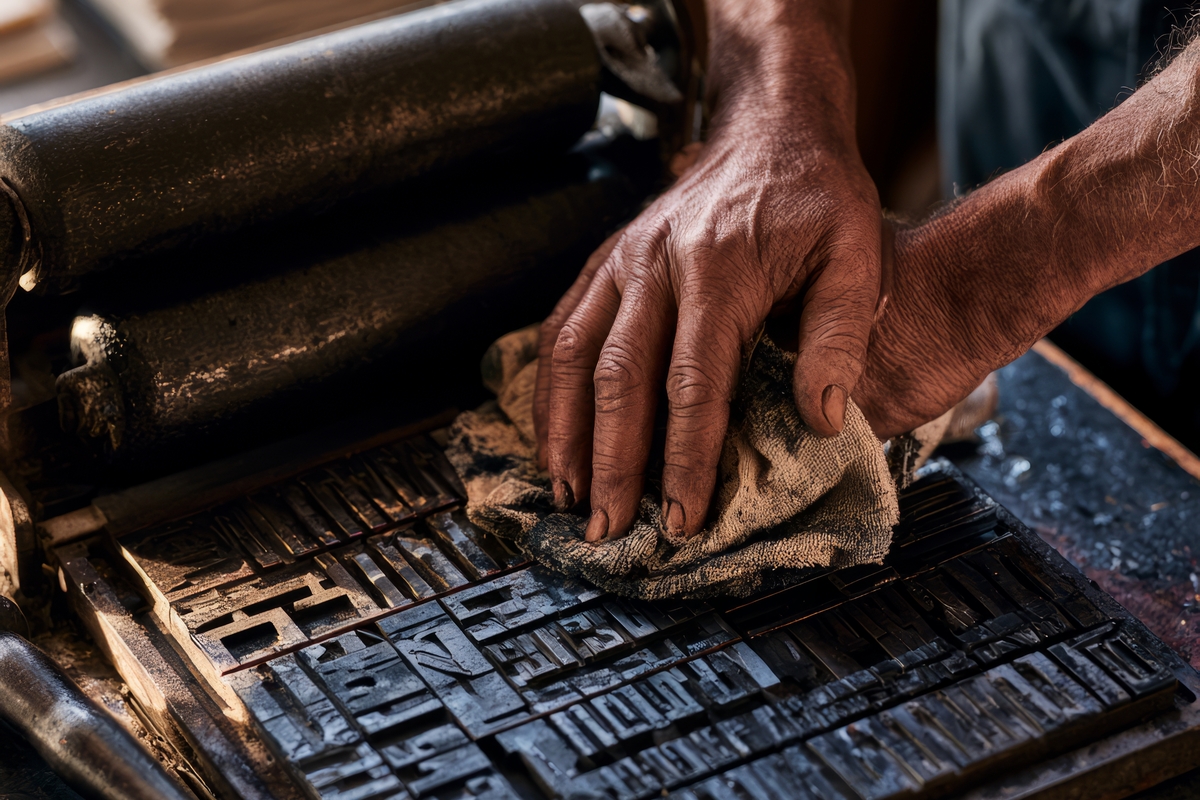
That density is not really a mystery once you remember who Gutenberg was before he became a printer. He trained as a goldsmith in Mainz, and goldsmiths understood metal in a way most scribes and scholars never did. His printing formula, including the ink, grew directly out of that trade.
A book everyone assumes is well documented, but isn’t
It feels safe to assume that one of the most important inventions in human history left behind a detailed paper trail. It did not.
No surviving document from Gutenberg’s own lifetime fully describes how his workshop actually produced the Bible. The first partial written account of the process only appeared in 1534, nearly 80 years later. A complete printing manual was not published until 1683, more than two centuries after the presses in Mainz went quiet.
Years of secrecy in Strasbourg
Before Mainz, there was Strasbourg. Gutenberg went into a kind of exile there around 1428, quietly accumulating lead and working out the mechanics of his invention away from public view.
Almost nothing was written down about what happened during those years. The technique that would upend European knowledge production was developed largely in secret, by a man with every reason to protect it.
The red ink he gave up on
Gutenberg originally wanted to print titles and headings in red directly on the press, running each sheet through twice. The alignment kept failing.
He abandoned the idea and instead handed rubricators and illuminators written instructions for filling in the blank spaces by hand after printing. The result is that no two surviving copies of the Gutenberg Bible look exactly alike. Every one carries a slightly different set of hand-finished decorations, a side effect of a technical failure nobody planned for.
One eyewitness, and 49 survivors today
The earliest known outside account of the Bible comes from Enea Silvio Piccolomini, the future Pope Pius II. On March 12, 1455, he wrote about seeing “quires of a new Bible, particularly legible,” at the Frankfurt fair, estimating that somewhere between 158 and 180 copies would be produced.
Roughly 150 to 180 copies were printed in total, on vellum and paper, and all appear to have sold by subscription before the printing even finished. Today, 49 complete or partial copies are known to survive, scattered across Germany, the United States, France and the United Kingdom.
A single copyist could spend up to three years hand-copying one Bible. Gutenberg’s workshop produced 150 to 180 in about two years, multiplying output by roughly a hundredfold. That leap happened with almost no written record of how it was actually pulled off, a reminder that some of history’s biggest turning points left behind far less paperwork than we assume.