In 1693, a plough in a Somerset field turned up a lump of gold, enamel and polished crystal about two and a half inches long. Around its sides, in openwork letters, it still says “Alfred ordered me made”. More than three centuries later, the Alfred Jewel is one of the most popular objects in Oxford’s Ashmolean Museum, and one of the strangest.
1. It tells you exactly who ordered it
The inscription reads “AELFRED MEC HEHT GEWYRCAN”, Old English for “Alfred ordered me made”. The jewel has been dated to the late 9th century, the reign of Alfred the Great.
Not everyone was convinced at first. Historian David M. Wilson pointed out that “in a period when royal titles meant something, there is no royal title in the inscription”. But today the Ashmolean and art historian Leslie Webster both treat Alfred’s commission as firmly established.
The find spot helps too: the field at North Petherton lies about eight miles from Athelney, where King Alfred founded a monastery.
2. It was probably the handle of a reading pointer
At the base of the jewel sits a small animal head. Its snout is a hollow socket, made to hold a thin rod, probably of wood. The back is a flat gold plate, “suitable for sliding smoothly across the surface of a page”.
After decades of debate, it is now “generally accepted” that the jewel was the handle of a pointer used to follow words while reading a book. The clue comes from Alfred himself. When he translated Pope Gregory the Great’s Pastoral Care into Old English, he wrote in the preface that every bishop in his kingdom would receive a copy:
“And in each book there is an aestel of 50 mancusses and I command, in God’s name, that no man take the staff from the book, nor the book from the church.”
In Old English, “aestel” could mean a guide, an index or a handle. And the price was no joke: a single mancus was worth about a month’s wages for a skilled craftsman or soldier. That makes each of these reading aids worth roughly fifty months of pay.
3. Nobody agrees on whose face it shows
Under the clear crystal sits an enamel plaque showing a man with ecclesiastical symbols. Wilson thought it most likely showed Christ as Wisdom. Webster leans towards a personification of Sight, comparing it to the figure on the Anglo-Saxon Fuller Brooch.
Then there is the wildest theory. In 2014, Sir John Boardman argued that the figure is Alexander the Great on his way to the sky. In a medieval legend, Alexander harnessed two great birds (griffins in some versions) and dangled meat on two skewers above their heads to make them fly higher. Since the story is about gaining knowledge through sight, it would suit a reading tool rather well.
The technique, at least, was new. Large enamel cells forming a figure, and crystal used as a see-through cover, were innovations in Anglo-Saxon art. The crystal itself may even be recycled from a Roman object.
4. It left Somerset for almost three centuries
The jewel was first described in 1698, in the Philosophical Transactions of the Royal Society. Colonel Nathaniel Palmer later bequeathed it to Oxford University, and today it belongs to the Ashmolean.
In February 2015, it finally went home. For one month, it was shown at the Museum of Somerset in Taunton Castle, its first return to the county in 297 years.
5. It has smaller siblings, one of them in Norway
Since 1693, a handful of similar objects have turned up. All are smaller and plainer, but all have the same socket. There is the Minster Lovell Jewel in Oxfordshire, the Warminster Jewel in Wiltshire, and the Bidford Bobble, the tiniest of them, found in Warwickshire in 1999.
One, the Yorkshire Aestel, was sold at Bonhams in 2008 for £10,800. It is the only one in private hands. Another was found in the ruins of a Viking chieftain’s hall at Borg, in Norway’s Lofoten Islands. Alfred was visited by a trader named Ottar from that region, so it might have been a royal gift. More likely, according to Webster, it was simply Viking loot, like most Anglo-Saxon finds in Scandinavia.
A pointer that outlived its book
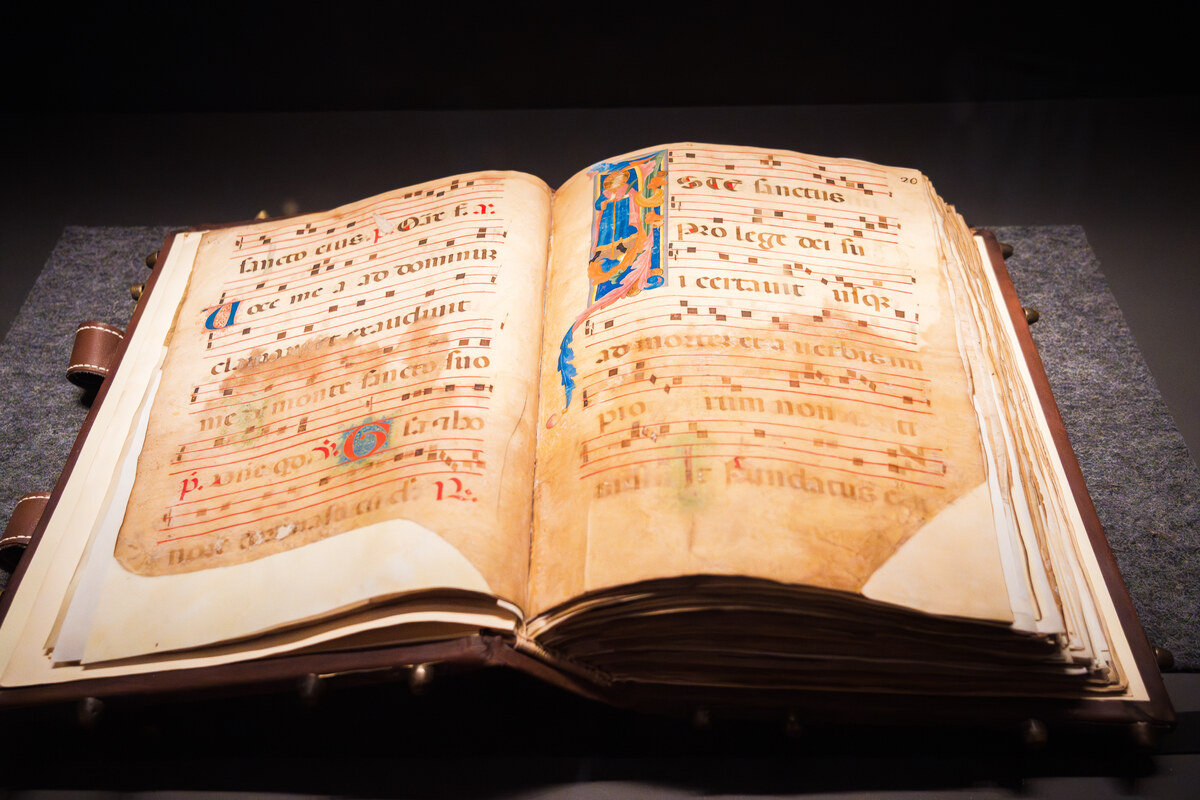
Alfred’s translation of Pastoral Care survives too: kept at the Bodleian Library in Oxford, it is the oldest surviving book written in English. Its little golden pointers lost their sticks long ago, scattered from Somerset to the Lofoten Islands.
As historian Simon Keynes put it, “it is perhaps only a matter of time before another is found in a context that reveals its function”. Somewhere, the next one may already be waiting for a plough.