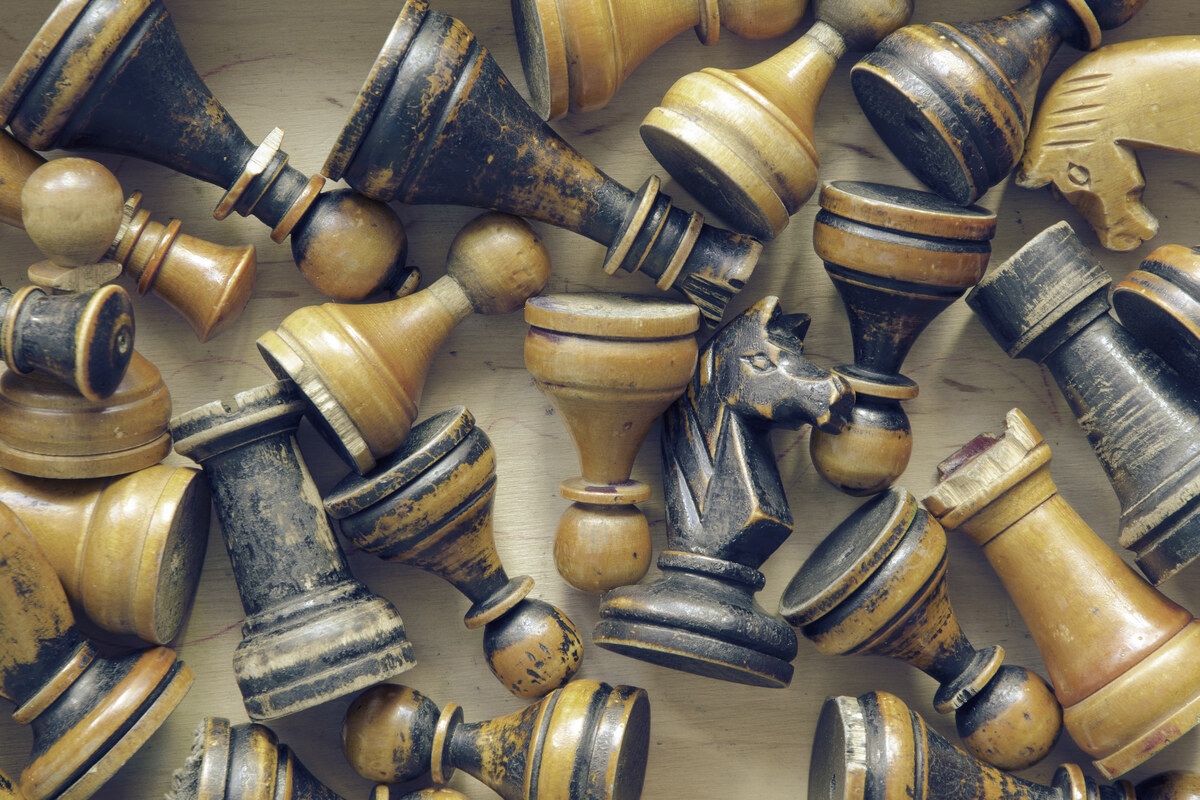
In 1831, 93 small objects carved mostly from walrus ivory turned up on the Isle of Lewis, in Scotland’s Outer Hebrides. Among them were kings, queens, bishops and knights with bulging eyes and glum faces, and four warriors caught in the act of biting their own shields.
They are the Lewis chessmen, and almost two centuries after their discovery, they still raise more questions than they answer.
A hoard that nobody can quite place
The pieces were probably carved between 1150 and 1200. They are commonly believed to have been made in Trondheim, Norway, though some scholars have suggested Iceland or even the Hebrides themselves. The usual theory is that they reached Lewis as part of a merchant’s stock.
Even the find spot is disputed. Most accounts point to Uig Bay, on the west coast of Lewis, but researchers at National Museums Scotland consider Mealista, about six miles further south, a more likely location.
The discovery was first credited to an unnamed local peasant. A name, Malcolm MacLeod, only appears in the records in 1863. The hoard held 78 chess pieces, 14 pieces for a game of tables (a cousin of backgammon) and a single belt buckle.
The rooks are not towers, they are furious warriors
Forget the castle turret. On the Lewis board, the rook is a standing soldier called a warder, armed with a shield and a sword. Four of them are berserkers, wild-eyed fighters shown chewing on their shields in a battle frenzy.
The rest of the cast is just as vivid. Kings sit on thrones, crowned, holding swords. Knights ride small, stocky horses and carry spears and shields. Bishops hold croziers, some with a book. The queens sit crowned, each with her right hand pressed against her face.
The pawns break the pattern entirely. They are plain geometric shapes, cylinders and “tombstones”, and this mix of abstract and figurative pieces is unique among medieval chess sets.
Comic to us, fearsome to them
To modern eyes, the faces are hilarious. One warder casts a worried sideways glance, and scholars have called the shield-biters “irresistibly comic to a modern audience”.
The carvers almost certainly saw something else: strength and ferocity in the warriors and, in the queens’ pensive pose, “contemplation, repose, and possibly wisdom”.
The board did not look like ours either. Some pieces carried traces of red stain when they were found, since vanished. The two armies may have been red and white, not black and white. A study even found traces of mercury on the surface, possibly from the red pigment cinnabar.
A game that came from the south
By the time these pieces were carved, chess was already well established in Europe. It probably entered through Muslim Spain or southern Italy and Sicily, and the oldest Western text documenting it, a Latin poem called the Versus de Scachis, was written in northern Italy between 900 and 950.
It spread quickly. In 1010, the will of Count Ermengol I of Urgell in Catalonia already listed a chess set among the possessions he handed down. In the 13th century, the Dominican Jacques de Cessoles turned the game into a moral lesson in which every piece stood for a role in society.
80 guineas then, £735,000 now
The chessmen were first shown to the Society of Antiquaries of Scotland on 11 April 1831. Most were then bought by the British Museum, at the urging of Frederic Madden, a manuscripts curator and keen chess player. The museum paid 80 guineas for 82 pieces. Another group reached the National Museum of Scotland in 1888.
When the hoard was found, one knight and four warders were missing from four complete sets. In 2019, one of those lost warders resurfaced in Edinburgh after going unrecognised for at least 55 years, and sold at Sotheby’s for £735,000.
Four other major pieces and many pawns are still missing. Somewhere, in a drawer or a forgotten collection, a few more grumpy ivory warriors may be waiting to be noticed.