Picture medieval Europe and the image comes automatically: peasants swapping chickens for shoes, no real money changing hands. The record left by Charlemagne’s mints, and by a bridge toll in Paris, tells a very different story.
The myth of a coinless Middle Ages
Money in medieval Europe was less abundant than it had been under Rome or would become in modern times, but it was never sidelined. Coins moved constantly through markets, seasonal fairs and everyday trade across the continent.
By the 12th century, merchants engaged in international commerce were already relying on credit instruments as sophisticated as bills of exchange, letting them move value across borders without hauling sacks of silver. That is not the behavior of a barter economy.
A currency built to survive Charlemagne by nine centuries
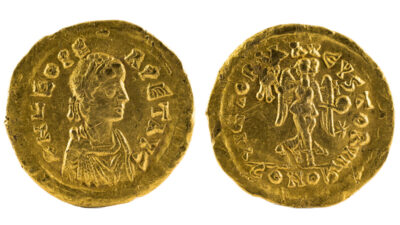
The system that made this possible began with Pepin the Short, who reformed Frankish coinage between 755 and 768 and made the silver denier the base unit of Western European money.
His son Charlemagne went further, issuing capitularies that fixed weights, imposed a royal minting monopoly, and locked in a fixed exchange: 12 deniers to one sou, 20 sous to one livre. That livre-sou-denier structure held constant for the rest of the medieval period and well into the centuries that followed.
Money guarded like a state secret
Medieval mints, the hotels des monnaies, were run like fortresses rather than workshops. The exact alloy recipes counted as state secrets, and minting staff were not permitted to leave the premises during their shift, a precaution against smuggled metal or leaked techniques.
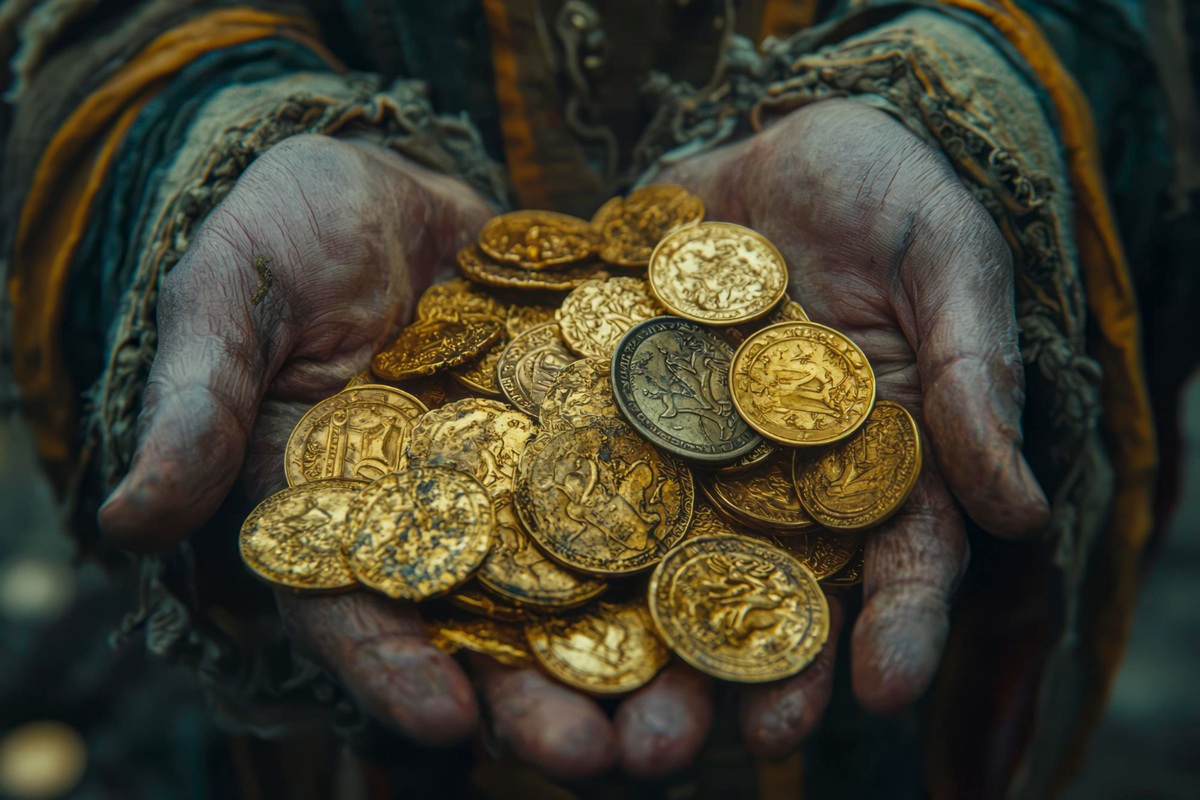
Even the coins themselves carried a built-in color code any peasant could read at a glance: “white money,” high in silver and pale, and “black money,” heavier in copper and dark, a visible signal of a coin’s real value that shifted constantly with the pressures on the royal treasury.
The coins were also tiny. A silver denier weighed under a gram, far too small and valuable to count out one by one for any significant purchase. Large transactions instead required a professional money weigher, whose scales, not a headcount, determined how much a pile of coins was actually worth.
The toll you could pay with a dancing monkey
On the Grand-Pont in medieval Paris, the bridge was crossed daily by street performers, and the crossing came with a toll. Most travelers paid it in coin like everyone else.
Performers too poor to pay had one recognized alternative: making their trained monkey dance in front of the toll collector, who accepted the show as payment in kind. It only worked as an exception precisely because everyone understood what a real toll payment looked like.
That workaround left a permanent mark on the French language. The expression “payer en monnaie de singe,” to pay in monkey money, still means settling a debt with empty gestures instead of anything of real value.
A closing thought
None of this fits the image of a cash-starved, barter-driven Middle Ages. It shows a society that treated its currency with the same seriousness modern states apply to theirs: standardized, monopolized, guarded, and color-coded for anyone who needed to check what they were really holding.