For more than four decades, an anonymous Parisian wrote down what he saw and heard in a city torn apart by civil war and English occupation. The result, known as the Journal d’un bourgeois de Paris, is one of the most important sources on Paris between 1405 and 1449. Yet almost everything its famous title promises turns out to be misleading.
1. The bourgeois was not a bourgeois
The author never called himself a “Bourgeois of Paris.” That name was given by the scholar Denis Godefroy in his edition of 1653, and it simply stuck.
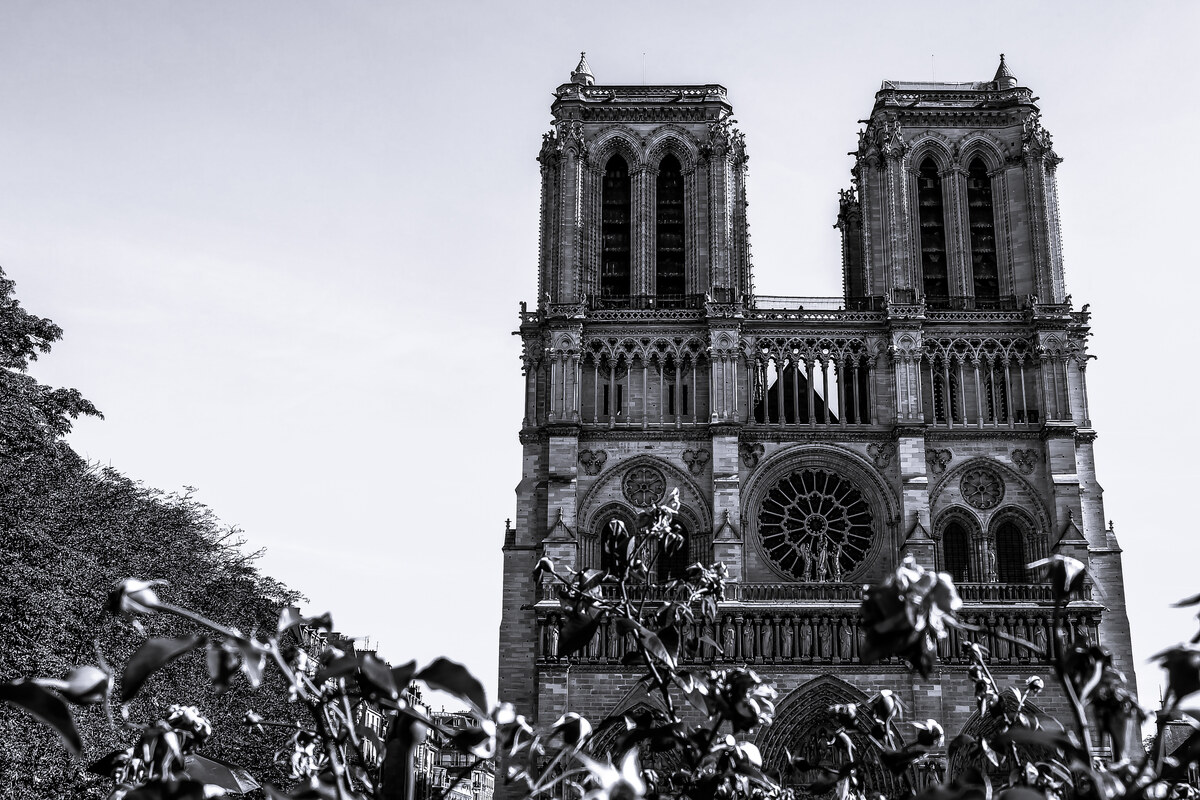
Historians now agree that the writer was a cleric of the University of Paris, probably a doctor of theology. He was connected in some way to the chapter of Notre-Dame de Paris and served in the clergy of the parishes on the Right Bank.
His real name is still a mystery. Auguste Longnon proposed Jean Beaurigout, parish priest of Saint-Nicolas-des-Champs. Alexandre Tuetey rejected that idea in 1881 and named Jean Chuffart, a canon of Notre-Dame. The historian Colette Beaune then rejected Chuffart in her modern edition, and a 2021 study by Luke Giraudet raised yet another possible name, Nicolas Confrant. The prologue where the author might have identified himself has vanished from every surviving copy.
2. The diary was never really a diary
Despite the word “Journal,” a title that only dates from the 17th century, the text was not written as daily entries describing what happened that day. It is made of short sections, each devoted to a particular event.
Specialists distinguish several layers of writing: a calendar and liturgical framework, short notes, more polished rhetorical passages, and a final revision. In other words, it reads more like a memoir than a diary.
Its author did not aim for literary merit or historical objectivity either. He recorded what he witnessed himself, but also the rumors, public opinion, official news and decrees that circulated through the city, in writing and by word of mouth.
3. Its author changed sides during the war
For years, the writer was a fierce supporter of the Burgundian faction in the civil war between the Armagnacs and the Burgundians (1407-1435). The Burgundians were allied with the English, and like most Parisians and most of the University, he hoped they would curb the excesses of the French monarchy, including its tax and currency policies.
Then, in 1423, he grew disillusioned. He noticed that the Burgundians and their English allies caused almost as much suffering in the countryside as the Armagnacs did.
By the end of the text, the former Burgundian partisan had come to accept Charles VII as king of France.
4. The original manuscript is lost
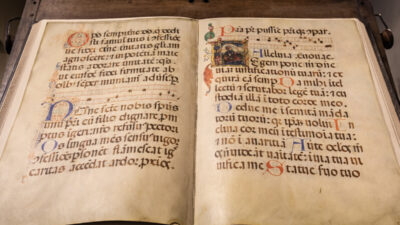
Six manuscripts survive, and none of them is the original. The oldest, now in the Vatican collections, is a late 15th-century copy that is far from careful: it has no paragraphs, its binding places the year 1408 before 1405, and the year 1438 is damaged beyond reading.
A second 15th-century copy, held in Oxford, is stranger still. Whole sections were cut out, leaving a collection of extracts chosen to show English exploits in France in a flattering light. Someone had, in effect, edited the chronicle to suit the English side.
Later copies from the 16th and 17th centuries, including those of Aix-en-Provence and the Bibliothèque nationale de France, made it possible to rebuild the missing year 1438. Read together, the copies give an approximate picture of the lost original. The first complete edition only appeared in 1729, and Alexandre Tuetey’s edition of 1881 is still used today.
5. It records the price of wine and a woman who beat men at tennis
The text covers the political and religious life of Paris, the siege of Meaux by Henry V of England, the economic damage of the war, the trial of Joan of Arc and a handful of extraordinary phenomena.
It is also a goldmine on everyday life: the price of food and wine, weather events, and harvests ruined by soldiers and insects.
One passage from 1427 describes a young woman named Margot, from Hainaut, aged around 28 to 30, who played the best tennis “that any man had ever seen”, and few men could beat her. Her story is told in full in our article on the woman who beat medieval Paris at tennis.
A Parisian voice from the Hundred Years War
An anonymous cleric, a misleading title, a lost original and a change of heart: on paper, this hardly sounds like a reliable witness. Yet that is exactly what makes the text precious. Rather than an official chronicle, it preserves what one Parisian heard, feared and believed while war passed through his city, and it is still read today, notably in Janet Shirley’s 1968 English translation.