Readers who picked up the Roman de la Rose expected a love story: a dreamer chasing a rosebud through a walled garden. What Jean de Meung’s continuation actually delivered, for thousands of lines, reads closer to a university lecture in disguise.
A poem that grew into something else
Guillaume de Lorris wrote the first 4,000 verses around 1230, a polished ideal of courtly love and careful devotion to a lady. He died before finishing it.
Four decades later, Jean de Meung picked up the unfinished poem and added roughly 17,700 verses of his own, more than four times the length of the original. He kept the dream-garden framework, but used it to carry something else entirely.
Real science hidden inside a garden of allegory
Jean de Meung filled his continuation with long digressions on nature, astronomy, optics, politics, and natural philosophy. For the passages on optics, he drew directly on the work of the Arab scientist Al-Haytham.
None of this was decoration. It was university-level knowledge, repackaged inside a romantic dream vision for aristocratic readers who never set foot in a university lecture hall.
Jean de Meung had the material to pull this off because he was already a Parisian clerk and a prolific translator, rendering works by Vegetius, Boethius, and Gerald of Wales into French before he ever touched the unfinished love poem.
Nature’s complaint to her priest
One digression runs for thousands of verses: the character Nature confesses to her priest, Genius, that she is troubled by humans who refuse to reproduce. It is part sermon, part scientific treatise, wrapped inside a confession scene.
A poem about pursuing a rosebud had, by this point, wandered into biology, theology, and social commentary, all delivered through characters arguing with each other in a garden.
Objects princes collected like art
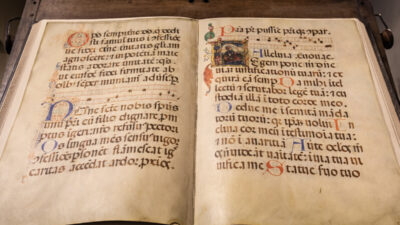
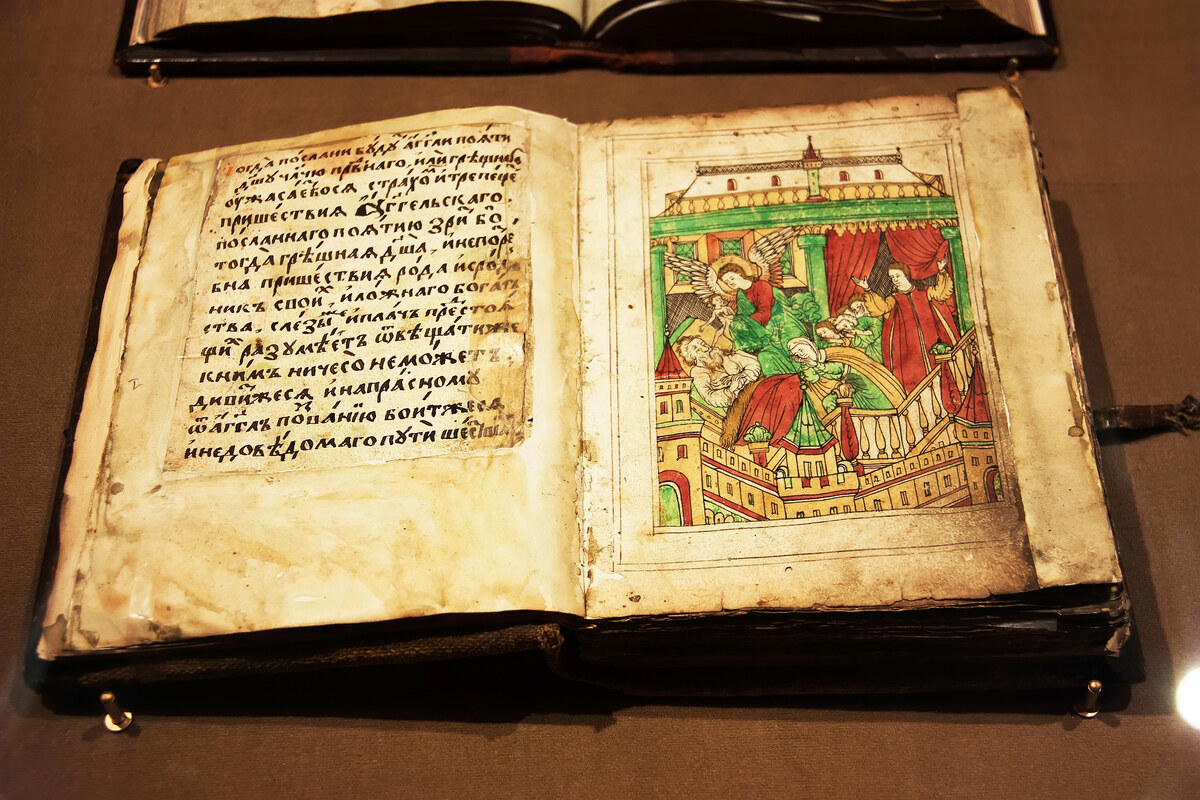
The finished poem became a status object. The Duc de Berry owned several copies, luxuriously illuminated, some showing the poem’s allegorical figures, Danger, Jealousy, Reason, Venus, painted as real courtiers in contemporary dress.
Fiction was rendered with the same visual seriousness medieval artists gave to real historical events. A personification of Jealousy got the same treatment as a king.
A flower with three meanings at once
The rose itself was never a simple symbol. It carried an erotic and marital meaning as the object of the dreamer’s pursuit, a religious one through its association with the Virgin Mary, and a political one through heraldry.
That deliberate overlap of meanings is part of why the poem spread so widely, resonating with readers on several levels at once without needing to choose between them.
By 1485, it had entered the print era through the Paris printer Jean Dupré, decades after Gutenberg, carrying all three layers of meaning into a new medium built for mass reproduction rather than single luxury copies.
Entertainment doing double duty
None of this was accidental. Jean de Meung built a poem that worked as romance on the surface and as a delivery system for real ideas underneath, and medieval readers absorbed both without necessarily noticing the second one.
Slipping real information into something people want to read for pleasure feels like a modern trick. The Roman de la Rose shows it is closer to a very old habit.