A medieval purse-cutter needed only one clean cut and a few seconds of nerve to walk away richer than most people saw in a month.
Why everyone wore their money on a string
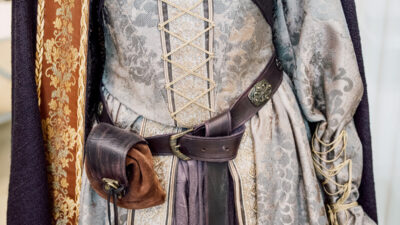
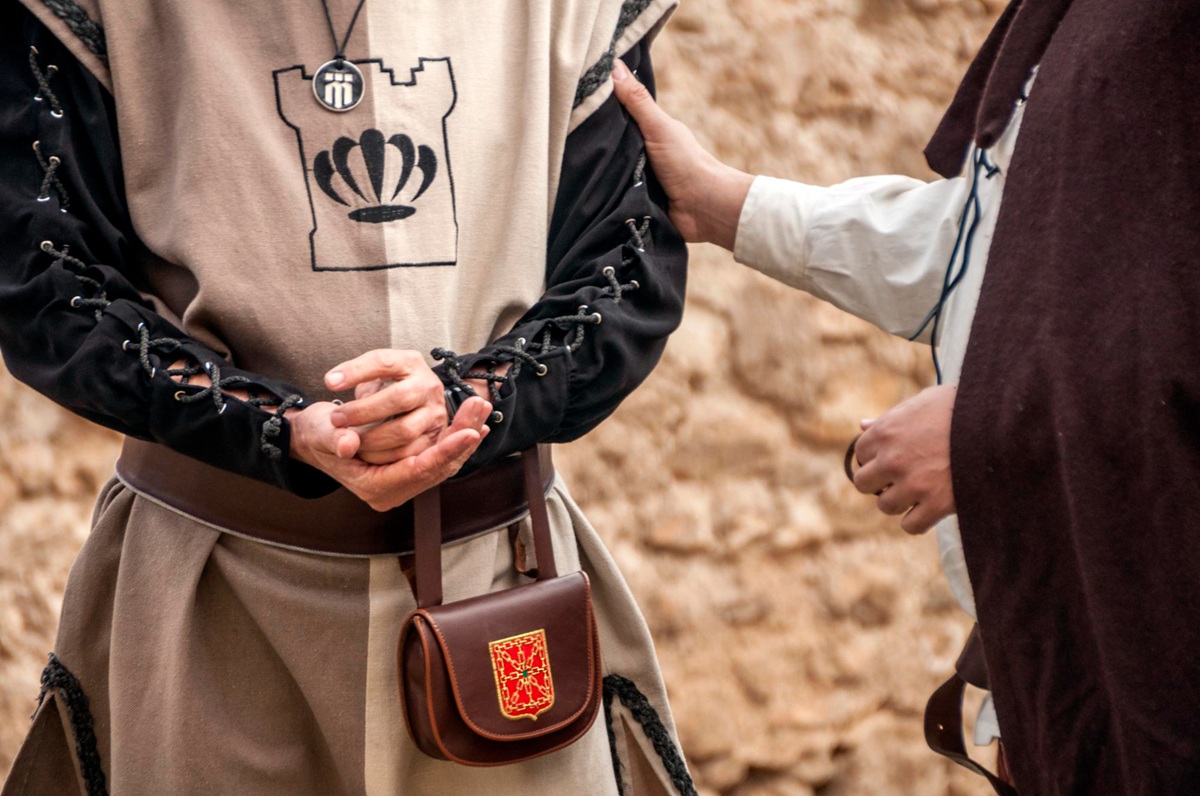
Medieval clothing had no pockets. To carry coins, keys, or a comb, people tied a small pouch, the aumoniere, to their belt.
Men and women of every social rank wore one. It wasn’t a mark of wealth by itself, just the only practical way to carry personal items.
It’s easy to assume money was strictly a man’s business, but medieval inventories, wills, and courtly poems tell a different story. Noblewomen and city women alike managed household finances and owned property, and carrying their own purse was simply part of that reality.
A target worth the risk
For the wealthy, the pouch itself became the valuable part. The finest examples were sewn from silk and velvet, embroidered with gold thread, pearls, and courtly scenes.
Paris workshops of the 13th and 14th centuries produced these embroidered purses, exported across Europe as a byword for luxury. Royal and noble inventories of the 14th century list purses of silk, gold-embroidered velvet, and pearls among their most prized possessions.
The escarcelle, a larger purse with a rigid clasp, stayed fashionable for centuries. King Henri II of France owned several precious examples, carefully inventoried after his death in 1559.
The pouch that gave money away
The name aumoniere comes from “aumone,” alms. Part of the coins inside were explicitly set aside for the poor, a devotional habit that medieval conduct manuals prescribed to nobles heading out in public.
Carrying a purse wasn’t only about spending. It was a small, constant act of charity built into the outfit itself.
Why cutting the cord was worth the danger
Purse-cutters appear again and again in medieval literature and police records. Fairs and markets, packed with distracted crowds, were their favorite hunting ground.
Slicing the cord or strap that tied a purse to a belt took real speed and discretion, one wrong move and the victim would feel it immediately.
A successful cut could mean more than stolen coins. Purses also carried documents, wax seals, and sometimes miniature relics or amulets used as personal protection. Losing one could mean losing irreplaceable proof of an agreement, not just spending money.
Saint Francis of Assisi understood exactly what the purse represented. In the early 13th century, he forbade his friars from carrying one or even touching money, a rejection that only makes sense in a world where the purse was inseparable from wealth and commerce.
What survived the centuries
Some of the finest embroidered purses from the 13th century still exist today, preserved in church treasuries. The dry conditions kept their gold thread and silk colors remarkably vivid.
The escarcelle began fading out in the 16th century, as clothing makers started sewing pockets directly into men’s garments. The object that had defined how medieval people carried their lives simply became unnecessary.
Centuries later, the same tension is still around every time someone clutches a bag a little tighter in a crowd. The purse changed shape, but the instinct it protects against never went away.