Picture the siege of Orléans and you probably see a city trapped inside a ring of English forts, starving until Joan of Arc rode in to break the circle. The real map tells a different story: the ring was never closed, and the French had been sneaking supplies through the gap for months.
A siege that decided the Hundred Years’ War
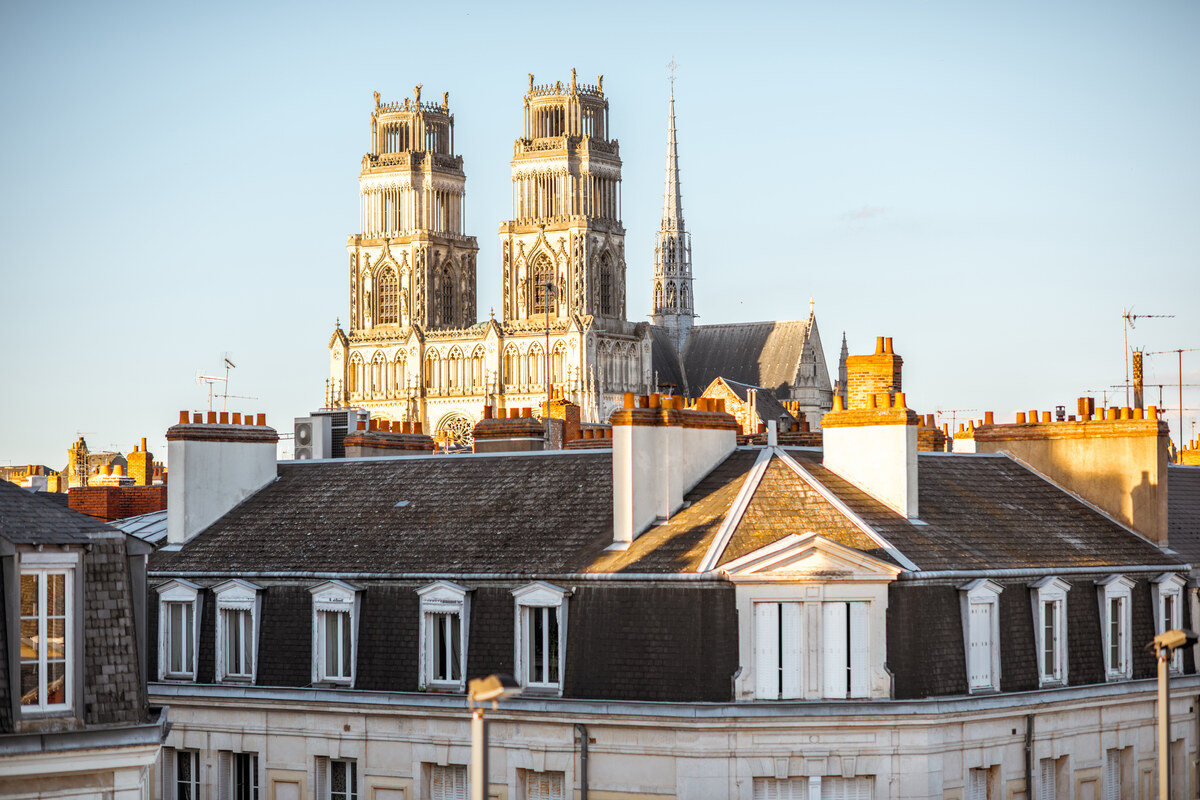
From 1428 to 1429, English forces besieged Orléans, on the Loire. Its survival became the turning point of the Hundred Years’ War.
That fits a wider pattern. Medieval warfare was mostly a succession of sieges and raids, and pitched battles were the exception. Whoever held the fortified places held the country.
The ring of forts that wasn’t a ring
By April 1429, the English had built nine bastilles, small siege forts, around the city. But look at where they stood. Seven were packed into the north-west, between the Loire and the road to Paris.
On the east side, there were only two, at Saint-Loup and Saint-Jean-le-Blanc, and both sat several kilometers from the walls. The English simply did not have enough men to lock the city in.
The French knew it. Supply convoys looped around through the Sologne, south of the river, then crossed the Loire on barges and boats at Port Saint-Loup. Joan of Arc herself argued for a bolder approach from the north, through the Beauce.
Who was really outnumbered
The numbers deepen the surprise. Estimates put the French side at around 6,400 soldiers plus 3,000 armed townspeople, roughly 9,400 people under arms. The English had about 3,800 soldiers, reinforced by 1,500 Burgundians.
In other words, the besiegers were smaller than the force they were besieging. That is exactly why the eastern side stayed so thin.
The people of Orléans also fought with a drastic tactic: they destroyed their own city. In October 1428 they demolished an arch of the Tourelles bridge. Between November and late December, they tore down every suburb and building outside the walls, so the enemy would find no shelter.
A cannonball, a failed ambush and a crossbow bolt
The siege was already strange before Joan arrived. On 24 October 1428, the English commander, Thomas Montaigu, Earl of Salisbury, climbed a tower and was hit in the head by a cannonball fired from the city’s Notre-Dame tower. He died a few days later.
Then came a French disaster. In February 1429, a Franco-Scottish force attacked an English supply convoy and failed badly. The episode is remembered as the Day of the Herrings, and it left the defenders demoralized.
Joan entered Orléans on 29 April 1429, around eight in the evening. Her first target is telling: on 4 May, about 1,500 French attacked Saint-Loup, one of those isolated eastern forts, defended by some 400 men. It fell, with 140 English killed and 40 captured.
The Augustins fort followed on 6 May, taken just before nightfall. On 7 May, at the Tourelles, Joan was hit in the shoulder by a crossbow bolt early in the assault. She pulled it out herself and came back to the fight. By the end, nearly a thousand English were dead, 600 were prisoners, and 200 French captives were found inside. The English captain, Glasdale, fell into the river and drowned.
Why the full picture matters
On the morning of 8 May, the two armies faced each other for about an hour. Then the English marched away toward Meung, Beaugency and Jargeau. A “feast of 8 May” celebrating the lifted siege is already recorded in 1429.
None of this makes Joan’s role smaller. It explains it. She did not smash through an unbreakable wall; she struck a siege that had been leaking for months, starting at its weakest point. Even the legend around her needs care: her famous prediction of her own wound rests only on testimony given years later at a trial.
Medieval sieges were rarely the perfect traps we imagine. They were contests of manpower, supply lines and nerve, and Orléans was saved as much by a map as by a miracle.