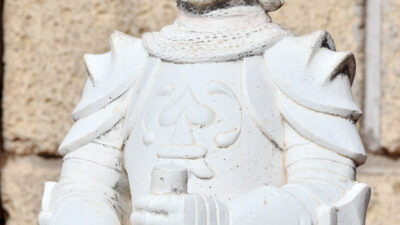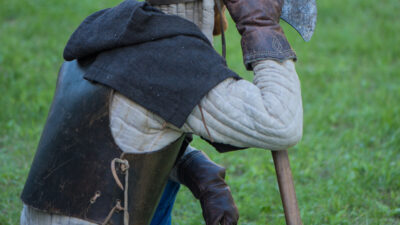
On 1 January 1523, the defeated knights of Rhodes marched out of their ruined city with banners flying, drums beating and their battle armor on. The man who had just beaten them, Sultan Suleiman, had agreed to let them go.
It was the strange ending to one of the hardest sieges of the age, six months of cannon fire, tunnels and explosions against a few thousand defenders who refused to give up.
An island fortress built for a second round
The Knights Hospitaller, also called the Knights of Saint John, had held Rhodes since the early 14th century, after the fall of Acre in 1291. From their island, just off the coast of Anatolia, they traded in the Aegean and harassed Turkish shipping.
The Ottomans had already tried to take the island once, in 1480. They failed. On 27 July of that year, around 2,500 Janissaries broke into the city, and Grand Master Pierre d’Aubusson, wounded in five places, fought them back with a lance in his hand.
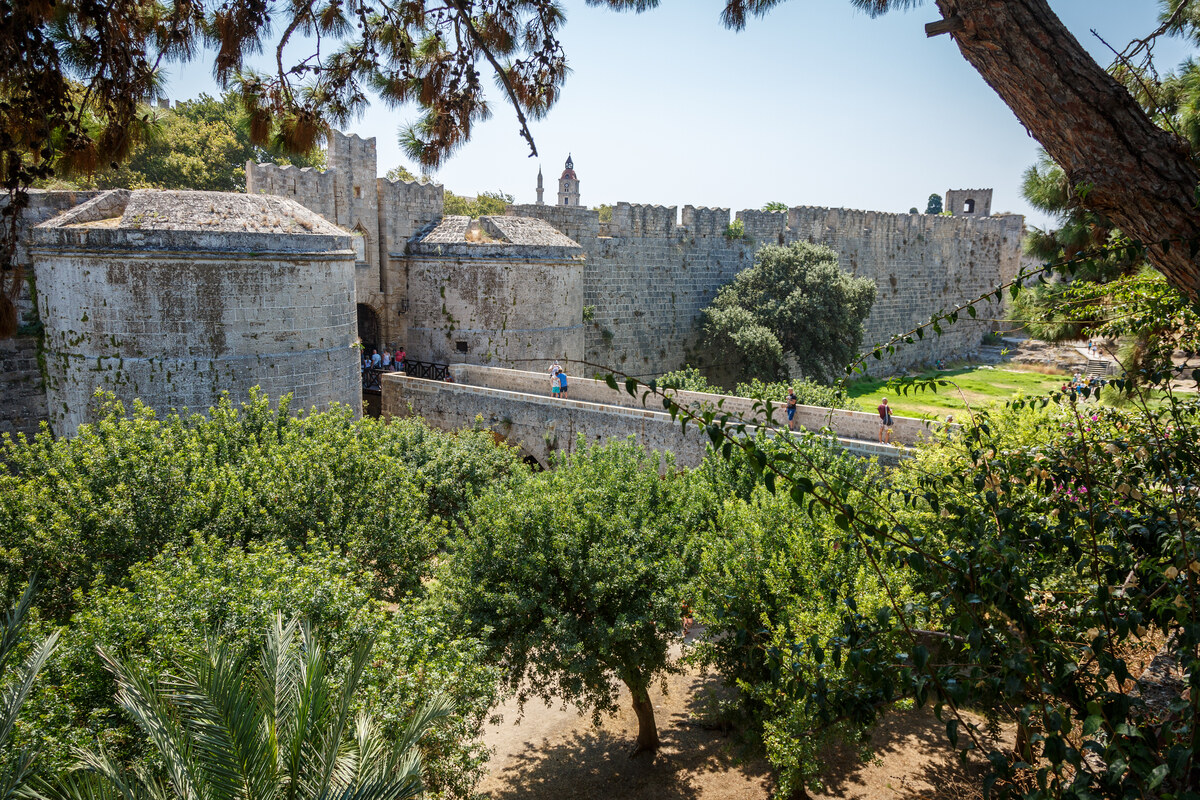
The knights knew a second attack would come. So they rebuilt their defenses for the age of gunpowder: a thicker main wall, a dry ditch doubled in width, new bulwarks around the towers and slanted parapets designed for artillery duels. Even the harbor was sealed by a heavy iron chain.
One grand master, one Irish prior and 100,000 attackers
In 1521, a Frenchman born in Beauvais, Philippe Villiers de L’Isle-Adam, was elected grand master. Expecting the Ottomans, he called on the order’s knights all over Europe to come and defend the island.
Europe ignored him. Only one man answered, Sir John Rawson, prior of the order’s Irish house, who came alone.
On 26 June 1522, an Ottoman fleet of 400 ships appeared. Suleiman himself arrived a month later with an army of about 100,000 men. Facing them, sources count somewhere between 600 and 700 knights, backed by a few thousand soldiers. Each stretch of wall was assigned to one of the order’s national groups, the Langues: England, Spain, Provence, Italy and the rest.
Six months of mines under the walls
The artillery was surprisingly slow to damage the massive walls. So the attackers went underground. On 4 September, two large gunpowder mines exploded under the bastion of England, bringing a 12-yard section of wall down into the moat.
The Ottomans poured into the breach. The English brothers, led by Fra’ Nicholas Hussey and the grand master himself, drove them out. Twice more that day the attackers came back, and twice more English and German knights held the gap.
On 24 September, a massive assault hit four bastions at once. The bastion of Spain changed hands twice in a single day. Furious at the failure, Suleiman sentenced his own brother-in-law, the commander Mustafa Pasha, to death, before sparing him at the pleas of senior officials.
His replacement, Ahmed Pasha, was an experienced siege engineer, and the mining intensified. The detonations kept hitting the same spots, which has led to an intriguing suggestion: the miners may have used ancient culverts of the Greek city buried beneath medieval Rhodes.
The surrender that looked like a parade
By late November, both sides were exhausted. The knights had no relief coming. The Ottoman camp was ravaged by losses and disease. Suleiman made an offer: lives and food if the city surrendered, death or slavery if it had to be taken by force.
Pressed by the townspeople, L’Isle-Adam agreed to talk. A truce collapsed, the bombardment resumed, and the bastion of Spain fell on 17 December. On 22 December, the city accepted Suleiman’s terms, and they were remarkably generous:
- The knights had twelve days to leave, with their weapons, valuables and religious icons
- Islanders could leave at any time within three years
- No church would be desecrated or turned into a mosque
- Those who stayed would pay no Ottoman taxes for five years
On New Year’s Day 1523, the knights walked out in full armor and boarded 50 ships bound for Crete, followed by several thousand civilians.
Knights without an island
For years, the order had no home: Crete, then Messina, Viterbo and Nice. In 1530, Emperor Charles V finally granted it Malta, Gozo and Tripoli. L’Isle-Adam landed on Malta on 26 October 1530 and received the silver key of Mdina a few weeks later.
Even then, the knights kept hoping to win Rhodes back. They only accepted Malta as their permanent home after surviving another great siege there, 35 years later.
Today, the walls of Rhodes still carry the scars of 1522, and stone cannonballs from the fighting still lie in the old ditch, a reminder that losing a siege, in the right way, could still look a lot like a victory.