In 778, a small Frankish rearguard was ambushed and wiped out in a Pyrenean mountain pass by Basque raiders. Three centuries later, a poem turned that local skirmish into a holy war against Muslim invaders, and almost nobody objected.
When a defeat became a legend
The Song of Roland is the archetype of the chanson de geste, the medieval genre of versified epics celebrating heroes of the Carolingian age. It tells the death of Roland, Charlemagne’s nephew, cut down at Roncevaux in the Pyrenees in 778.
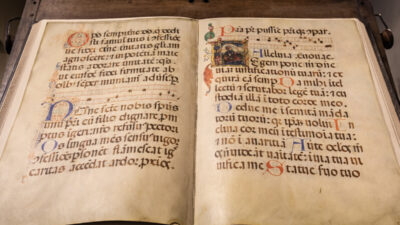
The problem is timing. The oldest surviving written version of the poem dates to around 1100, roughly three centuries after the actual battle. That gap gave storytellers plenty of room to rewrite what really happened.
The earliest Carolingian sources close to the event describe the attackers as Vascons, Christian Basques defending their own mountains. The poem instead casts them as Sarrasins, Muslim “infidels,” turning a local ambush into a clash between Christendom and Islam.
Why the poem picked the wrong enemy on purpose
Chansons de geste were composed between the 11th and 15th centuries, mostly in Old French, built from decasyllabic verses grouped into laisses, stanzas sharing the same final sound. That structure existed for a reason: it made long epics easier to memorize and perform aloud in front of an audience.
Those audiences lived centuries after Charlemagne, in the age of the Crusades, not the age of the Franks. So the knights inside the Song of Roland behave like 11th-century crusaders sworn to holy war, not like 8th-century Frankish soldiers defending a mountain pass.
The mismatch wasn’t a mistake. Chansons de geste doubled as propaganda, glorifying crusade, feudal loyalty, and the nobility as the only class fit to be a hero. Recasting Basque raiders as Muslim invaders made an obscure defeat serve a much bigger cause.
History, embellished, and simply invented
Medieval audiences weren’t necessarily meant to separate fact from fiction. The genre openly blended three things: real historical memory passed down orally, free embellishment on top of that memory, and outright invention presented as if it were history.
That blend also shaped the heroes themselves. A chanson de geste protagonist is never just a person. He is noble by birth, superhumanly strong, flawlessly loyal to his lord and his God, chosen for moral and martial perfection.
Roland, Charlemagne, and Guillaume d’Orange anchor the genre’s three great cycles: 27 works built around Charlemagne, 24 around Guillaume d’Orange and the independence of his family line, and 60 around Doon de Mayence and feudal revolt against the crown.
An epic that conquered medieval Europe
The formula traveled far beyond France. Spain produced its own national epic, the Cantar de mio Cid, before 1200. Italy developed a Franco-Venetian tradition of the genre, including works like L’Entrée d’Espagne in the 1330s and 1340s.
A poem built around a minor 8th-century ambush became, three hundred years on, one of medieval Europe’s biggest cultural exports, copied, translated, and reimagined across borders.
The myth that outlived the facts
The Song of Roland is still often read as an echo of real Carolingian history. It’s closer to medieval myth-making in service of a cause, dressed up as memory.
It’s a reminder that long before modern retellings reshaped history for the screen, medieval poets were already doing exactly that, one battle, one enemy, and one legend at a time.