The most famous quest in Western literature began with a story that has no ending. Around 1190, the poet who first put the Grail on the page died before finishing his tale, and much of what we now “know” about the Holy Grail was written by other people trying to fill the gap.
The poet who built King Arthur’s world
His name was Chrétien de Troyes, a poet from Champagne who lived from around 1130 to around 1190. If you have ever enjoyed a story set at Arthur’s court, you have walked through a world he designed.
Starting around 1170 with Érec et Énide, the first Arthurian romance written in the vernacular, Chrétien produced five romances that set the codes, the characters and the themes of the entire tradition. He is to Arthurian legend roughly what Homer is to Greek epic: the source everyone after him had to reckon with.
He also had a habit of inventing. Lancelot, the most famous knight of them all, does not appear in the earlier Welsh sources about Arthur. Chrétien created him.
A new patron and a mysterious object
After working for Marie de Champagne, the daughter of Eleanor of Aquitaine, Chrétien found a new patron in Philip of Alsace. Philip commissioned the romance that would become the poet’s last: Perceval, or the Story of the Grail, composed between about 1182 and 1190.
It is the first story in which the Grail appears as a mysterious object and the goal of a quest. In Chrétien’s hands, it stayed ambiguous, an enigma sitting at the heart of the tale.
Then the poet died, and the story simply stopped, with no conclusion at all.
So what was the Grail, exactly?
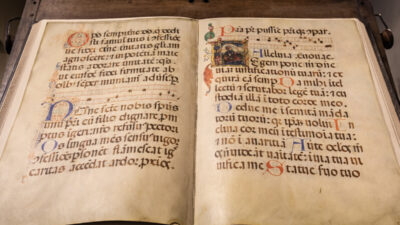
An unfinished work this influential was too tempting to leave alone. In the 13th century, a series of writers produced what are known as the Continuations, each one trying to carry on what Chrétien had started.
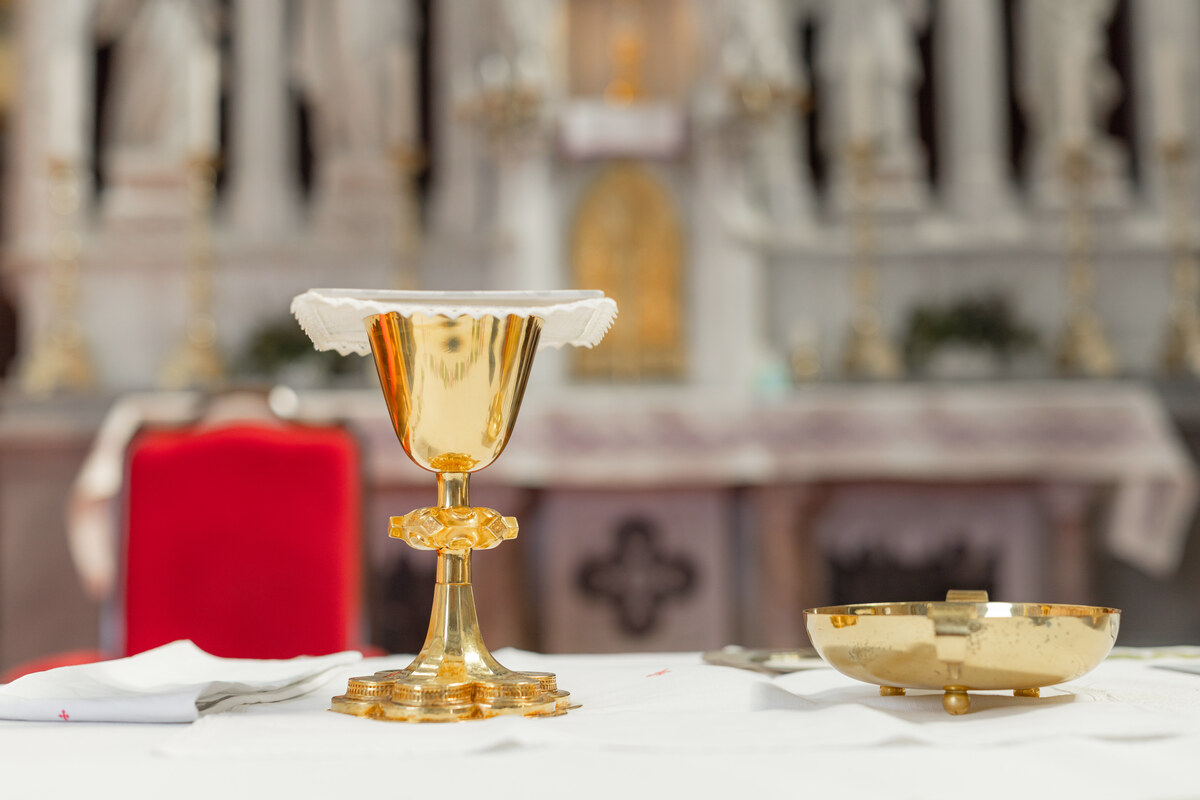
They did not agree. Some continuators made the Grail a dish. Others turned it into a chalice. Others still made it the cup of Christ’s Last Supper, the version most of us picture today.
In other words, the sacred cup was not a fixed starting point. It was one answer among several to a question the first author never got to settle.
Why the legend kept growing
A change in writing technique helped the story expand. During the 13th century, courtly romance in verse gradually gave way to romance in prose, which allowed far more complex, interlaced storylines. The result was vast cycles such as the Lancelot-Grail, weaving Chrétien’s characters and his unfinished quest into sprawling new narratives.
By around 1210, the writer Jean Bodel was already sorting medieval stories into three “matters”. The Grail sat firmly in the Matter of Britain, alongside Arthur, Lancelot, Guinevere and Perceval. Within a generation, an unfinished poem had become a pillar of how medieval authors organized their own literature.
An invented tradition, not an ancient one
It is tempting to imagine that Arthurian legend faithfully preserves some ancient, pure Celtic tradition. The romances tell a different story. Chrétien freely invented, transformed and adapted his sources, and courtly romance was a creative genre, not an archive of folklore.
He even had a word for his method: conjointure, the art of combining a story (the “matter”) with a meaning (the “sense”) to produce a coherent work. It is the first literary theory explicitly formulated by an author writing in a vernacular language. With Perceval, Chrétien supplied the matter, but death took away his chance to fix the sense, and others rushed in to supply it for him.
A quest that never really ended
That original ambiguity fed five centuries of rewriting, and it still fuels debate today. The search even left the page: in the 1930s and 1940s, the Ahnenerbe, an occult research organization created by Heinrich Himmler for the SS, took an interest in the Cathar fortress of Montségur, where the Grail was rumored to have been hidden.
Perhaps that is the real secret of the Holy Grail. It endures not because anyone ever found it, but because the first man to write about it never told us what it was.