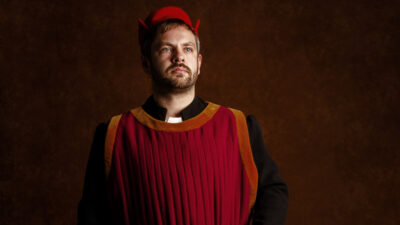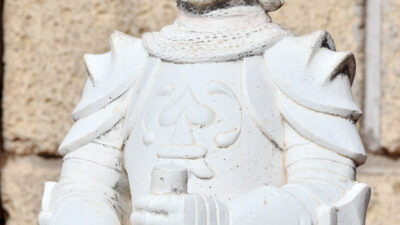
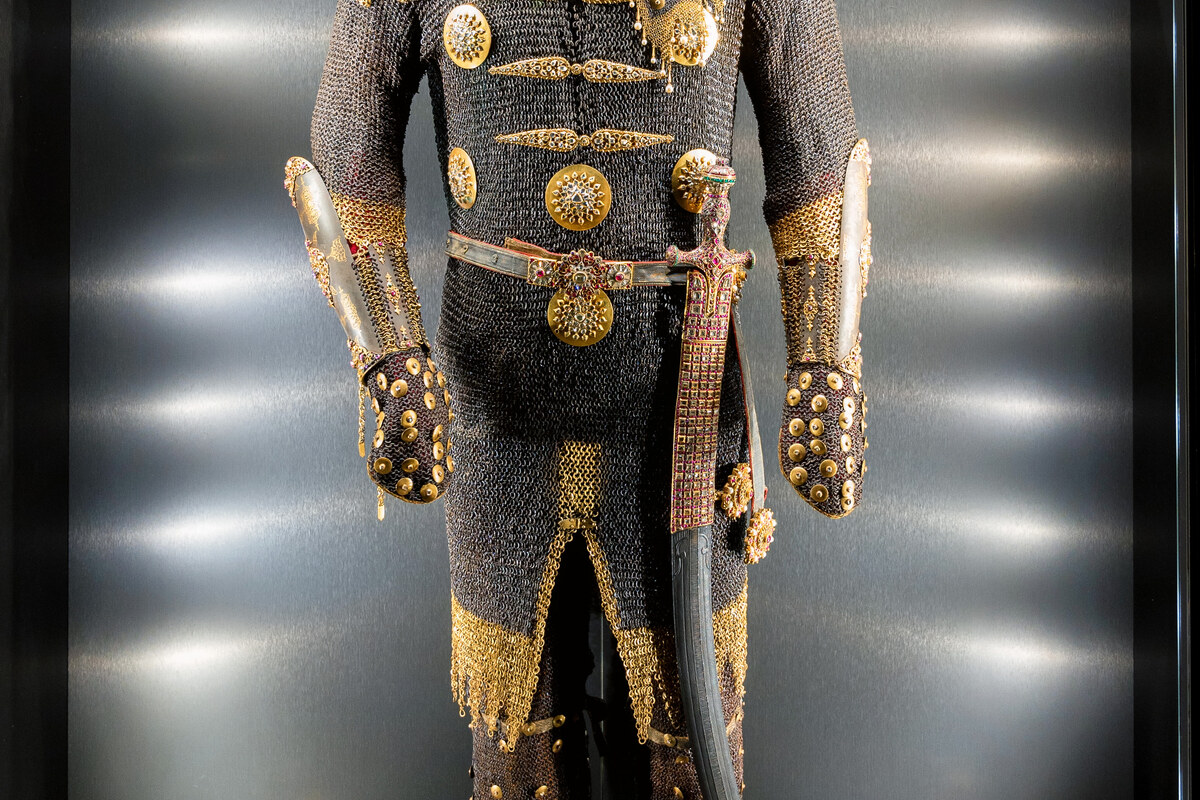
Modern flak jackets and ballistic vests rest on the same principle as a garment worn by medieval soldiers: small plates held in flexible cloth. It was called the brigandine, and its owners wanted everyone to see it.
A jacket with armor hidden inside
A brigandine is a body armor made of heavy cloth, canvas or leather, with small oblong steel plates riveted to the fabric. The rivets and the cloth sit on the outside. Sometimes a second layer of fabric lines the inside.
Its shape copied the civilian doublet, only sleeveless, with a wasp waist and a slightly rounded chest. Unlike a rigid breastplate, the overlapping plates could move against each other, so the wearer kept his mobility.
Cheaper than a breastplate, simple enough to fix
Brigandines were in common use from the mid-13th century until the late 16th century. A soldier usually wore one over a gambeson and a mail shirt. Men-at-arms paired it with plate protection for arms and legs, plus a helmet.
It did not protect as well as a full harness of plate. But it was simple enough that a soldier or knight could repair it himself, without an armourer. Cheaper versions also cost less than a breastplate. In 15th-century France, archers had to bring at least a brigandine to battle, while a man-at-arms had to bring at least a breastplate.
No, it was not the armor of bandits
A common myth says brigandines got their name because outlaws liked them. It is untrue. Originally the word “brigand” referred to a foot soldier, and a brigandine was simply the armor a foot soldier wore. It had nothing to do with hiding it under a cloak.
The name is also easy to mix up with the brigantine, a swift small sea vessel, and the brigandine is sometimes confused with the haubergeon.
Armor meant to be admired
Here is the surprise. These were highly fashionable garments, shown off by wealthy aristocrats in European and Asian courts alike. The rivets were often gilt or made of latten, sometimes embossed, and grouped in repeating patterns.
In the most expensive versions, the outer layer was silk. A richly dyed cloth studded with gilded rivet heads must have been impressive, which is why the armor was popular with high-status owners. A Hans Memling triptych wing from around 1470 shows one.
Cousins across the world
Similar armor appeared far beyond Europe. The jack of plate used small plates sewn in place, rather than riveted, and was worn by common soldiers and by the peasant rebels known as the Jacquerie. Jacks were often made from recycled pieces of old plate armor, including damaged brigandines cut into small squares.
India had the “coat of ten thousand nails”, a padded leather jacket covered in velvet. China had the bumianjia, Russia the kuyak and Japan the kikko. One jack dating to 1607 was even found at Jamestown in 2008.
A fashion statement that stopped arrows
The brigandine reminds us that medieval armor was never only about survival. Protection, price and style all shaped what a soldier put on in the morning, and the same logic still dresses people today.