Archaeologists can date a medieval grave almost to the year using nothing more than a small metal clasp. No written records required, just the shape of a brooch.
A clasp that works like a fingerprint for time
The brooch, known to archaeologists as the fibula, has been pinned to clothing since the Bronze Age. Its shape changed constantly and predictably across the centuries, evolving in ways that are well documented from region to region.
That reliability turns brooches into what specialists call “fossiles directeurs,” chronological markers so precise that a single clasp found in a grave can pin down a burial to a narrow window of time, sometimes tighter than any other object in the ground.
The tradition runs deep. Mycenaean-style fibulae were already spreading across Greece, Cyprus, and Sicily in the 14th century BC, and by the 7th century BC the Etruscans were producing sophisticated versions of their own during their orientalizing period. By the time the Middle Ages arrived, the brooch had already been evolving for close to two thousand years.
What a forgotten queen’s tomb revealed in 1959
In 1959, archaeologists opened a tomb at the Basilica of Saint-Denis and found the remains of Queen Aregonde, wife of the Merovingian king Clotaire I, who died around 573. Buried with her was an exceptional set of gold and garnet fibulae.
Among them, a large brooch in gold cloisonne work stands as one of the masterpieces of Merovingian goldsmithing, made using lost-wax casting and hammering techniques that could turn even a modest amount of metal into a dazzling piece of jewelry.
Aregonde’s tomb is not an isolated case. Prestige fibulae in cloisonne gold, buried alongside princely figures, are a recurring find from the fifth to the eighth century, right at the peak of Merovingian and Germanic craftsmanship. Each grave adds another data point to the same evolving timeline.
The myth that brooches were only for women
It is easy to assume the brooch was a purely feminine accessory. The archaeological record says otherwise.
Cruciform fibulae were, according to the archaeological sources, the exclusive domain of soldiers, a male accessory through and through. Roman troops and later Germanic warriors used them to fasten their military cloaks, and the clasp openly signaled that its wearer belonged to an army.
Both men and women wore brooches in the early Middle Ages, but the shapes differed by gender, status, and even profession, turning a simple clasp into a quiet form of identification.
The secret hidden inside an Irish masterpiece
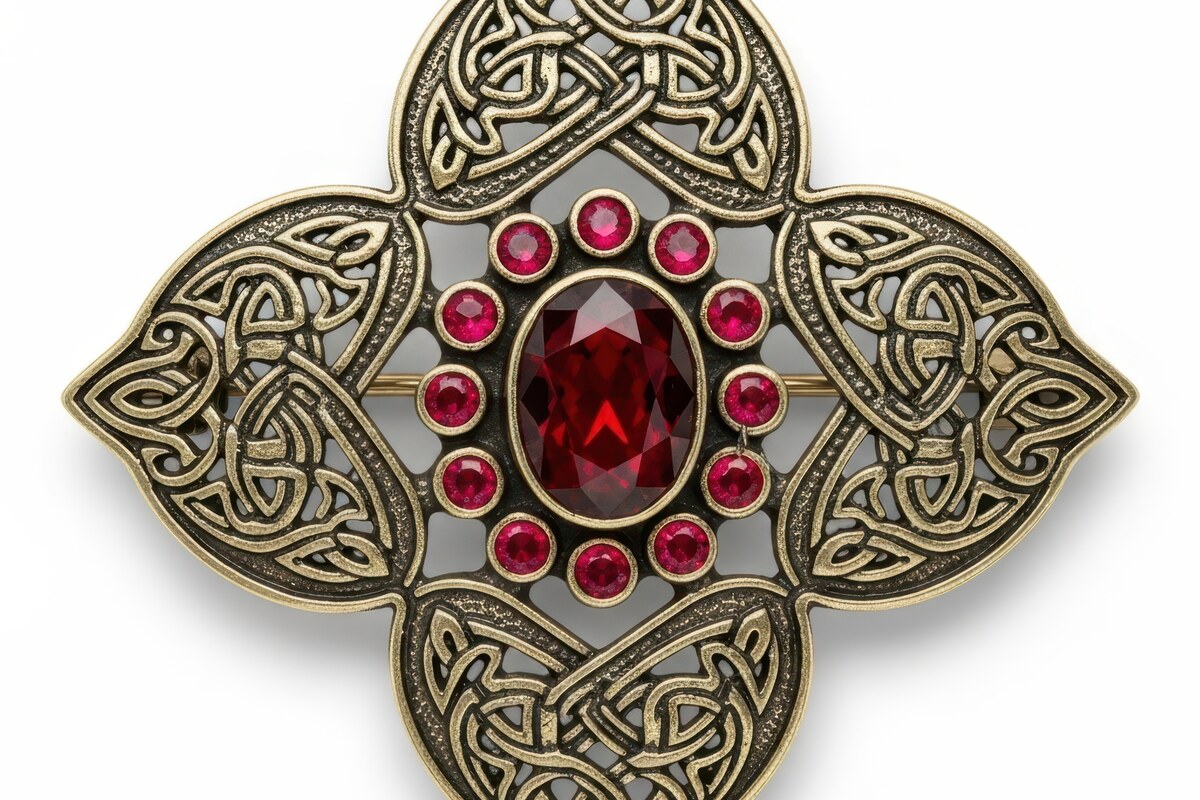
Few brooches show the level of craftsmanship found in the Tara Brooch, an 8th-century Celtic piece from Ireland. Its closing mechanism contains engraved details so fine they are invisible to the naked eye.
Other Merovingian fibulae pulled from graves show clear signs of wear, evidence that they were worn for decades before being buried with their owners. These were not disposable trinkets. They were lifelong companions, chosen carefully enough to accompany someone into the grave.
Before buttons existed, this clasp held medieval life together
The brooch was not just decorative. Until the button appeared in the 13th century and gradually spread, the brooch was the main way medieval people closed their clothes.
Its slow replacement by the button marks a genuine turning point in the history of dress, one easy to overlook next to castles and swords, yet just as revealing about how people actually lived.
Next time a museum case displays a small tarnished pin, it is worth remembering it might be doing more work than the sword in the case next to it, quietly telling historians exactly when, and sometimes who, once wore it.