In the early 1300s, a bishop had a book burned in front of the woman who wrote it. She kept writing, kept sharing it, and was burned herself a few years later. Her book outlived her by centuries, but under nobody’s name.
A mystic who wrote in the wrong language
Marguerite Porete was a Beguine, a French-speaking mystic from a lay religious movement. Her book, The Mirror of Simple Souls, is a dialogue between allegorical figures such as Love, Virtue and the Soul. It borrows the style of courtly love and reads a bit like the Roman de la Rose.
Her biggest offense may have been practical. She wrote it in Old French instead of Latin, so people outside the Church’s learned circles could read it.
Burned once in her presence, then ordered to stop
Sometime between 1296 and 1306, Gui de Collemedio, Bishop of Cambrai, condemned the book. It was burned publicly at Valenciennes, with Marguerite standing there. She was ordered never to circulate it or its ideas again.
She ignored the order. By 1308 she had been arrested, possibly in Châlons-en-Champagne, and handed to the Dominican inquisitor William of Paris. A Beghard named Guiard de Cressonessart was arrested with her.
A trial she refused to take part in
Porete spent about a year and a half in a Paris prison. Throughout, she refused to speak to any inquisitor. She would not recant, would not withdraw the book, and would not swear the oath required to continue the trial.
That silence was costly. In 1310, twenty-one theologians examined fifteen propositions taken from her book and judged them heretical. Only three of those propositions can be identified with certainty today. Guiard, under heavy pressure, confessed and was imprisoned. Porete, who confessed nothing, was condemned as a relapsed heretic.
Her book also contained a defense of its own orthodoxy: she wrote that three church authorities had read it, including the respected theologian Godfrey of Fontaines, and approved.
The crowd that cried
She was burned on 1 June 1310 at the Place de Grève in Paris. The inquisitor had called her a “pseudo-mulier”, a “fake woman”, and described her book as “filled with errors and heresies”.
A chronicle begun by Guillaume de Nangis, which sided against her, still recorded something striking: the crowd was moved to tears by the calm with which she faced death.
The book that would not die
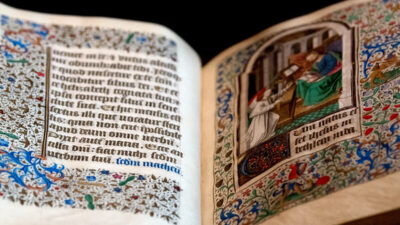
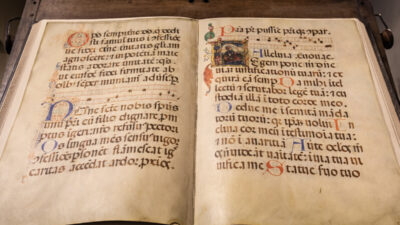
The Mirror should have vanished with her. Instead, it kept spreading as an anonymous work. It was translated into Latin, Italian and Middle English, and it circulated widely despite its reputation as a heretical text. At one point, scholars even thought it had been written by John of Ruusbroec.
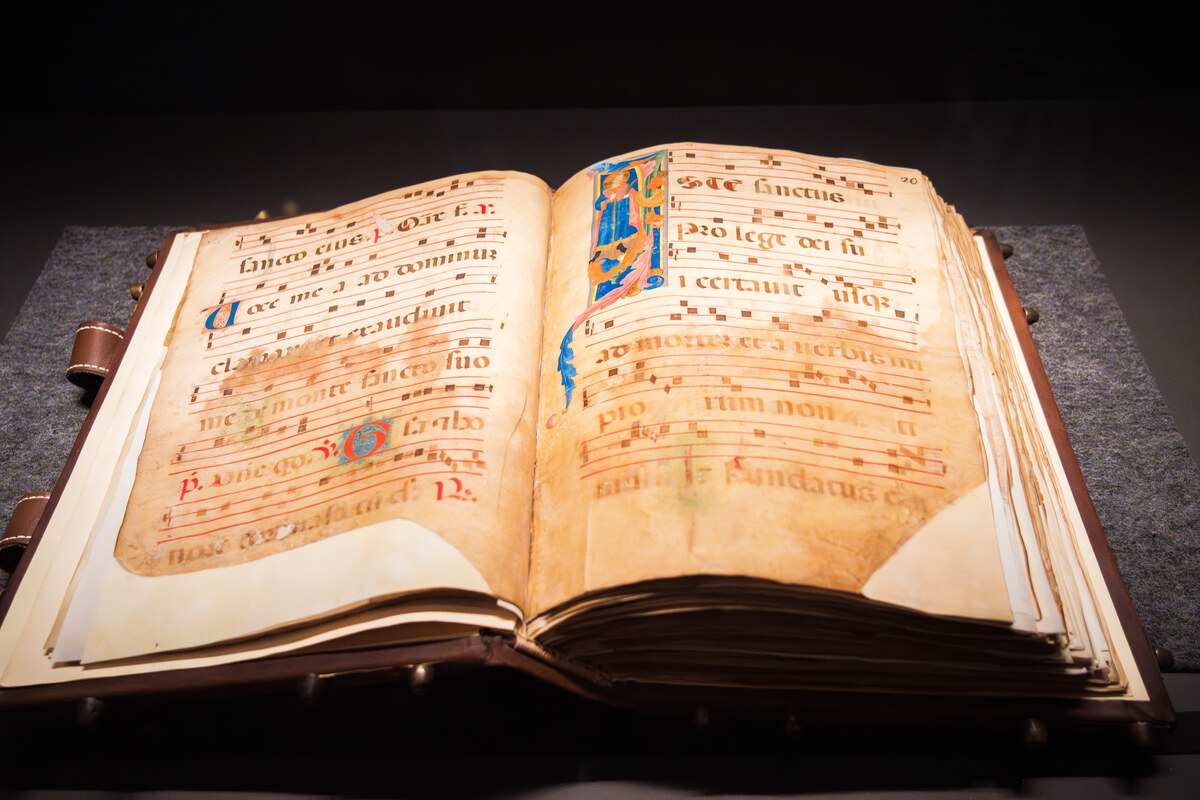
The real author was only recognized again in 1946, when Romana Guarnieri identified Latin manuscripts in the Vatican as Porete’s supposedly lost book. A Middle French manuscript, probably made after 1370, was published for the first time in 1965.
Why her?
Historians have suggested several reasons. Franciscans and Dominicans were increasingly hostile to the Beguines. Philip IV of France was busy suppressing the Knights Templar. And church authorities feared the spread of the anti-hierarchical Free Spirit movement, even though later scholarship found Porete’s link to it tenuous.
A name returned to a book
Fire destroyed the author but not the text. For more than six centuries, readers kept a stranger’s words alive without knowing whose they were. When the name came back, it came from a Vatican shelf, not from the church that had tried to erase it.